
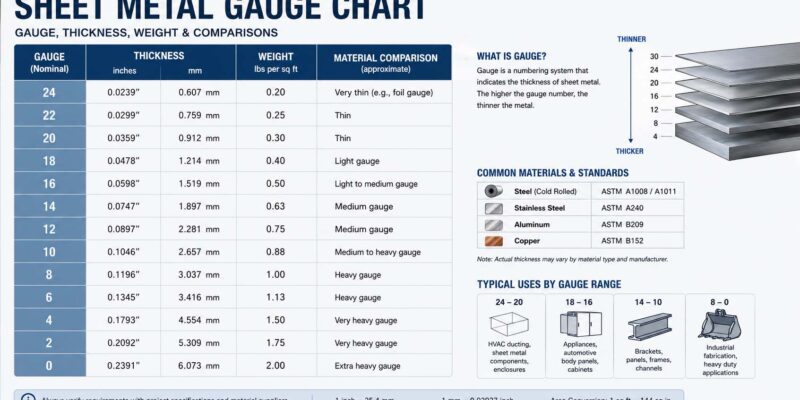
The sheet metal gauge chart is an essential reference tool used across the manufacturing, construction, automotive, and engineering industries. It helps professionals determine the thickness of sheet metal materials by using standardized gauge numbers. Since gauge numbers do not directly represent exact thickness values, a chart becomes necessary for converting gauge measurements into inches or millimeters. Understanding how these charts work is important for selecting the correct material thickness for different projects.
Sheet metal is widely used because of its durability, flexibility, and strength. It can be shaped into various forms and is commonly found in roofing systems, kitchen appliances, industrial equipment, vehicle bodies, and HVAC systems. Choosing the correct gauge thickness ensures the final product has the required balance between strength and weight.
Many beginners assume that a higher gauge number means thicker metal, but the opposite is actually true. Lower gauge numbers represent thicker metal sheets, while higher gauge numbers indicate thinner sheets. This numbering system can sometimes create confusion, which is why the sheet metal gauge chart remains an important industry standard.
Different metals may also use slightly different gauge systems. Steel, stainless steel, aluminum, and galvanized metal often have unique thickness measurements even when they share the same gauge number. Because of this variation, manufacturers and engineers rely heavily on accurate charts when selecting materials.
Sheet Metal Gauge Thickness Chart
The sheet metal gauge thickness chart is designed to simplify the process of understanding metal thickness measurements. Instead of manually converting gauges into decimal inches or millimeters, professionals can quickly reference a chart to find the exact dimensions they need for fabrication or construction work.
One of the main reasons thickness charts are important is because thickness directly affects the performance of the metal. Thicker metal provides greater strength and durability, while thinner metal offers flexibility and lighter weight. For example, heavy-duty industrial machinery may require thicker gauges, while decorative panels and lightweight duct systems may use thinner materials.
In construction projects, sheet metal thickness plays a critical role in structural integrity. Roofing panels, ventilation systems, and support structures all depend on proper material selection. Using the wrong thickness could lead to performance problems, reduced durability, or unnecessary costs.
The automotive industry also depends on gauge thickness charts. Vehicle manufacturers carefully choose metal thicknesses to achieve the best combination of safety, fuel efficiency, and durability. Thin metal helps reduce vehicle weight, while thicker metal improves impact resistance in critical areas.
Modern fabrication shops often use digital cutting machines and precision tools that require exact measurements. Even small thickness differences can affect bending, welding, and forming operations. This is why the sheet metal gauge thickness chart remains an essential reference in manufacturing environments.
Stainless Steel Sheet Metal Gauge Chart
The stainless steel sheet metal gauge chart is specifically designed for stainless steel materials, which have slightly different thickness standards compared to regular carbon steel. Stainless steel is widely known for its corrosion resistance, attractive appearance, and long-lasting durability. These qualities make it a preferred material for kitchens, medical equipment, industrial machinery, and architectural projects.
One important factor about stainless steel is that it often costs more than regular steel. Because of this, selecting the correct gauge is essential for balancing performance and cost efficiency. Thicker stainless steel sheets provide exceptional durability but may increase production expenses and overall project weight.
In food processing and medical industries, stainless steel is highly valued because it resists rust and contamination. Equipment such as sinks, countertops, storage tanks, and surgical instruments are commonly manufactured using stainless steel sheets. The gauge thickness selected for these products depends on the intended application and required durability.
Architectural applications also frequently use stainless steel sheet metal. Decorative wall panels, elevators, railings, and modern building facades often rely on stainless steel for both aesthetic appeal and weather resistance. Thinner gauges may be used for decorative purposes, while thicker gauges are selected for structural support.
Steel Sheet Metal Gauge Chart
The steel sheet metal gauge chart is commonly used in industries where carbon steel is the primary material. Carbon steel is one of the most widely used metals in manufacturing because it offers excellent strength, affordability, and versatility. From industrial machinery to building frameworks, steel sheet metal is found in countless applications worldwide.
The gauge chart allows engineers and fabricators to quickly identify the appropriate steel thickness for a project. Thicker steel gauges are often used for structural components that must withstand heavy loads or harsh environments. Thinner gauges are typically selected for lightweight panels, enclosures, and decorative products.
In the construction sector, steel sheet metal is used for roofing, wall systems, support beams, and ductwork. Each application requires specific thickness levels to ensure proper durability and performance. A reliable steel sheet metal gauge chart helps prevent costly mistakes during material selection.
Stainless Sheet Metal Gauge Chart
The stainless sheet metal gauge chart provides valuable information for professionals working with stainless steel fabrication and design. Since stainless steel is available in many different grades and thicknesses, understanding gauge measurements helps ensure proper material performance and compatibility.
One of the most common uses for stainless sheet metal is in kitchen and restaurant equipment. Refrigerators, sinks, ovens, and preparation tables are often manufactured using stainless steel because it is hygienic and resistant to corrosion. Different gauge thicknesses are selected depending on the equipment’s intended use and durability requirements.
Industrial applications also rely on stainless sheet metal for chemical processing equipment, storage tanks, and pipelines. Stainless steel’s resistance to moisture and harsh chemicals makes it ideal for challenging environments where ordinary steel may corrode over time.
Conclusion
The sheet metal gauge chart is an essential resource for professionals working in construction, engineering, manufacturing, and fabrication industries. It provides a simple way to understand metal thickness measurements and helps ensure accurate material selection for different applications.