
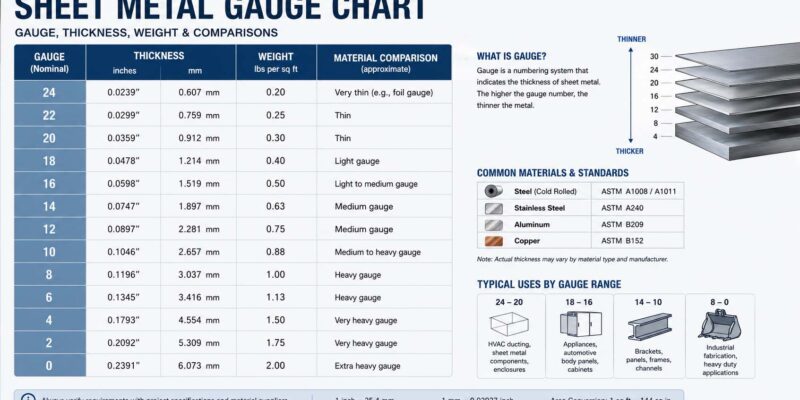
The sheet metal gauge chart is an essential reference tool in manufacturing, construction, automotive, and engineering work. Basically, it helps professionals find the thickness of sheet metal from standard gauge numbers. Since gauge numbers do not directly show exact thickness, you need a chart to convert them into inches or millimeters. For this reason, knowing how these charts work helps you pick the right thickness for each project.
Sheet metal is popular because it is durable, flexible, and strong. In addition, workers can shape it into many forms, so you’ll find it in roofing, kitchen appliances, industrial equipment, vehicle bodies, and HVAC systems. Above all, the right gauge gives the final product the right balance between strength and weight.
Many beginners assume that a higher gauge number means thicker metal. In fact, the opposite is true. Lower gauge numbers mean thicker sheets, while higher numbers mean thinner sheets. Because this system can confuse people, the sheet metal gauge chart remains an important industry standard.
Also, different metals may follow slightly different gauge systems. For example, steel, stainless steel, aluminum, and galvanized metal often have different thicknesses even when they share the same gauge number. As a result, manufacturers and engineers rely heavily on accurate charts when they choose materials.
Moreover, manufacturers that choose materials wisely often improve efficiency and cut waste, which is one of the key advantages explained in How Would a Manufacturer Benefit by Using Fewer Scarce Resources.
Common Gauge Sizes at a Glance
To start, the table below shows typical thickness values in inches for common gauges. As you can see, the same gauge number gives a different thickness for each metal.
| Gauge | Steel (in) | Galvanized Steel (in) | Stainless Steel (in) | Aluminum (in) |
|---|---|---|---|---|
| 10 | 0.1345 | 0.1382 | 0.1406 | 0.1019 |
| 12 | 0.1046 | 0.1084 | 0.1094 | 0.0808 |
| 14 | 0.0747 | 0.0785 | 0.0781 | 0.0641 |
| 16 | 0.0598 | 0.0635 | 0.0625 | 0.0508 |
| 18 | 0.0478 | 0.0516 | 0.0500 | 0.0403 |
| 20 | 0.0359 | 0.0396 | 0.0375 | 0.0320 |
| 22 | 0.0299 | 0.0336 | 0.0313 | 0.0253 |
| 24 | 0.0239 | 0.0276 | 0.0250 | 0.0201 |
To convert these values to millimeters, multiply the inch figure by 25.4. For more help, the NIST unit conversion guide explains how to switch between inches and metric units. Still, suppliers can vary slightly, so always confirm the exact thickness with your supplier before you order.
Sheet Metal Gauge Thickness Chart
The sheet metal gauge thickness chart makes metal thickness easy to understand. Instead of converting gauges into decimal inches or millimeters by hand, professionals can check a chart and quickly find the exact size they need for fabrication or construction work.
Most importantly, thickness directly affects how the metal performs. On one hand, thicker metal gives more strength and durability. On the other hand, thinner metal offers flexibility and lighter weight. For example, heavy-duty industrial machinery may need thicker gauges, while decorative panels and light duct systems may use thinner sheets.
In construction, sheet metal thickness plays a key role in structural strength. Indeed, roofing panels, ventilation systems, and support structures all depend on the right material choice. Otherwise, the wrong thickness could cause performance problems, shorter life, or extra costs.
Likewise, the automotive industry depends on gauge thickness charts. Specifically, carmakers choose metal thicknesses carefully to get the best mix of safety, fuel efficiency, and durability. Thin metal helps reduce vehicle weight, whereas thicker metal improves impact resistance in critical areas.
Today, modern fabrication shops often use digital cutting machines and precision tools that need exact measurements. Even small thickness differences can affect bending, welding, and forming. That is why the sheet metal gauge thickness chart remains an essential reference in manufacturing.
Furthermore, companies that invest in fabrication equipment should understand What Is a Depreciation Schedule, since machinery and production assets usually lose value over time for accounting and tax purposes.
Stainless Steel Sheet Metal Gauge Chart
The stainless steel sheet metal gauge chart covers stainless steel, which follows slightly different thickness standards than regular carbon steel. In general, people know stainless steel for its corrosion resistance, attractive look, and long life. Thanks to these qualities, it is a top choice for kitchens, medical equipment, industrial machinery, and building projects.
However, stainless steel often costs more than regular steel. So, choosing the right gauge is essential for balancing performance and cost. Of course, thicker stainless sheets give excellent durability, but they may raise production costs and add weight.
In food processing and medicine, companies value stainless steel highly because it resists rust and contamination. For instance, manufacturers often make sinks, countertops, storage tanks, and surgical tools from stainless steel sheets. In each case, the right gauge depends on what the product does and how durable it must be.
Similarly, architects often use stainless steel sheet metal. For example, decorative wall panels, elevators, railings, and modern building fronts often rely on stainless steel for both good looks and weather resistance. Generally, designers choose thinner gauges for decoration and thicker gauges for structural support.
Steel Sheet Metal Gauge Chart
The steel sheet metal gauge chart is common in industries where carbon steel is the main material. After all, carbon steel is one of the most widely used metals in manufacturing, since it offers great strength, low cost, and versatility. From industrial machinery to building frames, steel sheet metal appears in countless products worldwide.
With this chart, engineers and fabricators can quickly find the right steel thickness for a project. Typically, they use thicker gauges for parts that must handle heavy loads or harsh conditions. In contrast, they choose thinner gauges for light panels, enclosures, and decorative products.
In the construction sector, builders use steel sheet metal for roofing, wall systems, support beams, and ductwork. Each use needs a specific thickness for proper durability and performance. Therefore, a reliable steel sheet metal gauge chart helps you avoid costly mistakes when choosing materials.
In addition, many manufacturers that supply industries such as What Companies Are in the Energy Field rely on precise gauge measurements, so their equipment meets safety and performance standards.
Stainless Sheet Metal Gauge Chart
The stainless sheet metal gauge chart gives useful information to professionals who work on stainless steel fabrication and design. Because stainless steel comes in many grades and thicknesses, understanding gauge sizes helps you get the right performance and fit.
One of the most common uses for stainless sheet metal is kitchen and restaurant equipment. For example, makers often build refrigerators, sinks, ovens, and prep tables from stainless steel, since it is hygienic and resists corrosion. Then, they pick the gauge based on what the equipment does and how tough it must be.
Also, industrial plants rely on stainless sheet metal for chemical processing equipment, storage tanks, and pipelines. In particular, stainless steel resists moisture and harsh chemicals, which makes it ideal for tough settings where ordinary steel may corrode over time.
Meanwhile, manufacturers in a Free Enterprise System keep improving production methods and material choices to stay competitive and meet customer demand. Finally, fabrication and manufacturing businesses should follow local rules by getting a business license where required, as explained in What Is a Business License.
Conclusion
In conclusion, the sheet metal gauge chart is an essential resource for professionals in construction, engineering, manufacturing, and fabrication. In short, it gives a simple way to understand metal thickness and helps you choose the right material for every job.