A well-designed marketing strategy is essential for any business that wants to attract customers, increase brand awareness, and drive long-term growth. However, many business owners struggle to organize their marketing efforts effectively. This is where a marketing strategy template becomes valuable.
A marketing strategy template provides a structured framework that helps businesses define goals, identify target audiences, choose channels, and measure results. Whether you’re a startup, small business, or established company, using a template can simplify planning and improve execution.
In this guide, you’ll learn what a marketing strategy template is, why it matters, and how to create one for your business.
What Is a Marketing Strategy Template?
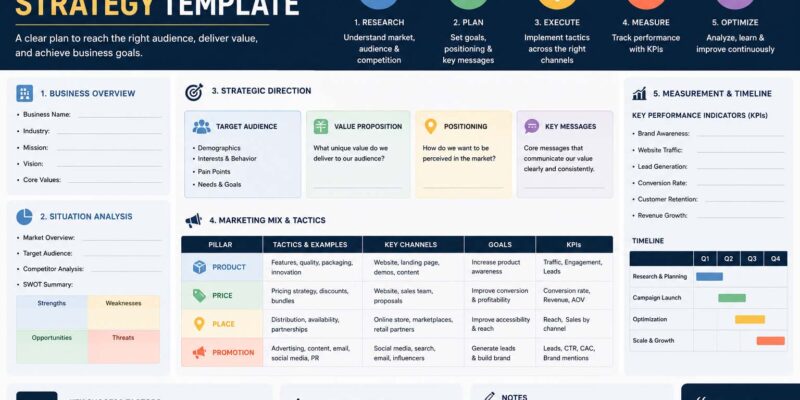
A is a structured document that outlines a company’s objectives, target audience, tactics, budget, and performance metrics.
Instead of creating a strategy from scratch every time, businesses can use a repeatable framework to ensure consistency and efficiency.
A typical includes:
- Business goals
- Target market
- Customer personas
- Marketing channels
- Content plans
- Budget allocation
- Key performance indicators (KPIs)
- Review schedules
The template acts as a roadmap that guides marketing activities throughout the year.
Why Businesses Need a Marketing Strategy Template
Many companies launch campaigns without a clear plan. This often leads to wasted budgets and inconsistent messaging.
Using a marketing strategy template offers several benefits.
Improved Organization
A structured plan keeps all marketing activities aligned.
Better Decision-Making
Businesses can evaluate opportunities using predefined goals and metrics.
Consistent Branding
Templates help maintain a unified brand message across channels.
Easier Performance Tracking
Clear KPIs make it easier to measure campaign effectiveness.
Time Savings
Core Components of a Marketing Strategy Template
Every successful template should include several key sections.
Executive Summary
Provide a brief overview of the business and marketing objectives.
Business Goals
Define measurable objectives such as:
- Increase website traffic
- Generate leads
- Boost sales
- Improve customer retention
Target Audience
Identify who your ideal customers are.
Include details such as:
- Age
- Location
- Interests
- Buying behavior
- Pain points
Unique Value Proposition
Explain what makes your business different from competitors.
Marketing Channels
List the channels you will use, such as:
- SEO
- Social media
- Email marketing
- Content marketing
- Paid advertising
Budget
Outline expected spending for each marketing activity.
KPIs
Determine how success will be measured.
Examples include:
- Website traffic
- Conversion rate
- Lead generation
- Customer acquisition cost
Step-by-Step Guide to Creating a Marketing Strategy Template
Building a becomes easier when broken into manageable steps.
Step 1: Define Business Objectives
Start by identifying what you want to achieve.
Examples:
- Increase sales by 20%
- Gain 5,000 monthly website visitors
- Generate 100 qualified leads per month
Clear objectives provide direction for every marketing activity.
Step 2: Research Your Audience
Understanding customers is critical.
Gather information about:
- Demographics
- Purchasing habits
- Challenges
- Preferences
Customer insights help create more effective campaigns.
Step 3: Analyze Competitors
Study competitors to identify:
- Strengths
- Weaknesses
- Opportunities
- Market gaps
Competitive analysis helps improve positioning.
Step 4: Select Marketing Channels
Choose channels that match your audience.
Examples:
- SEO for organic visibility
- Social media for engagement
- Email marketing for retention
- Paid ads for quick traffic
Step 5: Create Content Plans
Include:
- Blog posts
- Videos
- Social content
- Email campaigns
Step 6: Measure Results
Track performance regularly and make adjustments when needed.
Digital Marketing Strategy Template
A digital focuses on online channels and customer acquisition.
Typical Sections
- Website goals
- SEO strategy
- Paid advertising plan
- Social media objectives
- Analytics tracking
Example
A software company might focus on:
- Organic search growth
- Google Ads campaigns
- LinkedIn marketing
- Lead generation funnels
Digital marketing templates help businesses manage multiple online channels effectively.
Content Marketing Strategy Template
A content marketing strategy template provides a framework for creating valuable content that attracts and educates audiences.
Key Components
- Content goals
- Audience personas
- Keyword research
- Publishing schedule
- Distribution plan
Example
A travel company may publish:
- Destination guides
- Travel tips
- Seasonal content
- Vacation planning articles
Content marketing supports SEO, brand authority, and customer trust.
Email Marketing Strategy Template
An email strategy template helps businesses communicate consistently with subscribers.
Template Sections
- Audience segmentation
- Email goals
- Campaign schedule
- Automation workflows
- Performance metrics
Example
An e-commerce store might use email campaigns for:
- Product launches
- Promotions
- Cart recovery
- Customer retention
Email remains one of the highest-return marketing channels.
Social Media Marketing Strategy Template
A social media marketing strategy template helps businesses manage multiple platforms efficiently.
Include
- Platform selection
- Posting frequency
- Content themes
- Engagement goals
- Performance tracking
Example
A fitness brand may focus on:
- Instagram Reels
- Facebook communities
- TikTok videos
- User-generated content
A structured social media plan improves consistency and audience engagement.
Real-World Example of a Marketing Strategy Template
Imagine a local coffee shop seeking growth.
Goal
Increase monthly revenue by 15%.
Target Audience
Young professionals and students.
Marketing Channels
- Local SEO
- Email newsletters
Content Plan
- Weekly coffee tips
- Seasonal drink promotions
- Customer stories
KPI
- Website visits
- Social engagement
- Coupon redemptions
Using a template makes the strategy easy to manage and evaluate.
Common Mistakes to Avoid
Many businesses make avoidable marketing planning errors.
Setting Unrealistic Goals
Objectives should be measurable and achievable.
Ignoring Audience Research
Campaigns perform better when based on customer insights.
Choosing Too Many Channels
Failing to Track Results
Without measurement, improvement becomes difficult.
Lack of Consistency
Marketing success often requires sustained effort over time.
Best Practices for Long-Term Success
Review Strategies Regularly
Focus on Data
Use analytics to guide decisions.
Prioritize Customer Needs
Customer-focused marketing often produces better results.
Align Marketing With Business Goals
Every campaign should support broader organizational objectives.
Test and Optimize
Continuous improvement leads to stronger performance.
Frequently Asked Questions
What is a marketing strategy template?
A marketing strategy template is a structured framework used to plan, organize, and measure activities.
Why is a marketing strategy important?
It helps businesses allocate resources effectively, reach target audiences, and achieve growth goals.
What should a marketing strategy template include?
Key sections include goals, target audience, marketing channels, budget, content plans, and KPIs.
Most businesses review their strategy quarterly and update it annually.
Can small businesses use marketing strategy templates?
Yes. Templates are especially helpful for small businesses because they simplify planning and improve consistency.
Conclusion
A strategy template provides businesses with a practical framework for achieving growth and maintaining focus. By defining goals, understanding target audiences, selecting the right channels, and tracking performance, organizations can create more effective marketing campaigns and maximize return on investment.