
In today’s competitive marketplace, attracting customers is only half the battle. The real challenge is keeping them interested, connected, and loyal to your brand. This is where a strong customer engagement strategy becomes essential.
Customer engagement focuses on building meaningful interactions with customers throughout their journey. Businesses that successfully engage their audience often experience higher customer retention, increased sales, stronger brand loyalty, and more positive referrals.
Whether you run a small startup, an online store, or a large company, understanding how to improve customer engagement can create long-term business success. Businesses often combine their engagement efforts with a Marketing Strategy Template to ensure every campaign supports broader business objectives.
What Is a Customer Engagement Strategy?
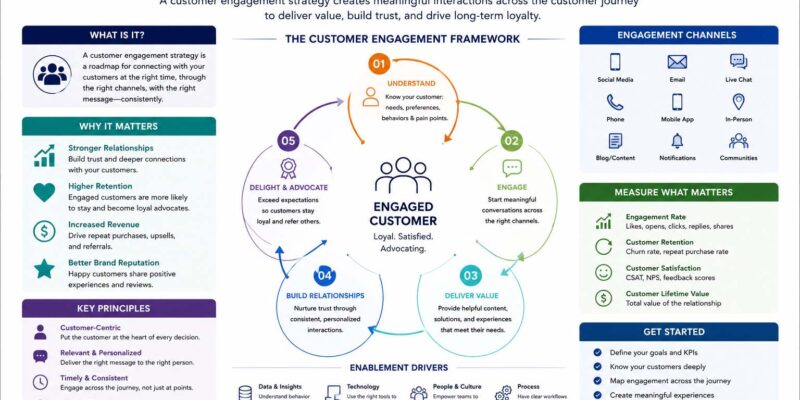
A customer engagement strategy is a structured plan that businesses use to interact with customers across various channels and touchpoints.
The goal is to create positive experiences that encourage customers to continue engaging with the brand. These interactions may occur through social media, email marketing, customer support, loyalty programs, mobile apps, websites, or in-person communication.
Rather than focusing only on sales, customer engagement aims to build relationships that increase trust and customer lifetime value.
Why Customer Engagement Matters
Businesses that fail to connect with customers often struggle to maintain loyalty.
An effective customer engagement strategy helps businesses:
- Increase customer retention
- Improve customer satisfaction
- Generate repeat purchases
- Build stronger brand loyalty
- Encourage positive reviews
- Create word-of-mouth marketing
- Increase overall revenue
Research consistently shows that engaged customers spend more and remain loyal longer than disengaged customers. Many organizations also rely on a Voice of the Customer Program to gather feedback that helps improve engagement and customer satisfaction.
Key Components of a Successful Customer Engagement Strategy
Several elements contribute to an effective engagement plan.
Understanding Your Audience
Customer data collected through surveys, analytics, purchase history, and feedback can help companies personalize interactions and improve communication.
Consistent Communication
Customers expect brands to communicate regularly without becoming intrusive.
Effective communication may include:
- Email newsletters
- Social media updates
- Product recommendations
- Customer support responses
- Loyalty program updates
Consistency helps maintain brand visibility and trust.
Personalization
Modern customers expect personalized experiences.
Using customer names, recommending relevant products, and delivering customized content can significantly improve engagement rates.
Providing Value
Successful engagement goes beyond selling.
Businesses should provide educational content, helpful resources, industry insights, and solutions that genuinely benefit customers.
How to Build a Customer Engagement Strategy
Creating a customer engagement strategy requires careful planning and execution. Understanding Strategy vs Tactics can also help businesses separate long-term engagement goals from the daily actions used to achieve them.
Step 1: Define Your Goals
Start by identifying what you want to achieve.
Examples include:
- Increasing customer retention
- Growing email subscribers
- Improving customer satisfaction scores
- Increasing repeat purchases
- Building brand awareness
Clear goals make it easier to measure success.
Step 2: Map the Customer Journey
Understand every stage of the customer experience.
Common stages include:
- Awareness
- Consideration
- Purchase
- Retention
- Advocacy
Identify opportunities to engage customers at each stage.
Step 3: Choose Engagement Channels
Select channels that your audience uses most frequently.
Popular options include:
- Social media platforms
- Email marketing
- SMS campaigns
- Company websites
- Mobile applications
- Customer communities
Focus on quality interactions rather than trying to be everywhere.
Step 4: Create Valuable Content
Content remains one of the most effective engagement tools.
Examples include:
- Blog articles
- Educational videos
- Webinars
- Guides
- Product tutorials
- Case studies
Useful content encourages customers to stay connected with your brand.
Step 5: Measure Results
Track key performance indicators such as:
- Customer retention rate
- Engagement rate
- Email open rate
- Website activity
- Customer lifetime value
- Net Promoter Score (NPS)
Customer Engagement Marketing Strategy
A customer engagement marketing strategy focuses specifically on marketing activities that encourage customer interaction.
Unlike traditional advertising, engagement marketing prioritizes two-way communication.
Examples include:
- Interactive social media campaigns
- User-generated content contests
- Personalized email campaigns
- Customer surveys
- Live Q&A sessions
- Community-building initiatives
For example, a fitness brand may encourage customers to share workout progress photos using a branded hashtag. This creates engagement while promoting the business organically.
By involving customers in conversations rather than simply broadcasting messages, companies can strengthen relationships and improve brand loyalty.
Digital Customer Engagement Strategy
Technology has transformed how businesses interact with customers.
A digital customer engagement strategy leverages online platforms and digital tools to create personalized experiences.
Popular digital engagement methods include:
Email Automation
Automated emails can welcome new customers, recommend products, and follow up after purchases.
Social Media Engagement
Responding to comments, messages, and customer questions helps build trust and improve customer satisfaction.
Live Chat Support
Instant support increases convenience and keeps customers engaged during the buying process.
Mobile Applications
Apps can offer rewards, notifications, personalized recommendations, and exclusive content.
Artificial Intelligence
AI-powered chatbots provide fast responses and improve customer service availability around the clock.
Businesses that embrace digital engagement often create smoother and more personalized customer experiences.
Customer Engagement Strategy Example
Consider an online clothing retailer.
The company implements a customer engagement strategy that includes:
- Welcome emails for new subscribers
- Personalized product recommendations
- Loyalty reward points
- Social media style challenges
- Customer feedback surveys
- Birthday discounts
As customers interact with the brand across multiple touchpoints, they develop stronger loyalty and become more likely to make repeat purchases. Businesses that generate new prospects through engagement campaigns often nurture those prospects after they become What Is a Lead opportunities within the sales funnel.
This customer engagement strategy example demonstrates how multiple channels can work together to improve customer relationships.
Customer Engagement Strategy Template
Businesses can use a simple customer engagement strategy template to organize their efforts.
Business Goal
Increase customer retention by 15% within 12 months.
Target Audience
Existing customers aged 25–45.
Engagement Channels
- Email marketing
- Social media
- Website content
- Loyalty program
Key Activities
- Weekly educational content
- Monthly promotions
- Personalized recommendations
- Customer feedback collection
Success Metrics
- Repeat purchase rate
- Customer satisfaction score
- Email engagement rate
- Customer lifetime value
Using a structured template helps ensure consistency and measurable outcomes.
Common Customer Engagement Mistakes
Many businesses struggle with engagement because they make avoidable mistakes.
Focusing Only on Sales
Customers quickly lose interest when every interaction is promotional. Businesses selling premium services, including What Is High Ticket Sales offers, should focus on providing value and building trust instead of pushing constant sales messages.
Ignoring Feedback
Customer feedback provides valuable insights for improvement.
Inconsistent Communication
Long periods without communication can reduce engagement and brand awareness.
Lack of Personalization
Generic messaging often fails to connect with customers.
Avoiding these mistakes can significantly improve engagement results.
Future Trends in Customer Engagement
Customer engagement continues to evolve as technology advances.
Emerging trends include:
- AI-powered personalization
- Predictive customer analytics
- Omnichannel experiences
- Voice search engagement
- Interactive content
- Community-driven marketing
Businesses that adapt to these trends will be better positioned to meet changing customer expectations.
Frequently Asked Questions
What is a customer engagement strategy?
A customer engagement strategy is a plan designed to build and maintain meaningful interactions between a business and its customers to improve loyalty and satisfaction.
Why is customer engagement important?
Customer engagement helps increase retention, strengthen relationships, improve customer satisfaction, and boost long-term revenue.
What is a customer engagement marketing strategy?
A customer engagement marketing strategy focuses on marketing activities that encourage interaction, participation, and communication with customers.
What is a digital customer engagement strategy?
A digital customer engagement strategy uses online channels such as websites, social media, email, mobile apps, and chatbots to connect with customers.
How can small businesses improve customer engagement?
Small businesses can improve engagement through personalized communication, excellent customer service, valuable content, loyalty programs, and active social media interactions.
Conclusion
A well-planned customer engagement strategy is one of the most powerful tools for building long-term business success. By focusing on meaningful interactions, personalization, valuable content, and consistent communication, businesses can strengthen customer relationships and increase loyalty.