The hub and spoke model is one of the most widely used systems in transportation, logistics, aviation, and supply chain management. Businesses use this structure to improve efficiency, reduce operational costs, and simplify the movement of goods or services between locations. The model is designed around a central hub that connects multiple smaller points called spokes. Instead of sending products directly between every location, goods move through the hub before reaching their final destination.
This system has become especially popular in industries such as airlines, shipping, delivery services, and distribution networks. Companies use the hub and spoke approach because it helps centralize operations and improves resource management. Understanding how this model works can help businesses make smarter decisions about logistics and operational planning.
Pros and Cons of Hub and Spoke Logistics Model
The pros and cons of hub and spoke logistics model are important to understand before implementing this strategy. One of the biggest advantages is efficiency. By centralizing operations into a single hub, businesses can organize transportation more effectively and reduce unnecessary routes. This often lowers fuel costs and simplifies scheduling.
Another major benefit is scalability. Companies can add more spoke locations without dramatically changing the entire system. This flexibility allows businesses to expand into new markets while maintaining centralized control over operations. Airlines frequently use this structure because passengers from multiple cities can connect through one large airport hub.
The model also improves inventory management. Products stored at central hubs can be distributed more accurately based on demand. Businesses can monitor stock levels more effectively and avoid maintaining large inventories at every location.
Despite its advantages, the system also has disadvantages. One major issue is dependency on the central hub. If the hub experiences delays, technical problems, or operational failures, the entire network can be disrupted. In logistics and aviation, weather conditions or equipment breakdowns at the hub may create delays across multiple spoke locations.
Another challenge is increased travel time for some routes. In certain cases, goods or passengers must travel through the hub even when direct transportation would be shorter. This can lead to longer delivery times and reduced convenience in specific situations.
Businesses must also invest heavily in maintaining the hub itself. Since the central hub handles a large amount of traffic and operations, it often requires advanced infrastructure, staffing, and technology systems to function effectively.
What Is a Hub and Spoke Model
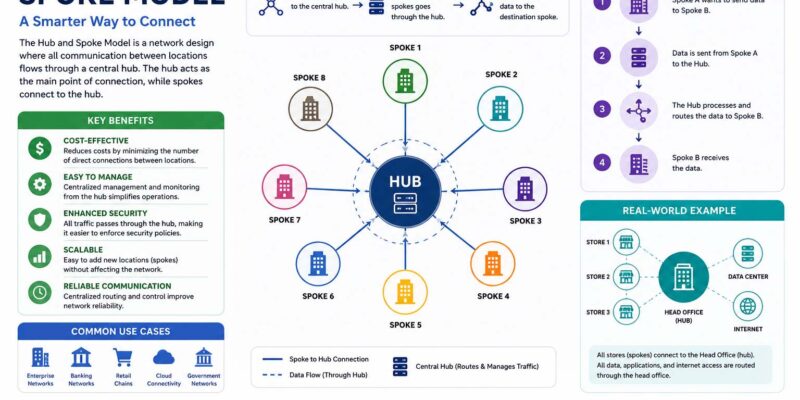
Many people ask, what is a hub and spoke model because the system is used across many industries. The concept is relatively simple. A central location called the hub acts as the primary connection point for several smaller locations known as spokes. Instead of every spoke communicating directly with one another, they connect through the hub.
The wheel analogy helps explain the structure clearly. The center of the wheel represents the hub, while the lines extending outward represent the spokes. This design allows businesses to manage operations from one central location while still serving multiple destinations efficiently.
Airline companies are among the most recognized users of this system. Major airlines operate central airports where passengers transfer flights before reaching their final destinations. Shipping companies also use large distribution centers as hubs where packages are sorted and redirected to regional delivery locations.
The model is not limited to transportation. Technology companies use similar structures for network management and cloud computing systems. Healthcare organizations sometimes apply hub and spoke systems to connect smaller clinics with larger hospitals. Retail businesses also use centralized warehouses to distribute products to local stores.
The popularity of the hub and spoke model continues to grow because it allows organizations to simplify operations while reducing duplication of resources. Centralized management often improves coordination and overall efficiency.
Hub-and-Spoke Model
The hub-and-spoke model plays an important role in modern supply chains and transportation systems. Businesses operating globally often rely on this structure to manage large-scale operations effectively. Central hubs help consolidate shipments, reduce operational complexity, and improve communication across networks.
Technology has significantly improved the performance of the hub-and-spoke model in recent years. Advanced tracking systems, automation tools, and real-time analytics allow businesses to monitor shipments and optimize routes more accurately. These innovations help reduce delays and improve customer satisfaction.
E-commerce companies heavily depend on hub-and-spoke logistics because of growing demand for fast shipping. Central fulfillment centers receive products from suppliers and distribute them to regional locations for final delivery. This process helps companies process large volumes of orders efficiently.
The aviation industry also benefits greatly from this structure. Airlines can maximize passenger traffic by routing flights through major hubs instead of operating expensive direct routes between every city pair. This increases seat occupancy and improves profitability for carriers.
One important factor in the success of the hub-and-spoke model is location selection. Choosing the right hub location can significantly improve transportation efficiency and reduce costs. Businesses often place hubs near major highways, airports, or shipping ports to simplify distribution and access.
What Is Hub and Spoke Model
Understanding what is hub and spoke model is essential for businesses aiming to improve operational efficiency. The system focuses on centralization, coordination, and resource optimization. Instead of managing multiple independent connections, organizations streamline movement through one primary center.
This approach helps businesses reduce operational expenses because fewer direct routes are needed. Companies can consolidate shipments, reduce staffing duplication, and improve scheduling accuracy. These savings can improve profitability while also enhancing service quality.
Customer experience can also improve when the system is managed effectively. Centralized operations allow businesses to track shipments more accurately and maintain better communication across the network. Faster processing and organized routing often result in more reliable deliveries.
Conclusion
The hub and spoke model continues to be one of the most effective systems for transportation, logistics, and distribution networks. Whether discussing the pros and cons of hub and spoke logistics model, understanding what is a hub and spoke model, analyzing the hub-and-spoke model, or exploring what is hub and spoke model, the core concept remains focused on centralized efficiency.