
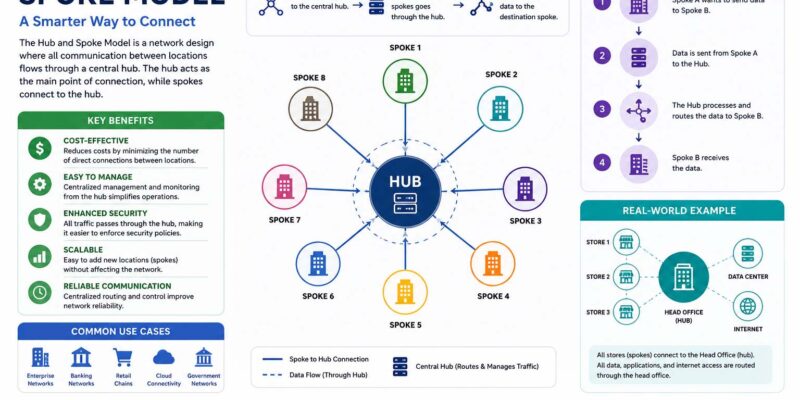
The hub and spoke model is one of the most widely used systems in transportation, logistics, aviation, and supply chain management. Businesses use this structure to improve efficiency, cut operating costs, and simplify how goods or services move between locations. At its core, the model centers on one main hub that connects several smaller points called spokes. Instead of sending products directly between every location, companies move goods through the hub before they reach their final destination.
This system has become especially popular with airlines, shipping firms, delivery services, and distribution networks. In particular, companies choose the hub and spoke approach because it centralizes operations and improves resource management. As a result, understanding how this model works can help businesses make smarter decisions about logistics and planning.
In many ways, the efficiency of centralized logistics matches the ideas discussed in How Would a Manufacturer Benefit by Using Fewer Scarce Resources, where cutting waste and improving operations help businesses raise long-term profits.
Pros and Cons of Hub and Spoke Logistics Model
The pros and cons of hub and spoke logistics model are important to understand before you put this strategy in place.
Main Advantages
First, one of the biggest advantages is efficiency. By centralizing operations in one hub, businesses can organize transportation better and cut unnecessary routes. Often, this lowers fuel costs and simplifies scheduling.
Another major benefit is scalability. In fact, companies can add more spoke locations without changing the whole system. This flexibility lets businesses enter new markets while keeping central control over operations. For example, airlines often use this structure because passengers from many cities can connect through one large airport hub.
Also, the model improves inventory management. With stock held at central hubs, businesses can send products out more accurately based on demand. In turn, they can watch stock levels closely and avoid keeping large inventories at every location.
Main Disadvantages
Despite its advantages, the system also has drawbacks. For one thing, the whole network depends on the central hub. If the hub faces delays, technical problems, or breakdowns, the entire network can suffer. In logistics and aviation, bad weather or equipment failures at the hub may cause delays across many spoke locations.
Another challenge is longer travel time on some routes. In certain cases, goods or passengers must pass through the hub even when a direct trip would be shorter. Consequently, this can mean longer delivery times and less convenience in some situations.
Finally, businesses must invest heavily in running the hub itself. Since the central hub handles a large amount of traffic, it often needs advanced infrastructure, staff, and technology to work well.
What Is a Hub and Spoke Model
Many people ask, what is a hub and spoke model, because so many industries use the system. Luckily, the idea is fairly simple. Basically, a central location called the hub acts as the main connection point for several smaller locations, the spokes. Instead of every spoke dealing directly with every other spoke, they all connect through the hub.
To picture it, think of a wheel. The center of the wheel is the hub, while the lines running outward are the spokes. This design lets businesses run operations from one central location and still serve many destinations efficiently.
Notably, airlines are among the best-known users of this system. Major airlines run central airports where passengers change flights before reaching their final destinations. In the United States, the Federal Aviation Administration even groups commercial airports into large, medium, small, and non-hub categories based on passenger traffic. Similarly, shipping companies use large distribution centers as hubs, where workers sort packages and send them on to regional delivery points.
However, the model is not limited to transportation. For instance, technology companies use similar structures for network management and cloud computing. Likewise, healthcare organizations sometimes use hub and spoke systems to connect smaller clinics with larger hospitals. In retail, businesses use central warehouses to supply local stores.
Overall, the hub and spoke model keeps growing in popularity because it simplifies operations and reduces duplicated resources. Moreover, central management often improves coordination and overall efficiency.
In addition, companies that provide logistics services often rely on remote sales teams. That makes What Is Inside Sales a useful topic for learning how businesses win and manage customers without much travel.
Hub-and-Spoke Model
The hub-and-spoke model plays an important role in modern supply chains and transportation systems. Indeed, global businesses often rely on this structure to manage large operations. Specifically, central hubs combine shipments, reduce complexity, and improve communication across networks.
In recent years, technology has greatly improved how the hub-and-spoke model performs. For example, advanced tracking systems, automation tools, and real-time analytics let businesses monitor shipments and plan better routes. As a result, these tools help reduce delays and improve customer satisfaction.
Today, e-commerce companies depend heavily on hub-and-spoke logistics because customers want fast shipping. First, central fulfillment centers receive products from suppliers. Then, they send those products to regional locations for final delivery. This way, companies can handle large volumes of orders efficiently.
Similarly, the aviation industry benefits greatly from this structure. By routing flights through major hubs, airlines can fill more seats instead of running costly direct routes between every pair of cities. Therefore, carriers raise seat occupancy and profits.
Above all, location plays a big part in the success of the hub-and-spoke model. In other words, the right hub location can greatly improve transportation efficiency and lower costs. For this reason, businesses often place hubs near major highways, airports, or shipping ports to make distribution and access easier.
What Is Hub and Spoke Model
Understanding what is hub and spoke model is essential for businesses that want to improve efficiency. In short, the system focuses on centralization, coordination, and smart use of resources. Rather than managing many separate connections, organizations move everything through one main center.
Consequently, this approach helps businesses cut costs, since they need fewer direct routes. Also, companies can combine shipments, reduce duplicate staff, and schedule more accurately. In the end, these savings can raise profits and improve service quality.
On top of that, customer experience can improve when businesses manage the system well. With central operations, companies can track shipments more accurately and keep better communication across the network. Thus, faster processing and organized routing often lead to more reliable deliveries.
Of course, organizations that build large logistics networks must also meet legal requirements, which makes What Is a Business License relevant when they open new distribution centers or expand. Likewise, understanding the Free Enterprise System helps explain why efficient logistics networks create a competitive edge. At the same time, lessons from Retail Chain Liquidation Effects show how supply chain problems can hurt businesses, suppliers, and local economies.
Conclusion
In conclusion, the hub and spoke model remains one of the most effective systems for transportation, logistics, and distribution networks. Whether you’re weighing the pros and cons of hub and spoke logistics model, asking what is a hub and spoke model, studying the hub-and-spoke model, or exploring what is hub and spoke model, the core idea always comes back to central efficiency.