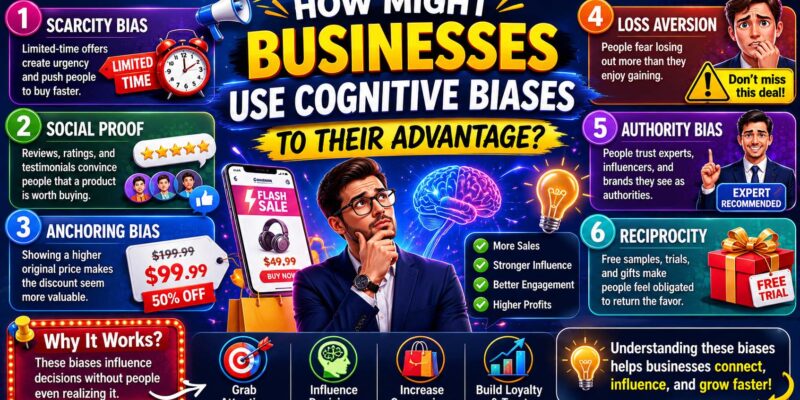
Understanding customer behavior is one of the most important parts of modern business. Companies constantly study how people make decisions, especially when purchasing products or services. Many marketers and business owners ask how might businesses use cognitive biases to their advantage because cognitive biases strongly influence consumer choices.
Cognitive biases are mental shortcuts people use when making decisions. Businesses often use these biases in marketing, pricing, advertising, and product design to encourage customers to buy products or remain loyal to a brand.
What Are Cognitive Biases?
Cognitive biases are patterns of thinking that influence how people interpret information and make decisions. Instead of analyzing every choice logically, the human brain often relies on emotions, habits, and mental shortcuts.
These biases affect everyday activities such as shopping, investing, and choosing between brands. Businesses study consumer psychology to understand how these biases shape purchasing behavior.
The Scarcity Bias in Marketing
One of the most common cognitive biases used in business is scarcity bias. People tend to value products more when they believe those products are limited or difficult to obtain.
Businesses often create urgency by using phrases such as “limited-time offer,” “only a few items left,” or “sale ends tonight.” These messages encourage consumers to act quickly because they fear missing out.
Online stores frequently display stock warnings to increase urgency. Travel websites may show notifications like “3 rooms remaining” to motivate immediate bookings.
Social Proof and Consumer Trust
Social proof is another powerful cognitive bias businesses use to their advantage. People are more likely to trust products or services when they see others using and recommending them.
Customer reviews, testimonials, ratings, and influencer endorsements all rely on social proof. Businesses highlight positive feedback to build trust and reduce customer uncertainty.
For example, restaurants display customer reviews online, while e-commerce platforms showcase product ratings and buyer comments. Social media influencers also help companies promote products by sharing personal experiences.
Anchoring Bias and Pricing Strategies
Anchoring bias occurs when people rely heavily on the first piece of information they see. Businesses commonly use this bias in pricing strategies.
For example, a company may display an expensive product first to make lower-priced options appear more affordable. Retail stores also use “original price” comparisons to create the impression of significant discounts.
A television listed at $1,000 and then discounted to $700 may seem like a great deal because the original higher price becomes the mental reference point.
The Power of Brand Familiarity
Familiarity bias causes people to prefer brands they recognize. Consumers often trust familiar companies more than unknown competitors, even when products are similar.
Businesses build familiarity through repeated advertising, logos, slogans, and social media presence. Constant exposure helps customers remember the brand and feel more comfortable purchasing from it.
Large companies spend millions on advertising campaigns because brand recognition strongly influences buying decisions. Even simple repetition can increase customer trust and loyalty over time.
Loss Aversion in Business
Businesses use this cognitive bias to encourage action and increase customer engagement.
Subscription services often offer free trials because customers may feel reluctant to lose access after experiencing the service. Retailers also emphasize what customers might miss by not purchasing a product.
For example, insurance companies focus on the risks of being uninsured rather than simply describing benefits. Fitness memberships may promote messages about avoiding health problems instead of only highlighting exercise benefits.
Loss aversion can strongly influence decision-making because people naturally want to avoid negative outcomes.
Personalization and Confirmation Bias
Confirmation bias occurs when people prefer information that supports their existing beliefs and preferences. Businesses use data and personalization to target customers with content that matches their interests.
Social media platforms and online stores recommend products based on browsing history and past purchases. Personalized advertisements make customers feel understood and increase the likelihood of purchases.
For example, streaming services suggest movies based on viewing habits, while online retailers recommend products similar to previous orders.
Emotional Marketing and Consumer Decisions
Emotions play a major role in consumer behavior. Businesses often use emotional marketing to create strong connections with customers.
Advertisements may focus on happiness, family, success, or nostalgia to influence emotions and encourage purchases. Emotional storytelling helps brands become memorable and relatable.
For example, holiday commercials often focus on family moments and emotional experiences rather than product features alone. Emotional marketing creates stronger customer relationships and increases brand loyalty.
Ethical Concerns About Cognitive Biases
Although cognitive biases can help businesses improve marketing effectiveness, ethical concerns also exist. Some companies may use manipulative tactics that pressure consumers into unnecessary purchases.
Ethical businesses focus on transparency, honesty, and customer value while using psychological strategies responsibly. Building long-term trust is more important than short-term sales.
Consumers today are becoming more aware of marketing techniques and expect companies to act responsibly. Businesses that misuse cognitive biases may damage their reputation and lose customer trust.
Why Cognitive Biases Matter in Modern Business
Understanding how might businesses use cognitive biases to their advantage is important because psychology strongly influences modern marketing and consumer behavior. Businesses that understand decision-making patterns can create better advertisements, improve customer experiences, and strengthen brand loyalty.
Technology and data analytics now allow companies to personalize marketing strategies more effectively than ever before. Online businesses especially rely on consumer psychology to improve engagement and sales performance.
Conclusion
The question of how might businesses use cognitive biases to their advantage highlights the connection between psychology and marketing. Businesses use cognitive biases such as scarcity bias, social proof, anchoring bias, familiarity bias, and loss aversion to influence customer decisions and improve sales.
These strategies help companies create stronger marketing campaigns, improve customer experiences, and build brand loyalty. When used ethically, cognitive biases can benefit both businesses and consumers by making shopping experiences more engaging and personalized.