
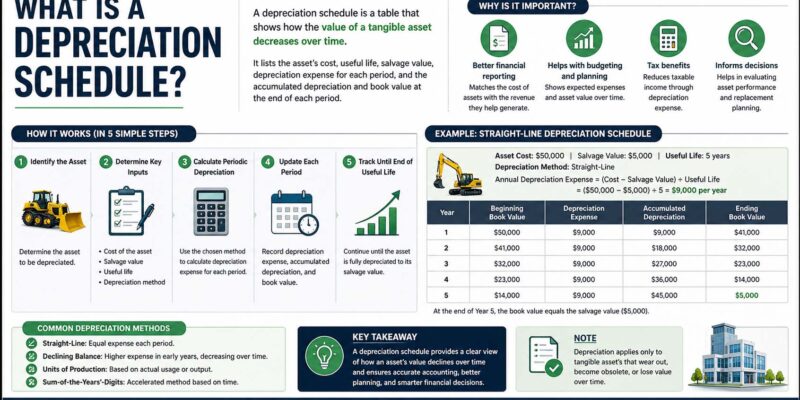
Understanding finances is essential for anyone who owns property, runs a company, or invests in assets. One important concept many people encounter is what is a depreciation schedule. A depreciation schedule is a document or table that shows how the value of an asset decreases over time for accounting and tax purposes. It helps individuals and businesses track the yearly depreciation expense of assets such as buildings, equipment, vehicles, and furniture.
Depreciation exists because most physical assets lose value as they age, wear out, or become outdated. Instead of claiming the full cost in one year, the expense is spread across the useful life of the asset. This creates a more accurate picture of profit and financial performance.
What Is a Depreciation Schedule?
Many beginners ask, what is a depreciation schedule? In simple terms, it is a structured report listing assets, purchase dates, original cost, estimated useful life, depreciation method, annual deductions, and remaining value. Accountants use it to manage records, while investors use it to understand tax benefits.
For example, if a company buys machinery for $20,000 and expects it to last 10 years, the depreciation schedule may allocate part of that cost each year. By doing this, the business can match the expense with the income generated by the machinery.
Depreciation schedules are especially helpful during tax season because they organize asset deductions clearly and accurately. Businesses operating in a Free Enterprise System often rely on accurate depreciation records to evaluate profitability and make long-term investment decisions.
Why Depreciation Matters
Depreciation is more than just an accounting rule. It can reduce taxable income, improve budgeting, and help owners plan for future replacements. Without depreciation tracking, financial statements may overstate profits because the real cost of using assets would not be recognized.
When businesses ignore depreciation, they may face inaccurate reports and tax issues. A well-prepared depreciation schedule solves this by showing the decline in value year after year.
It also helps with decision-making. If a vehicle or machine is almost fully depreciated, it may be time to replace or upgrade it.
What Is a Depreciation Schedule for Rental Property
Property investors often ask, what is a depreciation schedule for rental property because it can create valuable tax deductions. In rental real estate, certain parts of the property wear out over time, including appliances, carpets, air conditioning systems, and even the building structure in some tax systems.
A professional depreciation schedule for rental property breaks the asset into components and estimates how much can be claimed each year. This may significantly reduce taxable rental income.
For example, if a landlord purchases a rental apartment, the oven, blinds, flooring, and fixtures may all depreciate at different rates. The building itself may also depreciate depending on local laws.
This is why many real estate investors hire quantity surveyors or accountants to prepare detailed schedules.
What Is a Depreciation Schedule for Business
Entrepreneurs often wonder, what is a depreciation schedule for business operations. Businesses buy assets regularly, including computers, office furniture, tools, trucks, and machinery. These assets are not usually expensed in one year. Instead, their cost is spread across multiple years using a depreciation schedule.
For a business owner, this schedule becomes an essential financial tool. It tracks each asset separately and records yearly depreciation. It also helps calculate net profit more accurately.
Imagine a bakery purchasing commercial ovens, refrigerators, and delivery vans. Without depreciation, the first year may appear less profitable due to high upfront costs. With a schedule, those costs are allocated fairly over time.
Business owners also use depreciation records when selling assets, applying for loans, or preparing audits. They should also understand What Is a Business License since proper legal registration and accurate financial records work together to support business compliance.
What Is a Tax Depreciation Schedule
Another common question is what is a tax depreciation schedule. This term usually refers to a schedule prepared specifically for tax reporting rather than internal accounting. Tax authorities often set rules about depreciation rates, eligible assets, and useful life periods.
A tax depreciation schedule ensures claims are made according to local tax laws. It can differ from book depreciation used in accounting statements. Some countries allow accelerated depreciation, which lets owners claim larger deductions earlier.
This type of schedule is especially useful for rental property owners and companies with many assets. It reduces errors and helps maximize legal deductions while staying compliant.
Common Depreciation Methods
There are several methods used in a depreciation schedule. Straight-line depreciation is the most common and spreads the cost evenly over the asset’s useful life. Declining balance depreciation allows higher deductions in earlier years. Units of production links depreciation to actual usage.
The best method depends on the type of asset and accounting rules in your country. Vehicles and technology may depreciate faster than office furniture or buildings. Manufacturers investing in expensive equipment can also benefit from understanding How Would a Manufacturer Benefit by Using Fewer Scarce Resources, since efficient resource management often improves both operational costs and asset utilization.
Who Needs a Depreciation Schedule?
Many people assume only large corporations need depreciation schedules, but that is not true. Small business owners, landlords, freelancers, contractors, and investors can all benefit.
If you own income-producing assets, keeping a schedule can save time and money. It improves recordkeeping and makes tax filing easier. Even a single rental home or one delivery vehicle may justify using depreciation tracking.
How to Create a Depreciation Schedule
A basic depreciation schedule starts with listing each asset and noting purchase price, acquisition date, expected life, and salvage value. Next, choose a depreciation method and calculate annual deductions.
Many businesses use accounting software to automate this process. Rental property owners often hire professionals because buildings and fixtures may require detailed component breakdowns.
Benefits of Professional Help
While simple schedules can be created manually, professional accountants and tax advisors often provide better accuracy. They understand changing regulations and know how to classify assets correctly.
For rental properties, a specialist can often identify depreciable items owners may overlook. For businesses, an accountant can coordinate depreciation with overall tax strategy. This is especially valuable for businesses in growing sectors such as What Companies Are in the Energy Field, where large investments in equipment and infrastructure require careful financial planning.
Conclusion
Knowing what is a depreciation schedule is valuable for investors, landlords, and business owners. It is a practical tool that tracks how assets lose value over time and helps with accounting, taxes, and smarter financial planning. Whether you need to understand what is a depreciation schedule for rental property, what is a depreciation schedule for business, or what is a tax depreciation schedule, maintaining accurate records can support better financial decisions.