
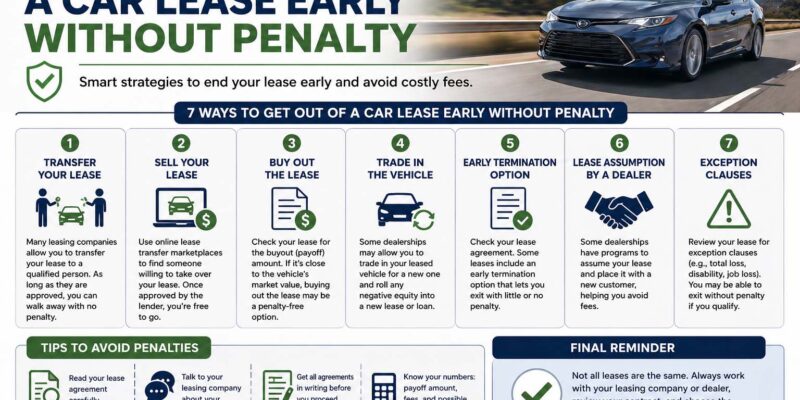
Many drivers sign lease agreements expecting their situation to stay the same for several years. However, life can change quickly. A job relocation, financial stress, family needs, or the desire for a different vehicle may leave you wondering how to get out of a car lease early without penalty. While ending a lease early can sometimes involve fees, there are legal and practical strategies that may reduce or even avoid penalties.
Understanding your lease contract and available options is the first step. Leasing companies often have programs or clauses that make early exit easier than most people think. This guide explains realistic ways to leave a lease early while protecting your finances.
Understand Your Lease Agreement
Before making any decisions, review your lease contract carefully. The agreement usually outlines early termination rules, mileage limits, wear-and-tear policies, and buyout options. Many people assume there is no escape, but contracts often include paths for ending the lease.
Check for terms such as early payoff amount, purchase option, lease transfer eligibility, and return procedures. If you are serious about learning how to get out of a car lease early without penalty, your contract is the best place to begin.
If you decide to purchase the vehicle before selling it, understanding What Is a Depreciation Schedule can also help you better understand how a vehicle’s value changes over time and whether a buyout makes financial sense.
You should also contact the leasing company directly. Customer service representatives can explain programs that may not be obvious in the paperwork.
Transfer the Lease to Another Driver
One of the most effective ways to end a lease early is through a lease transfer. This means another qualified person takes over your remaining payments and responsibilities. Some lenders allow transfers with approval, making this a popular option.
Lease assumption services and online marketplaces connect drivers who want short-term leases with people who want to exit existing agreements. If approved, you may avoid early termination fees and simply pass the contract to someone else.
This is often the smartest answer to how to get out of a car lease early without penalty, although you may remain partially liable after the transfer since some lenders keep the original signer responsible if the new driver defaults.
Buy Out the Lease and Sell the Vehicle
Another common option is purchasing the leased car and then selling it. Your lease contract includes a buyout amount, which is what it costs to own the vehicle before the lease ends.
If the market value of the car is equal to or higher than the buyout price, you may be able to buy the vehicle and sell it with little or no loss. In strong used-car markets, some drivers even come out ahead.
This strategy can work well when exploring how to get out of a car lease early without penalty, especially if your car is in good condition, has low mileage, and is in demand.
Always compare your buyout quote with current resale values from dealerships and private-party listings before proceeding.
Trade the Vehicle Into a Dealer
Many dealerships accept leased vehicles as trade-ins. If you want a different car, the dealer may handle the lease payoff and help roll any remaining balance into a new agreement.
Sometimes manufacturers also offer loyalty programs for existing customers. These promotions may waive remaining payments or certain fees if you lease or buy another vehicle from the same brand.
If you are asking how to get out of a car lease early without penalty, dealer promotions can be worth checking. Timing matters, especially near the end of the month or during special sales events when dealers are motivated to close deals.
For business owners replacing company vehicles, keeping financial records organized and ensuring What Is a Business License requirements remain up to date can also simplify fleet or commercial vehicle management.
Negotiate With the Leasing Company
Some drivers do not realize that lease companies may be open to negotiation. If you have made payments on time and experienced a legitimate hardship such as relocation, military deployment, or financial difficulty, the company may offer alternatives.
These could include payment deferment, early return programs, reduced termination costs, or hardship assistance. While not guaranteed, asking respectfully can sometimes save significant money.
If your goal is how to get out of a car lease early without penalty, a direct conversation with the lender can uncover options unavailable online.
Use Manufacturer Pull-Ahead Programs
Auto manufacturers occasionally run pull-ahead programs. These promotions allow current lessees to return a car several months early and move into another vehicle with waived remaining payments.
These programs are common when brands want to keep loyal customers. For example, if you are three to six months from lease end, the manufacturer may forgive remaining payments if you lease another car from them.
This is one of the best ways to achieve how to get out of a car lease early without penalty because it can eliminate fees legally and officially.
Return Near Lease End
If your lease is already close to ending, waiting a little longer may be the cheapest path. Many people seek early exit when only a few months remain. In that case, paying the last payments and returning normally may cost less than early termination.
Review your mileage and vehicle condition so you can avoid excess charges at turn-in. Repairing minor cosmetic damage beforehand may also reduce fees.
Avoid Common Mistakes
Never stop making payments without approval. Missed payments damage credit and can lead to repossession or collections. That creates far greater costs than most lease termination fees.
Best Option Depends on Your Situation
The right strategy depends on why you want out. If you need to reduce expenses, a lease transfer may be ideal. If you want another vehicle, dealer trade-ins or pull-ahead programs can help. If the car has strong resale value, a buyout and resale could make sense.
Business trends in industries such as what companies are in the capital goods field often influence vehicle demand and resale values, making it worthwhile to monitor broader market conditions before selling a leased vehicle.
Conclusion
If you are wondering how to get out of a car lease early without penalty, the good news is that several smart options exist. Lease transfers, buyouts, trade-ins, pull-ahead programs, and lender negotiations can all help minimize or eliminate extra charges. The best move is to review your contract, gather payoff numbers, and compare your choices carefully.