Inside sales has become one of the most important parts of modern business growth. Companies across industries rely on inside sales teams to connect with customers, generate leads, and close deals without needing face-to-face meetings. As technology continues to improve communication, more businesses are investing in inside sales strategies to increase revenue and improve customer relationships.
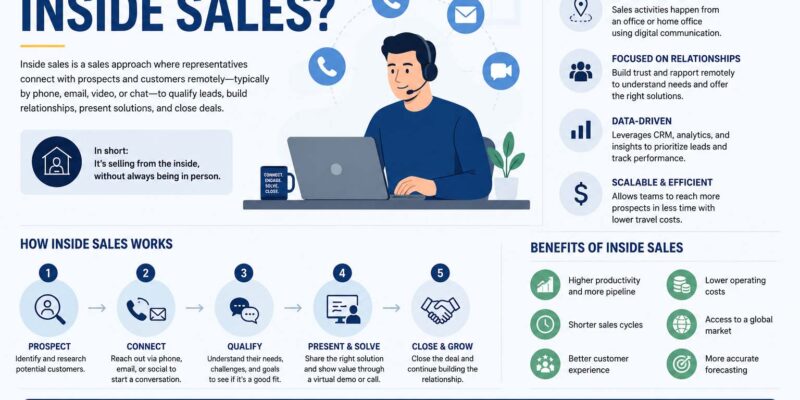
If you have ever wondered what is inside sales, the answer is simple. Inside sales refers to selling products or services remotely through phone calls, emails, video meetings, and online communication tools. Unlike traditional field sales, inside sales professionals usually work from an office or remote location instead of traveling to meet clients in person.
The rise of digital communication has transformed the way businesses operate. Companies can now reach clients worldwide without leaving the office, making one of the fastest-growing career paths in the sales industry. Businesses value inside sales because it reduces travel costs, improves efficiency, and allows sales teams to manage more customer interactions each day.
What Is an Inside Sales Rep
To understand the industry better, it is important to know what is an rep. An inside sales representative is a professional responsible for communicating with potential customers and guiding them through the sales process remotely. Their main goal is to build relationships, explain products or services, answer customer questions, and ultimately close sales.
Inside sales reps spend much of their time using communication tools such as customer relationship management software, email platforms, phone systems, and video conferencing applications. These tools help them organize leads, track customer interactions, and improve productivity throughout the sales cycle.
An inside sales rep must have excellent communication skills because most interactions happen without face-to-face contact. Confidence, active listening, and problem-solving abilities are essential for success in this role. Sales representatives also need strong time management skills because they often handle multiple clients and follow-ups during the day.
The responsibilities of an rep can vary depending on the company and industry. Some focus on finding new leads, while others work with existing customers to maintain long-term relationships. In technology companies, inside sales reps may explain software solutions, while in retail or manufacturing industries, they may promote products and services directly to businesses or consumers.
Many businesses prefer sales teams because they can work efficiently from almost anywhere. Remote work opportunities have also increased the popularity of careers around the world.
What Is an Inside Sales Representative
Another common question is what is an representative and how this role differs from other sales positions. An representative is essentially a sales professional who sells remotely instead of traveling to customer locations. Their work focuses heavily on digital communication and relationship building.
. They contact potential clients through cold calls, emails, or online meetings and guide them toward making purchasing decisions. Their ability to build trust through communication is one of the key factors that influence sales success.
The modern inside sales representative uses data and analytics to improve performance. Businesses track customer behavior, email engagement, and sales conversations to identify the best opportunities for conversion. This data-driven approach allows teams to make informed decisions and improve efficiency.
Training is also an important part of becoming a successful representative. Many companies provide education on communication techniques, negotiation strategies, and product knowledge. Understanding customer needs is critical because clients expect personalized solutions and professional guidance throughout the buying process.0
What Is Inside Sales vs Outside Sales
Many people compare remote selling with traditional sales methods and ask While both roles focus on generating revenue, the methods used are very different.
Inside sales professionals work remotely using digital communication tools. They connect with customers through phone calls, emails, video conferences, and online presentations. Outside sales professionals, on the other hand, travel to meet customers in person. They may attend business meetings, conferences, trade shows, or client visits to build relationships directly.
One major advantage of is efficiency. Because representatives do not spend time traveling, they can communicate with more customers during the day. This increases productivity and often reduces business expenses significantly.
Outside sales can still be valuable for industries that depend on face-to-face interactions or large business contracts. Some clients prefer personal meetings when discussing complex products or long-term partnerships. However, many companies now combine and outside sales strategies to create a balanced approach.
What Is the Difference Between Inside and Outside Sales
Understanding what is the difference between and outside can help businesses choose the right strategy for their goals. The primary difference is the work environment and communication method used to connect with customers.
sales teams typically work from offices or remote locations. Their communication happens digitally, allowing faster interactions and more flexible schedules. Outside sales professionals spend much of their time traveling to meet clients personally.
Another difference involves cost. Inside sales is usually more affordable because businesses save money on travel expenses, accommodations, and transportation. Companies can also scale inside sales operations more easily by hiring remote representatives from different regions.
Sales cycles may also vary. Inside often works well for shorter or medium-length processes because communication is immediate and efficient. Outside sales may be more effective for high-value deals that require in-person presentations and relationship building over longer periods.
Conclusion
Understanding what is is essential for businesses and professionals interested in modern sales strategies. Inside sales allows companies to communicate with customers remotely using phones, emails, and digital platforms, making the process more efficient and cost-effective.