
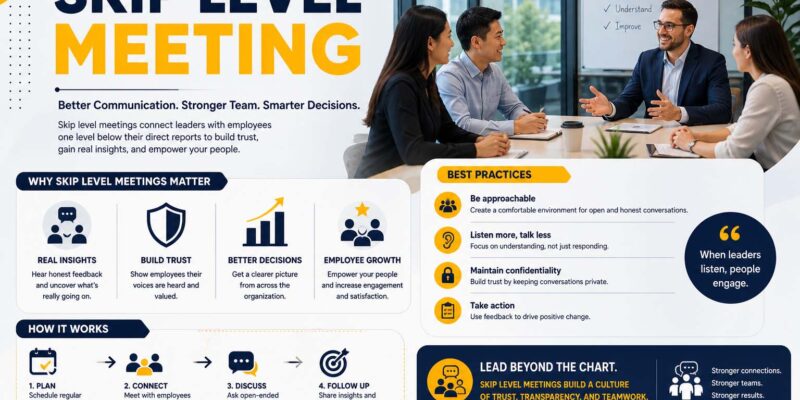
A skip level meeting is an increasingly popular management practice used by organizations to improve communication, transparency, and trust across different levels of the company hierarchy. In today’s fast-paced work environment, leaders are constantly searching for ways to stay connected with employees beyond their immediate teams. This is where the concept of a skip level meeting becomes highly valuable.
Unlike traditional meetings that follow a strict chain of command, a skip level meeting allows senior leaders to interact directly with employees who report to their direct reports. This approach creates an open channel of communication, enabling leaders to gather honest feedback, identify challenges, and better understand workplace dynamics. When used effectively, a skip level meeting can significantly enhance organizational culture and employee engagement.
Organizations that encourage open communication often operate more effectively within a Free Enterprise System, where innovation, leadership, and employee feedback help businesses remain competitive.
What Is a Skip Level Meeting
To fully understand the benefits of a skip level meeting, it is important to answer the question: what is a skip level meeting? Simply put, it is a meeting between a senior manager and employees who are not their direct reports. These employees typically report to someone in between, hence the term “skip level.”
The purpose of this type of meeting is not to bypass the immediate manager but to gain a broader perspective on how the organization is functioning. Senior leaders can use these meetings to understand team morale, identify inefficiencies, and uncover issues that may not surface through normal reporting channels.
For employees, a skip level meeting offers a unique opportunity to share their thoughts directly with higher-level leadership. It allows them to voice concerns, suggest improvements, and feel heard within the organization. This can lead to increased motivation and a stronger sense of belonging.
Business owners building management structures should also understand What Is a Business License, as proper business registration is one of the foundations of operating a professional organization.
Skip Level Meeting Questions
One of the most important aspects of a successful skip level meeting is asking the right questions. Effective skip level meeting questions help create meaningful conversations and provide valuable insights for leadership.
During these meetings, leaders often ask open-ended questions to encourage honest feedback. For example, they may inquire about the employee’s experience within the team, challenges they are facing, or suggestions for improvement. Questions about company culture, communication, and leadership effectiveness are also common.
It is essential for leaders to approach these conversations with a genuine interest in listening rather than judging. Employees should feel safe to express their opinions without fear of negative consequences. This requires building trust and maintaining confidentiality when necessary.
Well-structured skip level meeting questions can reveal hidden issues within teams, highlight opportunities for growth, and strengthen relationships between employees and leadership. When employees see that their feedback leads to real change, they are more likely to engage actively in future discussions.
Skip Level Meeting Meaning
Understanding the skip level meeting meaning goes beyond just its definition. It represents a shift in how organizations approach communication and leadership. Traditionally, information flows through a hierarchical structure, which can sometimes create gaps or distort messages. A skip level meeting helps bridge these gaps.
The meaning of a skip level meeting lies in its ability to foster transparency and trust. By connecting directly with employees, senior leaders gain unfiltered insights into the organization. This allows them to make more informed decisions and address issues proactively.
For employees, the skip level meeting meaning is tied to empowerment. It gives them a voice and a chance to contribute to the company’s success. When employees feel valued and heard, they are more likely to be engaged and productive.
What Is Skip Level Meeting
Many people still ask, what is skip level meeting, especially when they encounter the term for the first time. While it may sound like a simple concept, its impact can be profound when implemented correctly.
A skip level meeting is not meant to replace regular team meetings or one-on-one sessions with direct managers. Instead, it complements existing communication channels by adding another layer of interaction. This helps ensure that important information does not get lost and that employees have multiple avenues to share their perspectives.
It is also important to note that skip level meetings should be conducted with respect for the organizational structure. Leaders must avoid undermining direct managers and instead use these meetings as a way to support and strengthen the overall team.
Benefits of Skip Level Meetings
The advantages of implementing a skip level strategy are numerous. One of the most significant benefits is improved communication. By interacting directly with employees, leaders can gain a clearer understanding of the challenges and opportunities within the organization.
Another key benefit is increased employee engagement. When employees feel that their opinions matter, they are more likely to be motivated and committed to their work. This can lead to higher productivity and better overall performance.
Skip level meetings also help identify potential issues early. By addressing concerns before they escalate, organizations can avoid larger problems in the future. This proactive approach contributes to a healthier workplace environment.
To maximize the effectiveness of a skip level meeting, it is important to follow certain best practices. Preparation is key, as leaders should have a clear purpose for the meeting and a set of questions to guide the conversation.
Creating a comfortable and open environment is equally important. Employees should feel at ease sharing their thoughts without fear of judgment. This can be achieved by actively listening, showing empathy, and maintaining a respectful tone.
Consistency is another important factor. Regular skip level meetings help build trust and ensure ongoing communication between leadership and employees. However, they should not be overly frequent, as this can disrupt normal workflows.
As organizations grow, keeping accurate financial records becomes just as important as maintaining strong communication. Resources such as What Is a Depreciation Schedule can help business owners better understand long-term financial planning, while learning about What Is a Disregarded Entity is valuable when choosing an appropriate business structure.
Conclusion
A skip level meeting is a powerful tool for improving communication, building trust, and enhancing organizational performance. By understanding what is a skip level meeting, using effective skip level meeting questions, and embracing the true skip level meeting meaning, organizations can create a more open and collaborative work environment.