As businesses become increasingly dependent on digital systems, protecting sensitive information has become a top priority. While many organizations focus on external cyberattacks, some of the most damaging security incidents originate from within the company itself.
This is where an insider threat program becomes essential. Organizations across industries implement these programs to detect, prevent, and respond to risks that come from employees, contractors, vendors, or other trusted individuals with access to company resources.
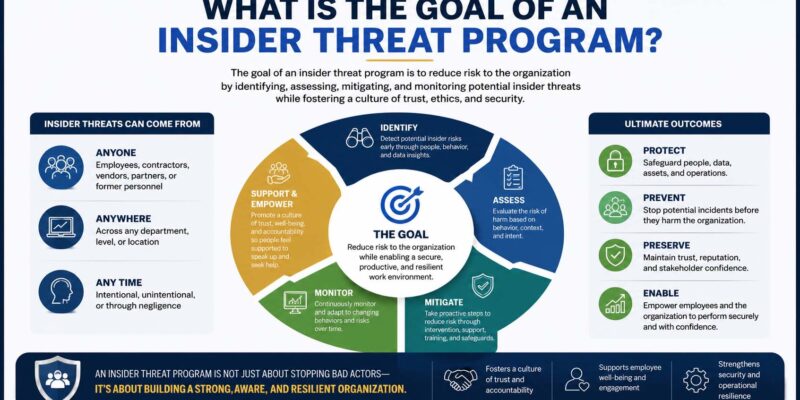
So, what is the goal of an insider threat program? The primary goal is to identify and mitigate internal risks before they result in financial losses, data breaches, reputational damage, or operational disruption.
What Is an Insider Threat Program?
An insider threat program is a structured framework designed to identify, assess, monitor, and reduce risks posed by individuals who have authorized access to an organization’s systems, data, facilities, or networks.
These programs focus on both intentional and unintentional threats.
Examples include:
- Employees stealing sensitive information
- Accidental data exposure
- Misuse of company resources
- Unauthorized access to confidential systems
- Negligent cybersecurity behavior
The goal is not to create distrust among employees but to build a safer and more secure workplace environment.
What Is the Goal of an Insider Threat Program?
The main goal of an insider threat program is to protect organizational assets from internal risks while maintaining trust, compliance, and operational efficiency.
Organizations typically focus on several key objectives.
Protect Sensitive Data
Businesses store valuable information such as:
- Customer records
- Financial data
- Trade secrets
- Intellectual property
An insider threat program helps prevent unauthorized access or disclosure of this information.
Reduce Security Risks
By identifying unusual behaviors and warning signs early, organizations can reduce the likelihood of serious security incidents.
Ensure Regulatory Compliance
Many industries require companies to implement security controls and monitoring practices.
An effective insider threat program supports compliance with industry regulations and standards.
Strengthen Organizational Resilience
Proactive threat detection allows businesses to respond faster and recover more effectively from potential incidents.
Understanding Insider Threats
Insider threats generally fall into several categories.
Malicious Insiders
These individuals intentionally misuse their access for personal gain, revenge, or other harmful purposes.
Examples include:
- Data theft
- Fraud
- Sabotage
Negligent Insiders
Negligent employees may unintentionally expose sensitive information.
Common examples include:
- Weak passwords
- Falling for phishing attacks
- Improper data handling
Compromised Insiders
Cybercriminals sometimes gain access to employee accounts through hacking or credential theft.
In these situations, legitimate accounts are used for unauthorized activities.
Why Insider Threat Programs Matter
Many organizations invest heavily in firewalls, antivirus software, and cybersecurity defenses.
However, employees often have direct access to critical systems.
Without proper oversight, internal risks may go unnoticed.
Benefits of insider threat programs include:
- Improved data protection
- Reduced financial losses
- Better risk visibility
- Stronger compliance efforts
- Enhanced security culture
These advantages make insider threat programs valuable for businesses of all sizes.
Real-World Business Example
Consider a company where an employee downloads thousands of confidential customer records before leaving for a competitor.
Without monitoring tools or insider threat controls, management may not discover the incident until significant damage has occurred.
An effective insider threat program could identify unusual download activity, trigger alerts, and enable security teams to investigate before sensitive information leaves the organization.
This proactive approach helps prevent major business losses.
Key Components of an Insider Threat Program
Successful programs typically include several important elements.
Risk Assessment
Organizations begin by identifying their most valuable assets and determining where vulnerabilities exist.
Employee Awareness
Security training helps employees understand:
- Data protection responsibilities
- Security policies
- Potential risks
Monitoring and Detection
Monitoring systems can identify unusual activities that may indicate elevated risk.
Incident Response
Organizations need clear procedures for investigating and responding to potential threats.
Continuous Improvement
Regular reviews help ensure the program remains effective as threats evolve.
How to Build an Insider Threat Program
Businesses interested in implementing an insider threat program can follow a structured approach.
Step 1: Identify Critical Assets
Determine which systems, data, and resources require the highest level of protection.
Step 2: Define Policies
Establish clear guidelines regarding acceptable use, access controls, and security responsibilities.
Step 3: Implement Monitoring Tools
Use technology solutions that help detect unusual behavior patterns.
Step 4: Train Employees
Provide regular education about cybersecurity risks and company policies.
Step 5: Create Response Procedures
Develop a formal process for investigating and addressing potential incidents.
Step 6: Evaluate and Improve
Review performance regularly and adjust the program as business needs change.
Insider Threat Program Business Strategy
An insider threat program should align with broader business goals rather than function as a standalone security initiative.
Organizations can integrate insider threat management into their overall strategy by focusing on:
Risk Management
Reducing operational and financial risks.
Corporate Governance
Supporting responsible management and accountability.
Customer Trust
Protecting sensitive information helps maintain customer confidence.
Business Continuity
Preventing disruptions supports long-term organizational success.
When aligned with business objectives, insider threat programs become strategic assets rather than simple compliance requirements.
Common Challenges
Organizations may encounter obstacles when implementing insider threat programs.
Privacy Concerns
Employees may worry about monitoring practices.
Transparency and clear communication are essential.
Resource Limitations
Smaller organizations may have limited budgets for security programs.
False Positives
Monitoring systems can sometimes generate alerts for normal activities.
Proper analysis helps reduce unnecessary investigations.
Evolving Threats
Insider risks continue to change as technology and work environments evolve.
Regular updates are necessary to maintain effectiveness.
Future of Insider Threat Programs
As remote work, cloud computing, and digital transformation continue expanding, insider threat management is becoming increasingly important.
Future programs will likely incorporate:
- Artificial intelligence
- Behavioral analytics
- Advanced monitoring technologies
- Automated risk detection
These innovations can improve threat identification while reducing administrative workloads.
Organizations that invest in proactive security measures will be better positioned to manage future challenges.
FAQ
What is the goal of an insider threat program?
The primary goal is to identify, prevent, detect, and mitigate risks posed by individuals with authorized access to organizational systems and information.
Who can be considered an insider threat?
Employees, contractors, vendors, business partners, and anyone with authorized access to company resources can potentially become insider threats.
Are insider threats always intentional?
No. Insider threats may be malicious, negligent, or the result of compromised accounts.
Why are insider threat programs important?
They help protect sensitive data, reduce security incidents, support compliance, and strengthen organizational resilience.
Can small businesses benefit from insider threat programs?
Yes. Organizations of all sizes can benefit from policies, employee training, monitoring, and risk management practices.
Conclusion
Understanding what is the goal of an insider threat program is essential for modern organizations seeking to protect their data, employees, customers, and reputation. While external cyber threats often receive significant attention, internal risks can be equally damaging if left unmanaged.