
In today’s digital business environment, electronic documents and online agreements have become increasingly common. However, many organizations still require traditional handwritten signatures for certain transactions and legal documents. This leads many professionals and business owners to ask, what is a wet signature?
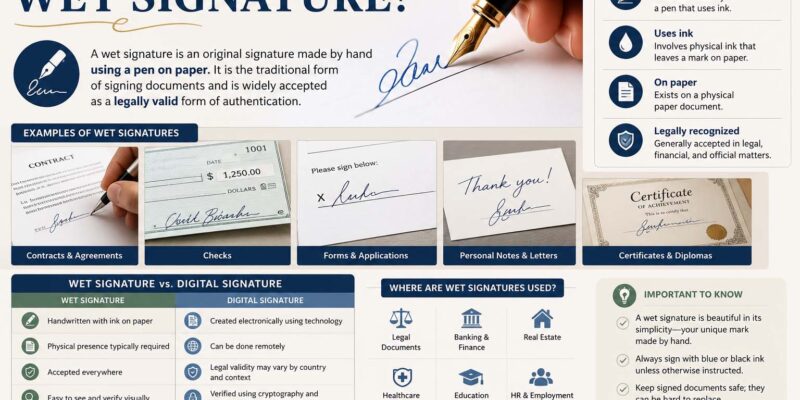
A wet signature is a handwritten signature made using ink on a physical document. The term “wet” comes from the fact that the ink is physically applied to paper and must dry after signing. Even with the rise of electronic signatures, wet signatures remain important in many industries and legal situations.
What Is a Wet Signature?
A wet signature is a person’s handwritten mark placed on a paper document using a pen or other ink-writing instrument.
Traditionally, wet signatures have been used to verify identity, indicate agreement, and legally authorize documents.
Examples of documents commonly signed with a wet signature include:
- Employment contracts
- Real estate agreements
- Loan documents
- Government forms
- Legal affidavits
- Corporate resolutions
The signature serves as evidence that the signer reviewed and approved the document.
Although digital alternatives are becoming more popular, wet signatures continue to hold significance in many business processes. Businesses often document signing procedures in what is SOP guides to ensure employees follow consistent approval workflows.
What Is a Wet Ink Signature?
Many people also search for what is a wet ink signature.
A wet ink signature is essentially another name for a wet signature. Both terms describe a handwritten signature created using physical ink on paper.
Questions about pricing, implementation, and results are addressed professionally.
For example, a lender may request a wet ink signature on a mortgage agreement to satisfy specific regulatory or legal requirements.
In practice, the terms wet signature and wet ink signature are generally interchangeable.
Why Wet Signatures Still Matter in Business
Despite advances in digital technology, wet signatures continue to play an important role in business operations.
Many organizations believe handwritten signatures provide an additional layer of authenticity. In some industries, regulations still require physical signatures for certain transactions.
Businesses often use wet signatures because they:
- Create a traditional paper trail
- Support legal compliance requirements
- Reduce concerns about identity verification
- Provide evidence during disputes
- Meet industry-specific regulations
These skills can be developed through practice, training, and experience.
What Is a Wet Signature on a Document?
A common question is, what is a wet signature on a document?
A wet signature on a document refers to the handwritten signature placed directly on a physical copy of an agreement, form, contract, or record.
For example, when two companies enter into a partnership agreement, both parties may print the document and sign it by hand.
The signed document then becomes an official record that demonstrates mutual consent.
Many organizations maintain these signed records for legal, financial, and compliance purposes.
Higher investments often require more consideration.
What Is a Wet Signature on PDF?
Another frequently searched topic is what is a wet signature on PDF.
A wet signature on a PDF usually involves printing the PDF document, signing it by hand with ink, and then scanning it back into digital format.
The process generally follows these steps:
- Download the PDF file.
- Print the document.
- Sign it using a pen.
- Scan the signed document.
- Save it as a new PDF.
- Send the signed copy to the recipient.
Although the final file is digital, the signature itself was originally created by hand on paper.
Many companies now hire remote closers to help convert qualified leads into paying customers.
Wet Signatures vs Electronic Signatures
Understanding the difference between wet signatures and electronic signatures is important for modern businesses.
| Feature | Wet Signature | Electronic Signature |
|---|---|---|
| Created on paper | Yes | No |
| Requires physical ink | Yes | No |
| Remote signing | Limited | Easy |
| Processing speed | Slower | Faster |
| Storage requirements | Physical storage | Digital storage |
| Automation support | Low | High |
Electronic signatures offer convenience and efficiency, while wet signatures are often preferred for highly sensitive or regulated transactions.
Businesses should understand which method is appropriate for specific situations.
When Is a Wet Signature Required?
Not every document requires a handwritten signature.
However, wet signatures may still be necessary for:
Real Estate Transactions
Property transfers and mortgage agreements sometimes require original signatures.
Government Documents
Certain government agencies continue to request wet signatures for official records.
Legal Documents
Affidavits, wills, and notarized forms may require physical signatures depending on local regulations.
Financial Agreements
Some lenders and financial institutions still prefer wet signatures for specific contracts.
Requirements vary by country, industry, and organization.
Step-by-Step Guide to Obtaining a Wet Signature
Businesses can streamline the signing process by following a clear workflow.
Step 1: Prepare the Document
Ensure all information is complete and accurate before requesting signatures.
Step 2: Print the Document
Create a physical copy for signing.
Step 3: Verify Signer Identity
Confirm the identity of the individual before the document is signed.
Step 4: Obtain the Signature
Have the individual sign using a pen with permanent ink.
Step 5: Store the Document
Keep the signed original in a secure location for future reference.
Step 6: Create Digital Backups
Scan and save electronic copies for recordkeeping purposes.
Following these steps helps maintain document integrity and reduces administrative errors. Documents related to purchasing or procurement, such as what is a purchase order, often require clear approval processes before signatures are collected.
Business Strategy: Choosing Between Wet and Digital Signatures
Modern organizations often balance traditional processes with digital transformation.
When deciding whether to use wet signatures, businesses should consider:
- Legal requirements
- Customer preferences
- Transaction complexity
- Security concerns
- Processing speed
- Compliance obligations
For routine agreements, electronic signatures may improve efficiency.
For high-value contracts or regulated transactions, wet signatures may provide additional reassurance and legal certainty.
A well-designed document management strategy often incorporates both methods. Organizations also document meetings about signing policies using guides such as how to write meeting minutes to maintain accurate records of important decisions.
Benefits of Wet Signatures
Wet signatures continue to offer several advantages.
They are widely recognized and accepted across industries. Many people feel more comfortable signing important documents by hand.
Additionally, wet signatures can help satisfy legal and regulatory requirements that may not yet fully recognize digital alternatives.
For businesses dealing with traditional industries, wet signatures remain an essential part of daily operations.
Challenges of Wet Signatures
While effective, wet signatures also present certain limitations.
They can slow down business processes, especially when parties are located in different regions.
Physical documents require storage space and may be vulnerable to loss or damage.
Administrative costs can also increase due to printing, mailing, scanning, and document management.
As a result, many organizations use wet signatures only when necessary. Businesses may also compare handwritten approvals with financial procedures such as how to sign over a check when evaluating secure methods for authorizing transactions and transferring value.
Frequently Asked Questions
What is a wet signature?
A wet signature is a handwritten signature made with ink on a physical paper document.
What is a wet ink signature?
A wet ink signature is another term for a handwritten signature created using ink on paper.
What is a wet signature on a document?
It is a physical handwritten signature placed directly on a paper agreement, form, or contract.
What is a wet signature on PDF?
It refers to printing a PDF, signing it by hand, and then scanning it back into digital format.
Are wet signatures legally binding?
In many jurisdictions, yes. Wet signatures are widely accepted as legally binding when properly executed.
Are electronic signatures replacing wet signatures?
Electronic signatures are becoming more common, but wet signatures are still required or preferred in certain legal, financial, and regulatory situations.
Conclusion
Understanding what is a wet signature is important for entrepreneurs, managers, and business professionals who regularly handle contracts and legal documents. A wet signature remains a trusted method of demonstrating agreement, authenticity, and legal intent.