
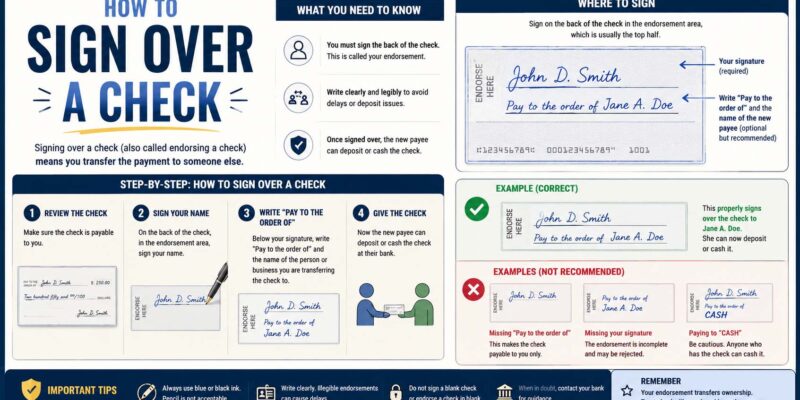
Many people search for how to sign over a check when they need to transfer a check payment to another person. People also call this process endorsing a check to someone else. Although digital payments continue to grow, people still use checks for business transactions, payroll payments, refunds, and personal banking.
Understanding how to sign over a check correctly can help you avoid payment delays and rejected deposits. However, banks may follow different policies for third-party checks. Therefore, contact the receiving bank before you transfer a check.
Businesses can also improve their financial records by tracking check payments carefully. For example, companies that understand what is a ledger can organize and monitor financial transactions more effectively.
What Does It Mean to Sign Over a Check?
When you sign over a check, you transfer your right to receive the check’s funds to another person. The original payee signs the back of the check and identifies the person who should receive the payment.
People often call this process a third-party check endorsement. Instead of depositing the check into your own account, you allow another person to deposit or cash it, subject to the bank’s rules.
However, some banks do not accept third-party checks. Others may require both parties to appear in person or provide identification.
How to Sign Over a Check to Someone Else
If the receiving bank accepts third-party checks, you can generally follow several steps. Because each bank may have different requirements, confirm its procedure before you sign the check.
Step 1: Confirm the Bank Accepts a Signed-Over Check
First, contact the bank where the recipient plans to deposit or cash the check.
Ask whether the bank accepts checks that one person has signed over to another person. Also, ask whether the original payee and recipient need to show identification.
Confirming these requirements first can help you avoid problems later.
Step 2: Verify the Recipient Before You Sign Over the Check
Before you transfer the check, confirm the recipient’s correct legal name.
A spelling mistake can create problems when the recipient deposits the check. Therefore, verify the name carefully and follow the bank’s instructions.
Step 3: Endorse the Check Correctly
Turn the check over and locate the endorsement area.
The original payee normally signs the back of the check. However, wait until you understand the bank’s requirements before signing because an incorrect endorsement can create complications.
Step 4: Add the Required Transfer Instructions
The bank may require specific wording that identifies the person who will receive the check.
For example, the bank may ask for a restrictive endorsement or another type of instruction. Since requirements vary, ask the receiving bank what wording you should use before completing the endorsement.
Step 5: Deliver the Signed-Over Check Securely
After you complete the endorsement, give the check directly to the intended recipient.
Do not leave a signed check unattended or use an unsecured delivery method. A person who finds or intercepts the check may attempt to misuse it.
How to Sign Over a Check Safely
Learning how to sign over a check safely involves more than signing the back of the document. You should also take reasonable precautions before transferring it.
First, confirm the recipient’s identity. Next, make sure the receiving bank accepts third-party checks. Finally, record the check number, amount, date, and recipient.
For business transactions, these records can help you reconcile payments later and maintain accurate accounting information.
You can also review check endorsement guidance from the Office of the Comptroller of the Currency (OCC).
Business Uses for Signing Over a Check
Businesses sometimes need to transfer checks to another party.
For example, a company may receive a check that it needs to pass to a supplier, contractor, or authorized recipient. Before doing so, the business should confirm that its bank permits the transaction.
Businesses should also maintain supporting records for every check transaction. When payroll payments form part of the process, understanding the benefits of outsourcing payroll can help companies evaluate their payroll administration options.
Why Banks May Reject a Signed-Over Check
Banks may reject a signed-over check for several reasons.
Common issues include:
- The bank does not accept third-party checks.
- The endorsement contains an error.
- The recipient’s name does not match the required information.
- The bank cannot verify the signature.
- The check has become too old.
- Someone has already deposited or processed the check.
- The bank requires both parties to appear in person.
- The check contains restrictions that prevent a transfer.
Because banks follow different policies, contact the receiving bank before you sign the check.
Signing Over a Check vs. Electronic Transfers
Signing over a check and transferring money electronically use different payment methods.
| Feature | Signed-Over Check | Electronic Transfer |
|---|---|---|
| Payment method | Paper check | Digital transaction |
| Bank approval | May require approval | Follows the transfer service’s rules |
| Processing time | Can take longer | Often faster |
| Physical document | Required | Usually not required |
| Third-party restrictions | May apply | Depends on the service |
| Risk of physical loss | Higher | Generally lower |
Electronic transfers often provide greater convenience. However, many businesses and individuals still use checks when the payer uses a paper-based payment system.
Legal Rules for Signing Over a Check
Check endorsement rules can vary according to the bank, check type, and transaction.
For this reason, do not assume that another bank will automatically accept your signed check. Some financial institutions follow strict procedures for third-party checks.
Also, avoid changing information on the front of the check. If you notice an error, contact the check issuer or bank for guidance.
For larger transactions, keep supporting records that show who received the payment and why you transferred the check.
How to Troubleshoot a Signed-Over Check
You may encounter problems after you sign over a check. The right solution depends on the specific issue.
Bank Refuses the Signed-Over Check
If the bank refuses the check, ask the bank to explain the reason.
The bank may not accept third-party checks, or it may require additional verification. Follow the bank’s instructions instead of immediately signing the check again.
Signature Does Not Match
A bank may question an endorsement when the signature differs from its records or appears incomplete.
If this happens, speak with the bank before making another endorsement. The bank may ask for identification or additional verification.
Recipient Cannot Deposit the Signed-Over Check
If the recipient cannot deposit the check, they should contact the bank and explain the situation.
The bank may require the original payee to appear in person or follow a specific procedure for third-party checks.
Someone Lost the Signed-Over Check
If someone loses a signed check, contact the check issuer and relevant bank as soon as possible.
Depending on the circumstances, the issuer may need to stop payment and provide a replacement.
The Check Has Become Too Old
Some checks may become difficult to cash or deposit after a certain period.
If the bank refuses an old check, contact the issuer and ask whether they can provide a replacement.
Best Practices When You Sign Over a Check
Follow these practices to reduce problems when you handle checks:
- Confirm the receiving bank’s policy before signing.
- Verify the recipient’s exact name.
- Keep the check in a secure location.
- Avoid signing a blank check unnecessarily.
- Record the check number and amount.
- Keep supporting transaction records.
- Do not alter information on the check.
- Ask the bank about unclear endorsement requirements.
- Use a secure delivery method.
Businesses can include these practices in their financial control procedures. Clear procedures help employees handle checks consistently and reduce avoidable mistakes.
Businesses that use documented purchasing procedures may also benefit from understanding what is a purchase order when managing purchasing and payment workflows.
FAQ: How to Sign Over a Check
How Do You Sign Over a Check to Someone?
Generally, the original payee signs the back of the check and identifies the person who will receive it according to the bank’s requirements. However, always confirm the receiving bank’s rules before signing.
Can All Checks Be Signed Over?
No. Some checks cannot move from one payee to another. Banks may have different policies, and certain checks may contain restrictions.
Do Banks Accept Signed-Over Checks?
Some banks accept third-party checks, while others restrict or refuse them. Contact the receiving bank before you attempt to deposit one.
Is It Safe to Sign Over a Check?
You can reduce the risks by following the bank’s requirements, verifying the recipient, and keeping the check secure. However, a signed check can create problems if someone loses or steals it.
Can Businesses Sign Over Checks?
Businesses may transfer checks when their bank allows the practice and the transaction meets applicable requirements. Companies should also maintain accurate records and follow their internal procedures.
Related Business Procedures
Check handling represents only one part of an organized business payment process. Companies can also create documented procedures for recurring financial and administrative tasks.
For example, learning What Is SOP can help businesses understand how standard operating procedures can organize recurring tasks.
Conclusion: How to Sign Over a Check Correctly
Knowing how to sign over a check can help when you need to transfer a check payment to another person. The process usually involves confirming the bank’s policy, verifying the recipient, completing the required endorsement, and delivering the check securely.
However, banks do not all follow the same third-party check procedures. Therefore, contact the receiving institution before you sign or transfer a check.
By following the bank’s instructions and keeping accurate records, individuals and businesses can reduce errors and handle check endorsements more safely.