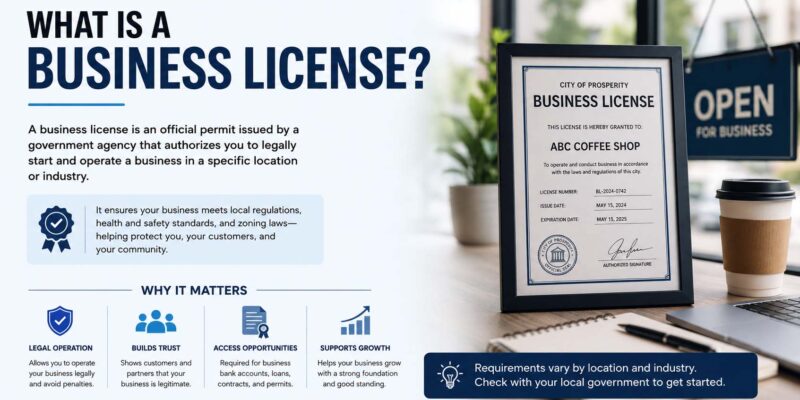
Starting a company involves more than having a good idea and opening a website. One of the most important legal steps is understanding what is a business license and why it matters. A business license is an official permit issued by a government agency that allows a person or company to legally operate within a certain location or industry. Whether you run a small online shop, a restaurant, or a consulting company, having the correct license helps ensure that your follows local laws and regulations.
Business licenses are used by governments to monitor businesses, collect taxes, and protect consumers. Different cities, states, and countries have their own requirements, so the type of needed can vary depending on the nature of the . Some businesses only need a basic operating license, while others require special permits related to health, safety, or professional qualifications.
What Is a Business License Number?
A common question among new entrepreneurs is what is a business license number. A number is a unique identification code assigned to a after the application is approved. This number is used by government agencies to track and verify the status of a company’s license.
The license number often appears on official documents, permits, invoices, and tax records. Customers or clients may also use this number to confirm whether a company is legally authorized to operate. In many industries, displaying the license number publicly helps build trust and professionalism.
Different regions have different formats for license numbers. Some include letters and numbers, while others use only numerical sequences. The number itself does not usually contain sensitive information, but it acts as proof that the business completed the registration process and received approval from the relevant authorities.
Why Businesses Need Licenses
Business licenses serve several important purposes. Governments use them to regulate industries, maintain safety standards, and ensure businesses contribute taxes properly. Licenses also help consumers identify legitimate businesses that follow legal requirements.
When a company obtains a license, it shows that the owner has agreed to comply with local rules. For example, restaurants may need health permits, while construction companies might require contractor licenses. Professional industries such as law, medicine, or accounting often require additional certifications beyond a standard business license.
Licensing can also help businesses gain credibility. Customers are more likely to trust a company that operates legally and transparently. In competitive industries, a proper license can improve reputation and create stronger customer relationships.
What Is a Business License Report?
Another important topic is what is a business license report. A business license report is a document that contains information about a company’s licensing status. This report may include details such as the name, license number, issue date, expiration date, and type of held by the company.
Government agencies, financial institutions, and customers may request a report to verify whether a company is operating legally. These reports are often used during partnerships, investments, or vendor agreements. They can also help consumers confirm that a company meets industry standards.
A business license report may include compliance history as well. For example, if a company received violations or failed inspections, those details could appear in certain public records. Because of this, maintaining proper licensing and following regulations is essential for protecting a company’s reputation.
What Is a Business License For?
Many people ask what is a license for and why businesses cannot simply operate without one. A business license exists to create legal authorization for commercial activity. It ensures that companies follow laws related to taxation, zoning, public safety, and consumer protection.
Licenses are also used to separate legitimate businesses from illegal operations. Governments rely on licensing systems to monitor economic activity and enforce standards across industries. This helps create fair competition and protects the public from fraudulent or unsafe businesses.
For business owners, obtaining a license can provide access to important opportunities. Licensed businesses may qualify for bank accounts, loans, contracts, and partnerships that unlicensed businesses cannot access. Some marketplaces and online platforms also require proof of licensing before allowing sellers to operate.
Types of Business Licenses
There are many different types of business licenses available depending on the business model and location. General business licenses are the most common and allow companies to operate within a city or region. Professional licenses apply to occupations that require specialized training or certification.
Health permits are necessary for businesses that handle food, beverages, or healthcare services. Environmental permits may be required for industries that affect natural resources or produce waste. Sales tax permits are important for companies that sell taxable goods or services.
Home-based businesses may also require licenses even if operations take place inside a private residence. Online businesses are not exempt from licensing requirements either. Many e-commerce companies still need permits related to taxes, shipping, or local business operations.
What Is a Business License for a Service?
Service-based companies often wonder what is a business license for a service and whether they need one. A business license for a service is a permit that allows individuals or companies to legally provide professional or personal services to customers.
Examples include consulting firms, cleaning companies, marketing agencies, salons, repair services, and freelance businesses. Even though these businesses may not sell physical products, they still operate commercially and may require licenses based on local laws.
In some industries, service providers must obtain professional certifications in addition to a general business license. Electricians, plumbers, accountants, and healthcare professionals are examples of occupations that may require specialized licensing.
Conclusion
Understanding what is a business license is essential for anyone planning to start or manage a company. A business license provides legal permission to operate and helps businesses comply with government regulations. From learning what is a business license number to understanding what is a business license report, each part of the licensing process plays a role in building a legitimate and trustworthy business.