
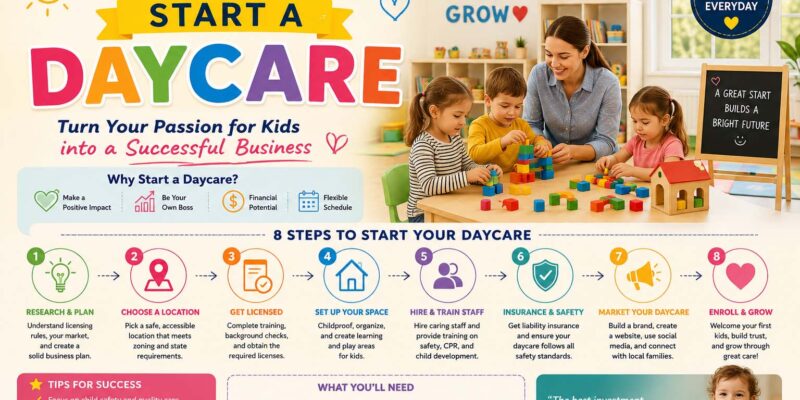
If you’re wondering how to start a daycare, begin by creating a simple business plan, choosing a safe location, meeting local licensing requirements, and preparing a child-friendly environment. You’ll also need qualified staff, essential supplies, and clear safety policies to provide quality care for children.
That said, success takes more than enjoying time with kids. You’ll need a solid business plan, the right licenses, a safe environment, and a clear understanding of your local regulations.
This guide explains how to start a daycare, from planning and licensing to budgeting, marketing, and growing your business.
Why Start a Daycare Business?
Child care services provide an essential service for working parents.
Some of the biggest benefits include:
Growing demand in many areas
Flexible business models
Potential for recurring monthly income
Personal satisfaction from supporting children’s development
Whether you open a large child care center or care for a few children from home, careful planning lays the foundation for long-term success.
How to Start a Daycare Business Step by Step
Starting a daycare involves several important stages.
Following a structured approach helps reduce mistakes and keeps your business organized.
StepGoalResearch local regulationsUnderstand licensing requirementsCreate a business planDefine services and financial goalsSecure fundingCover startup expensesPrepare the facilityMeet health and safety standardsObtain licenses and insuranceOperate legallyPurchase suppliesEquip classrooms and play areasMarket your daycareAttract familiesOpen and improveBuild a positive reputation
Research Local Licensing Requirements
Every state, province, or country has different rules for operating a daycare.
Requirements may include:
Child-to-staff ratios
Background checks
CPR certification
First aid training
Fire inspections
Health inspections
Building safety requirements
Before spending money, contact your local child care licensing agency to understand exactly what is required.
A home daycare often costs much less than opening a commercial child care center
Choose the Right Daycare Model
Not every daycare operates the same way.
Popular options include:
Home Daycare
A home daycare operates from your residence.
Benefits include:
Lower startup costs
Smaller class sizes
Flexible scheduling
Many entrepreneurs researching How to Start a Daycare at Home choose this option because it requires less investment than opening a commercial center.
Child Care Center
A commercial daycare typically serves more children.
Advantages include:
Higher earning potential
Larger staff
More educational programs
Greater room for expansion
Operating a center also comes with higher operating expenses and more regulations.
Write a Business Plan
Every successful daycare begins with a clear plan.
Include sections covering:
Business goals
Target families
Age groups served
Pricing
Operating hours
Marketing strategy
Startup budget
Revenue projections
Your business plan also helps when applying for loans or grants. Many entrepreneurs who are learning How to Start a Daycare Business use their business plan to secure financing and guide future growth.
How Much Does It Cost to Start a Daycare?
One of the most common questions is how much does it cost to start a daycare.
Expense Estimated CostLicensing and permits$200–2,000 Insurance$500–3,000 annually Furniture and equipment$2,000–15,000 Educational supplies $500–5,000 Playground equipment $1,000–20,000 Marketing$300–3,000Facility improvements Varies greatly
Choose durable products designed specifically for child care settings.
Find the Right Location
Look for areas with:
Growing neighborhoods
Working families
Safe surroundings
Easy parking
Convenient access
Families value convenience almost as much as quality care.
Design a Safe Learning Environment
Safety should always come first.
Prepare your daycare with:
Childproof locks
Covered electrical outlets
Smoke detectors
Fire extinguishers
Secure entrances
Age-appropriate furniture
Safe outdoor play space
Clean, organized classrooms also create a positive first impression during parent tours.
Purchase Essential Equipment
Your shopping list will vary depending on the children’s ages.
Common supplies include:
Tables
Chairs
Cribs
Sleeping mats
Educational toys
Books
Art materials
Storage shelves
Cleaning supplies
First aid kits
Regular staff training helps maintain high-quality care.
Hire Qualified Staff
If your daycare grows beyond a home operation, hiring becomes essential.
Look for employees who have:
Child care experience
CPR certification
Strong communication skills
Patience
Positive attitudes
Reliable references
they can strengthen your reputation within the community.
Local partnerships often produce valuable referrals.
Create Daily Programs
they can strengthen your reputation within the community.
A balanced schedule may include:
Free play
Story time
Outdoor activities
Music
Art projects
Educational games
Quiet time
Healthy snacks
Set Your Pricing
Positive reviews often become one of the strongest marketing tools for local businesses.
Consider:
Full-time enrollment
Part-time care
Before-school care
After-school programs
Infant care
Toddler programs
Your pricing should cover operating expenses while remaining competitive.
Marketing Your Daycare
Even an excellent daycare needs effective marketing.
Start with these strategies:
Build a Professional Website
Include:
Services
Pricing
Photos
Staff introductions
Contact information
Enrollment forms
Before scheduling tours, many parents search online.
Use Local SEO
Create a business profile on search engines.
Encourage satisfied families to leave reviews.
Positive reviews often become one of the strongest marketing tools for local businesses.
Social Media
Share content such as:
Classroom activities
Holiday events
Parent tips
Learning milestones
Always obtain parental permission before sharing children’s photos.
Community Networking
Partner with:
Pediatric clinics
Elementary schools
Community centers
Parenting groups
Local partnerships often produce valuable referrals.
Managing Daily Operations
Running a daycare involves more than supervising children.
Daily responsibilities include:
Attendance tracking
Meal planning
Cleaning
Parent communication
Staff scheduling
Billing
Supply management
Daycare management software can simplify many administrative tasks.
Common Challenges
Every business faces obstacles.
Daycare owners often encounter:
Staffing shortages
Changing regulations
Seasonal enrollment
Unexpected maintenance costs
Parent communication issues
Planning ahead makes these challenges easier to manage.
How to Start a Home Daycare Successfully
First-time entrepreneurs often search for how to start a home daycare because it offers a lower-risk entry point.
To succeed:
Separate business and personal areas.
Maintain excellent cleanliness.
Follow all licensing rules.
Keep accurate records.
Communicate regularly with parents.
Continue professional development.
Small home daycares often grow through word-of-mouth recommendations. Anyone researching How to Start a Home Daycare should also make ongoing compliance and safety a priority.
Mistakes New Owners Should Avoid
Avoid these common errors.
Opening without proper licensing
Underestimating startup costs
Charging too little
Skipping insurance
Buying unnecessary equipment
Poor record keeping
Weak communication with families
Learning from these mistakes can save both time and money.
Tips for Long-Term Growth
Once your daycare is established, focus on continuous improvement.
Ideas include:
Expand age-group programs.
Offer summer camps.
Introduce early learning activities.
Hire additional qualified staff.
Collect parent feedback.
Invest in staff training.
Small improvements often lead to stronger family satisfaction and higher retention.
Quick Startup Checklist
Before opening your doors, confirm that you’ve completed the essentials.
Business plan finished
Licenses approved
Insurance purchased
Facility inspected
Staff hired
Equipment installed
Safety procedures documented
Marketing launched
Enrollment process ready
Checking each item helps ensure a smoother opening day.
Frequently Asked Questions
How do I start a daycare business?
Begin by researching local licensing requirements, creating a business plan, preparing a safe facility, obtaining insurance, purchasing equipment, and marketing your services to local families.
How to start a daycare at home?
Check local regulations first, prepare child-safe spaces, obtain the required licenses, purchase age-appropriate equipment, and establish daily routines before enrolling children.
How much does it cost to start a daycare?
Startup costs vary widely. A small home daycare may require only a few thousand dollars, while a commercial child care center can require significantly larger investments depending on location, renovations, staffing, and equipment.
Do I need insurance?
Yes. Liability insurance is strongly recommended and often required by licensing authorities.
Do I need experience working with children?
Requirements vary by location. Even if experience is not legally required, training in child development, CPR, and first aid can improve the quality of care and build trust with parents.
Is a daycare business profitable?
A well-managed daycare with steady enrollment can become a profitable long-term business. Success depends on managing expenses, maintaining quality care, and building a strong local reputation.
Turning Your Daycare Idea into Reality
Learning how to start a daycare is about much more than opening a facility. By understanding local regulations, creating a realistic business plan, investing in safety, and delivering excellent care, you’ll be in a strong position to build a business that serves families for years to come.
Start with careful planning, stay committed to high standards, and keep improving your services as your daycare grows. A reputation for quality and trust is one of the most valuable assets your business can earn.