
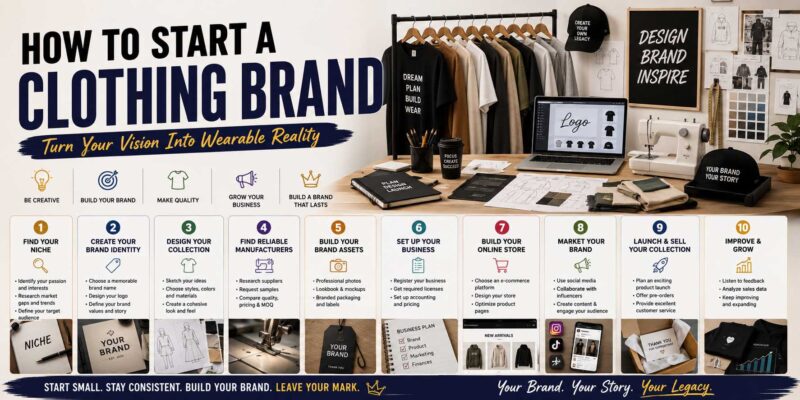
If you’ve been wondering how to start a clothing brand, you’re not alone. Thousands of aspiring entrepreneurs dream of turning creative ideas into a successful fashion business. While launching a clothing brand takes planning, persistence, and smart decision-making, it’s more achievable today than ever before thanks to online selling platforms, print-on-demand services, and social media marketing.
Whether you want to create luxury apparel, streetwear, activewear, or sustainable fashion, this guide walks you through every stage of the process—from developing your brand identity to making your first sale.
Why Start a Clothing Brand?
The global fashion industry continues to evolve as consumers look for unique styles, ethical production, and brands with authentic stories.
Unlike many traditional businesses, a clothing brand allows you to combine creativity with entrepreneurship. You can begin with a small product line, test your ideas, and expand as demand grows.
While competition is strong, niche brands often succeed by serving a specific audience rather than trying to appeal to everyone.
How to Start a Clothing Brand: Step-by-Step
Starting a clothing business becomes much more manageable when you break it into clear stages.
| Step | Goal |
|---|---|
| 1 | Choose your niche |
| 2 | Research your target market |
| 3 | Build your brand identity |
| 4 | Create your products |
| 5 | Find suppliers or manufacturers |
| 6 | Handle legal requirements |
| 7 | Set up sales channels |
| 8 | Market your brand |
| 9 | Launch and improve |
Let’s look at each step in more detail.
Choose a Clear Niche
One of the biggest mistakes new entrepreneurs make is trying to sell every type of clothing instead of focusing on a specific niche. Specializing in a well-defined market helps build a stronger brand, attract the right customers, and stand out from the competition.
Instead, focus on one audience.
Examples include:
- Sustainable fashion
- Streetwear
- Athletic clothing
- Children’s apparel
- Luxury basics
- Plus-size fashion
- Outdoor clothing
- Minimalist essentials
A well-defined niche makes branding and marketing much easier.
Ask yourself:
- Who am I designing for?
- What problem does my clothing solve?
- Why would someone choose my brand over larger competitors?
Research Your Market
Before investing money, spend time understanding your customers.
Study:
- Buying habits
- Price expectations
- Popular competitors
- Fashion trends
- Customer reviews
- Social media conversations
This research helps you identify opportunities that established brands may have overlooked.
At this stage, creating a simple Marketing Strategy Template can help organize your target audience, positioning, promotional channels, and launch goals before you invest in inventory.
Build a Brand People Remember
A clothing brand is much more than attractive designs.
Customers also connect with your story, personality, and values.
Your branding should include:
- Business name
- Logo
- Color palette
- Typography
- Brand voice
- Packaging style
- Mission statement
A memorable identity creates trust and helps customers recognize your products.
Choosing the right slogan also matters. Learning What Is a Tagline can help you create a short message that reflects your brand’s personality and makes your business easier to remember.
Design Your Clothing Collection
Start small.
Many successful clothing companies launched with only a few products before expanding.
Your first collection might include:
- T-shirts
- Hoodies
- Hats
- Sweatshirts
- Joggers
- Tote bags
Keep your designs consistent with your brand identity.
Instead of releasing dozens of products, focus on creating a handful of high-quality items.
Decide How You’ll Produce Your Clothing
There are several production models available.
Print-on-Demand
Pros:
- Low startup cost
- No inventory
- Easy to test designs
Cons:
- Lower profit margins
- Less product customization
Private Label
A manufacturer produces clothing that you sell under your own brand.
This option offers more control while reducing manufacturing complexity.
Custom Manufacturing
Ideal for brands creating unique products from scratch.
Although costs are higher, you have complete control over materials, quality, and design.
How Much Does It Cost to Start a Clothing Brand?
One of the most common questions aspiring entrepreneurs ask is, “How much does it cost to start a clothing brand?” The answer depends on factors such as your business model, product range, manufacturing method, branding, and marketing budget.
The answer depends largely on your business model, as startup costs can vary significantly based on factors such as manufacturing, inventory, branding, marketing, and sales channels.
| Business Model | Estimated Startup Cost |
|---|---|
| Print-on-demand | $200–$1,000 |
| Small private label | $2,000–$10,000 |
| Custom manufacturing | $10,000–$50,000+ |
Typical startup expenses include:
- Logo and branding
- Website
- Product samples
- Manufacturing
- Packaging
- Marketing
- Photography
- Business registration
Starting lean allows you to test demand before making larger investments.
Handle the Legal Side
Even a small clothing business should operate legally.
Depending on your location, you may need to register your business, obtain tax identification numbers, and comply with local regulations.
If you’re unsure where to begin, understanding What Is a Business License can help you determine whether your clothing business requires permits before you start selling.
You should also consider:
- Trademark protection
- Copyright for original artwork
- Sales tax registration
- Business insurance
Professional legal advice becomes more valuable as your business grows.
Build Your Online Store
Learning how to start a clothing brand online is easier today thanks to ecommerce platforms.
Popular options include:
- Shopify
- WooCommerce
- BigCommerce
- Squarespace
- Etsy (for selected products)
Your website should include:
- Professional product photos
- Detailed descriptions
- Size guides
- Customer reviews
- Secure checkout
- Mobile-friendly design
Since many customers shop using smartphones, fast loading times are essential.
Plan Your Inventory Carefully
Buying too much inventory is a common mistake.
Instead, forecast demand conservatively.
Understanding different types of inventory can help you decide whether to stock finished products, raw materials, or made-to-order items based on your production model.
Many new brands begin with limited releases to reduce financial risk.
Price Your Products for Profit
Pricing isn’t simply about covering production costs.
You also need to account for:
- Shipping
- Marketing
- Packaging
- Website expenses
- Transaction fees
- Taxes
Avoid copying competitor prices without understanding your own costs.
A premium brand can charge more if it offers exceptional quality or a compelling story.
Market Your Clothing Brand
Great products don’t sell themselves.
Marketing should begin before your official launch.
Focus on building an audience through:
Social Media
Instagram, TikTok, Pinterest, and YouTube remain powerful platforms for fashion brands.
Post consistently.
Show behind-the-scenes content.
Share customer photos.
Highlight new arrivals.
Email Marketing
Collect email subscribers before launch.
Offer:
- Early access
- Exclusive discounts
- Product announcements
Email often converts better than social media because you own your subscriber list.
Influencer Partnerships
Micro-influencers often produce stronger engagement than celebrities while costing much less.
Choose creators whose audiences genuinely match your target market.
Content Marketing
Helpful blog articles improve SEO while building trust.
Write about:
- Styling tips
- Fashion trends
- Fabric care
- Sustainability
- Outfit inspiration
This attracts visitors who may later become customers.
How Hard Is It to Start a Clothing Brand?
Many entrepreneurs ask, how hard is it to start a clothing brand.
The answer depends less on creativity and more on consistency.
Common challenges include:
- Standing out in a competitive market
- Managing cash flow
- Finding reliable suppliers
- Building customer trust
- Marketing effectively
- Balancing inventory
Most successful founders spend years improving their products rather than expecting overnight success.
Common Mistakes New Brands Make
Avoid these pitfalls:
- Launching too many products
- Ignoring customer feedback
- Spending heavily before validating demand
- Choosing poor-quality materials
- Weak branding
- Inconsistent social media activity
- Underpricing products
- Copying competitors instead of creating a unique identity
Consistently making small improvements to your products, customer experience, and marketing efforts often delivers better long-term results than relying solely on expensive marketing campaigns.
Measuring Success
Track key business metrics from the beginning.
Monitor:
- Website traffic
- Conversion rate
- Average order value
- Customer acquisition cost
- Repeat purchase rate
- Return rate
- Email subscriber growth
These numbers help you make smarter business decisions over time.
As your business grows, understanding the difference between revenue and profit becomes essential because strong sales don’t always mean your company is making money.
How to Start a Clothing Brand From Scratch with Limited Money
If your budget is tight, don’t let that stop you.
You can begin by:
- Designing a small collection
- Using print-on-demand
- Selling online
- Marketing through organic social media
- Reinvesting profits into future products
Many successful fashion brands started with only one signature product before expanding into full collections.
Patience often becomes your biggest competitive advantage.
Frequently Asked Questions
Can I start a clothing brand without fashion experience?
Yes.
Many successful founders learned design, marketing, and manufacturing as they built their businesses.
How long does it take to launch?
A simple print-on-demand store may launch within a few weeks, while custom manufacturing often takes several months.
Do I need a designer?
Not always.
You can create designs yourself, hire freelance designers, or work with manufacturers that provide design support.
Should I manufacture locally or overseas?
Local manufacturing often offers faster communication and easier quality control, while overseas production may reduce costs for larger orders.
Can I run a clothing brand as a side business?
Absolutely.
Many entrepreneurs begin part-time before transitioning into full-time business ownership once sales become consistent.
Your First Collection Is Just the Beginning
Learning how to start a clothing brand isn’t about creating hundreds of products or spending a fortune on your first launch. It’s about understanding your audience, building a memorable brand, producing quality apparel, and improving with every collection.
Start with a focused niche, validate your ideas before investing heavily, and treat every customer as an opportunity to build trust. A clothing brand grows through consistent effort, thoughtful marketing, and a willingness to adapt. If you stay patient and keep refining your products, your first collection can become the foundation for a lasting fashion business.