
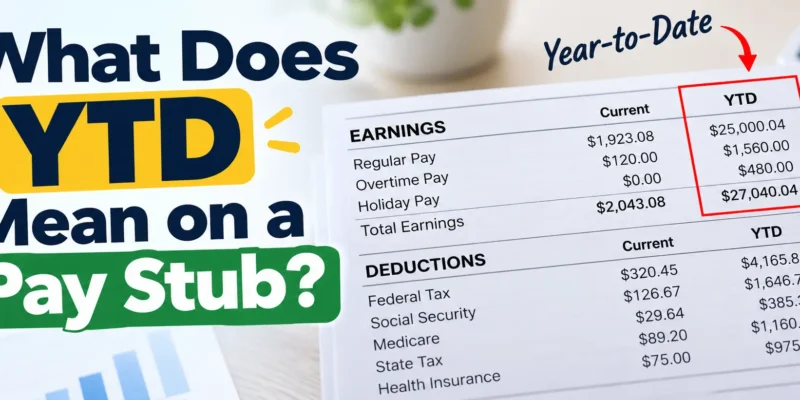
You open your paycheck statement and notice several numbers labeled YTD beside your wages, taxes, and deductions. So, what does YTD mean on a pay stub? YTD stands for year to date. It shows the cumulative amount for a particular payroll category from the beginning of the current calendar year through the pay period shown on your pay stub.
For example, your current gross pay may show $2,000, while your YTD gross pay shows $18,000. The first figure represents earnings for the current pay period, while the second represents accumulated gross earnings recorded so far during the year.
Understanding these numbers helps employees check their earnings, monitor deductions, review tax withholding, and spot possible payroll errors. Employers and payroll teams also use YTD figures to maintain accurate payroll records and prepare year-end information.
What Does YTD Mean on a Pay Stub?
YTD means year to date. On a pay stub, the term usually describes the running total of a payroll amount from the start of the calendar year through the current pay period.
For instance, suppose an employee receives a paycheck in May. Their pay stub may show both current-period earnings and YTD earnings.
The current column shows what happened during that specific pay period. In contrast, the YTD column adds eligible amounts recorded across the year’s completed payroll periods so far.
YTD figures can appear beside:
- Gross earnings
- Taxable wages
- Federal tax withholding
- State or local taxes, where applicable
- Social Security and Medicare taxes in the U.S.
- Retirement contributions
- Health insurance deductions
- Other payroll deductions
- Net pay
The exact layout varies between employers and payroll systems. If several sections and abbreviations are unfamiliar, learning how to read a pay stub can make it easier to understand how current and cumulative payroll figures fit together.
Why Do Pay Stubs Show YTD Amounts?
YTD information gives employees and employers a running financial record without requiring them to manually add every paycheck.
For employees, these totals provide a quick way to monitor earnings and deductions throughout the year. For example, you can see how much gross income your employer has recorded or how much has been withheld for certain taxes.
Businesses also use cumulative payroll records for reporting, reconciliation, and year-end payroll preparation.
YTD figures can help when checking whether payroll amounts appear reasonable. If your year-to-date earnings suddenly look much lower or higher than expected, compare the current statement with previous pay stubs.
As a result, YTD information works as both a summary and a useful error-checking tool.
Current Pay vs. YTD Pay: What’s the Difference?
The difference becomes easier to understand when you compare the two columns directly.
| Pay Stub Item | Current Pay Period | YTD |
|---|---|---|
| Gross earnings | $2,000 | $18,000 |
| Tax withholding | $220 | $1,980 |
| Retirement contribution | $100 | $900 |
| Insurance deduction | $75 | $675 |
| Net pay | $1,500 | $13,500 |
These figures are only an example.
Here, $2,000 represents gross earnings associated with the current pay period. Meanwhile, $18,000 represents accumulated gross earnings recorded year to date.
Likewise, $220 is the example tax withholding for the current period, while $1,980 represents the cumulative amount withheld so far.
Therefore, you should not expect current and YTD numbers to match.
If you are still learning payroll terminology, understanding what is pay stub can also help clarify why employers provide information about earnings, taxes, deductions, and net pay together.
What Does YTD Gross Mean on a Pay Stub?
One of the most common questions is what does YTD gross mean on a pay stub.
YTD gross generally represents your accumulated gross earnings for the year through the current payroll period.
Gross pay means earnings before applicable taxes and deductions are taken out. Depending on the employee’s compensation, gross earnings may include regular wages plus other forms of pay.
For example, they might include:
- Regular wages or salary
- Overtime
- Bonuses
- Commissions
- Certain paid leave
- Shift-related earnings
- Other eligible compensation
Suppose your gross earnings have been $2,500 during each of eight completed pay periods. If there are no other adjustments, your YTD gross could be $20,000.
However, payroll can become more complicated when compensation changes during the year.
An employee might receive a raise, bonus, overtime payment, or another type of compensation. Therefore, simply multiplying the current paycheck by the number of pay periods will not always reproduce the YTD total.
What Does YTD Amount Mean on a Pay Stub?
When people ask what does YTD amount mean on a pay stub, the answer depends on the line where the amount appears.
YTD does not refer to only one type of money. Instead, it tells you that the figure beside a particular payroll category is cumulative for the year so far.
For example, a YTD amount might show:
- Total gross earnings recorded so far
- Total amount withheld for a particular tax
- Cumulative retirement contributions
- Cumulative insurance deductions
- Cumulative net pay, if the payroll system displays it
Therefore, always read the label attached to the YTD amount instead of treating every YTD figure as earnings.
How YTD Works for Salary and Hourly Employees
YTD calculations can apply to both salaried and hourly workers, although the way gross earnings build up may differ.
A salaried employee commonly receives compensation based on an annual salary divided according to the employer’s pay schedule. Therefore, regular gross earnings may remain relatively consistent between pay periods.
If you are comparing compensation structures, understanding the difference between salary and hourly can help explain why two employees may build their YTD earnings differently even when they work for the same company.
Hourly employees, meanwhile, earn pay based largely on eligible hours and applicable rates. As a result, gross pay may change between periods because of varying hours, overtime, paid leave, or other adjustments.
Still, YTD serves the same basic purpose for both groups: it keeps a cumulative record of the relevant payroll amount.
YTD Earnings Can Include More Than Regular Pay
Your year-to-date gross earnings may not always equal your normal wages multiplied by the number of pay periods.
That is because compensation can change.
For example, an employee might earn overtime during a busy month. Another worker may receive a performance bonus or commission. Likewise, some workers receive extra compensation for working particular schedules.
Employees who see an unfamiliar premium in their earnings section may find what is shift differential useful for understanding why certain shifts can be compensated differently from standard working hours.
These extra earnings can affect YTD totals when they are included in gross compensation.
Therefore, compare each pay period carefully before assuming a cumulative figure is incorrect.
How to Check Your YTD Pay
You do not need to be a payroll specialist to perform a basic review.
First, find the earnings section on your pay stub. Then, locate the columns showing current-period and year-to-date amounts.
Next, compare the latest YTD total with the previous pay stub.
For example, imagine your previous YTD gross was $24,000. Your current gross earnings are $2,500. If there are no unusual adjustments, you might expect the new YTD gross to be around $26,500.
Then, review taxes and deductions in the same way.
However, avoid assuming that every figure will follow a simple pattern. Retroactive pay, corrections, bonuses, benefit changes, refunds, or payroll adjustments can affect cumulative totals.
If something still looks wrong after checking recent pay statements, contact your employer’s payroll or HR team and ask for clarification.
Why Your YTD Total May Look Different Than Expected
Several normal payroll events can change YTD figures.
A Pay Raise
If your compensation increased during the year, earlier pay periods used your previous rate. Therefore, your YTD total will not equal your current earnings multiplied across the entire year.
Overtime or Bonuses
Extra compensation can increase cumulative gross earnings. Consequently, YTD gross may be higher than expected if you only considered regular pay.
Unpaid Time
If an employee had unpaid time during an earlier period, accumulated earnings may be lower than a simple estimate based on normal compensation.
Payroll Corrections
Employers sometimes correct previous payroll entries. As a result, a YTD figure can change differently than you expected from the current-period amount alone.
Different Pay Arrangements
Employees paid through different compensation structures may see different patterns in their cumulative earnings. For instance, salaried workers often have predictable regular pay, although bonuses and deductions can still cause variation.
For employees comparing compensation structures, the benefits of salary can provide useful context about why predictable base compensation appeals to some workers.
What Does YTD Mean for Taxes on a Pay Stub?
If you are asking what does YTD mean for taxes on a pay stub, it generally represents the cumulative amount recorded for that tax category through the current payroll period.
In the U.S., pay stubs may show year-to-date figures for federal income tax withholding, Social Security tax, Medicare tax, and applicable state or local taxes. The IRS explains employer withholding and employment-tax responsibilities in its 2026 Employer’s Tax Guide.
However, not every employee will have identical tax lines.
Tax withholding can depend on earnings, tax-related information provided to the employer, jurisdiction, and other factors. Therefore, avoid comparing your tax totals directly with a coworker’s pay stub and assuming yours should match.
Instead, compare your own payroll records over time and use official tax guidance when you need to understand specific tax obligations.
Does YTD Reset Every Year?
Generally, year-to-date payroll totals restart when a new calendar year begins.
For example, the final paycheck of December may show substantial YTD earnings because it reflects amounts accumulated across the year. Then, an early January paycheck begins a new year’s cumulative total.
However, the timing of payroll and the way a payment is treated for tax or reporting purposes can affect which year it belongs to.
Therefore, employees should rely on their employer’s payroll records and applicable rules rather than assuming the dates of the work period alone determine the reporting year.
Your employer retains historical payroll records even though the visible YTD counter begins accumulating again for the new year.
Common Mistakes When Reading YTD Figures
One common mistake is confusing gross pay with net pay.
Gross pay represents earnings before applicable deductions, while net pay is generally what remains after deductions. Therefore, a YTD gross figure should not be expected to match the amount deposited into your bank account.
Another mistake is assuming every YTD figure represents income. A YTD number next to a tax or deduction line represents the accumulated value of that particular category instead.
People also sometimes multiply one current paycheck by the number of pay periods and expect the result to match YTD exactly. However, overtime, bonuses, unpaid time, raises, corrections, and changing deductions can make that calculation inaccurate.
Finally, employees may overlook previous payroll statements. Comparing two consecutive pay stubs often makes an unfamiliar YTD change much easier to explain.
Frequently Asked Questions About YTD on Pay Stubs
What does YTD on a pay stub mean?
YTD stands for year to date. It usually shows the cumulative amount for a payroll category from the beginning of the current calendar year through the pay period represented by the pay stub.
Is YTD the amount I earned on this paycheck?
No. Your current earnings normally represent compensation for the current pay period, while YTD earnings represent accumulated earnings for the year so far.
Is YTD gross the same as YTD net pay?
No. YTD gross represents cumulative gross earnings before applicable deductions. YTD net pay, when displayed, generally represents accumulated pay after applicable deductions.
Why did my YTD gross increase by more than my regular salary or wages?
The increase could reflect overtime, a bonus, commission, retroactive pay, a payroll correction, or another type of compensation. Therefore, check the detailed earnings section of the pay stub.
Can YTD numbers help identify payroll errors?
Yes. Comparing YTD amounts across consecutive pay stubs can help you notice unexpected changes. However, an unusual change does not automatically mean there is an error because legitimate adjustments can also affect cumulative totals.
A Simple Way to Review Your Next Pay Stub
Once you understand what YTD means on a pay stub, those extra columns become much easier to use.
Start by checking your current gross earnings. Next, compare them with your YTD gross total. Then, review taxes, benefits, retirement contributions, and other deductions in both the current and cumulative columns.
After that, compare the statement with your previous pay stub. If the change matches your earnings and deductions, the running totals will usually make sense.
However, if a figure still seems unusual, keep the pay stub and ask your payroll or HR department for an explanation. Regularly reviewing these records can help you understand your compensation, catch possible errors earlier, and maintain a clearer picture of your earnings throughout the year