
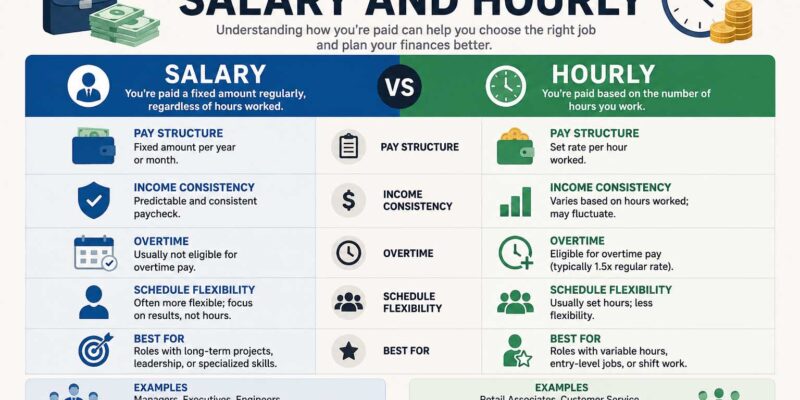
Whether you’re accepting a new job, hiring employees, or planning your payroll, understanding the difference between salary and hourly pay is essential. Although both methods compensate employees for their work, they calculate earnings differently and often come with different expectations regarding work hours, overtime, and benefits.
For employees, choosing between salary and hourly pay can affect income stability, work-life balance, and career growth. For employers, selecting the right compensation model helps control labor costs while attracting and retaining talent.
Difference Between Salary and Hourly at a Glance
The simplest way to understand the difference is this:
- Salary employees receive a fixed amount of pay each year, usually divided into weekly, biweekly, or monthly paychecks.
- Hourly employees earn wages based on the number of hours they work during each pay period.
Here’s a quick comparison:
| Feature | Salary | Hourly |
|---|---|---|
| Pay Method | Fixed annual amount | Paid per hour worked |
| Income Stability | High | Varies with hours worked |
| Overtime | Depends on employment classification | Usually eligible |
| Schedule | Often fixed but flexible | Based on scheduled shifts |
| Pay During Slow Periods | Usually unchanged | May decrease if fewer hours are worked |
| Common Roles | Managers, professionals, executives | Retail, hospitality, manufacturing, customer service |
Although both systems are common across industries, the best choice depends on the role, company policies, and employment laws.
What Is Salary Pay?
A salary is a predetermined annual amount paid regardless of the exact number of hours worked, provided the employee fulfills their job responsibilities.
For example, someone earning $60,000 per year typically receives equal payments throughout the year according to the employer’s payroll schedule.
Many salaried employees work around 40 hours per week, although some positions occasionally require additional time during busy periods without extra hourly compensation.
What Is Hourly Pay?
Hourly employees earn a specific wage for every hour they work.
For example:
- Hourly rate: $25
- Hours worked: 38
- Weekly earnings: $950
If the employee works additional qualifying hours, they may also receive overtime pay depending on local labor laws and employment classification.
Employers often use What Is a Timesheet to accurately record working hours before calculating payroll.
Difference Between Salary and Hourly: How Pay Is Calculated
The biggest distinction is how earnings are determined.
Salary Calculation
A salaried employee’s annual compensation remains consistent throughout the year.
Example:
- Annual salary: $72,000
- Monthly paycheck: $6,000 (before taxes and deductions)
Working an extra hour one day generally doesn’t change that paycheck.
Hourly Calculation
Hourly earnings depend entirely on recorded work hours.
Example:
- Hourly wage: $20
- Weekly hours: 42
- Regular pay: 40 × $20 = $800
- Overtime: 2 hours at the applicable overtime rate
As a result, weekly income may vary depending on schedules, seasonal demand, or overtime opportunities.
What Is the Difference Between Salary and Hourly for Employees?
Employees often compare these two pay structures when evaluating job offers.
Benefits of Salary
Salary positions typically offer:
- Predictable income
- Easier budgeting
- Career advancement opportunities
- Paid vacation and holidays
- Comprehensive benefits packages
Many professional careers use salary because employees focus on achieving results rather than tracking every hour worked.
Benefits of Hourly Pay
Hourly positions often provide:
- Overtime pay eligibility
- Compensation for every hour worked
- Flexible scheduling
- Easier work-life separation
- Opportunities to increase earnings by working additional shifts
Workers who prefer flexible schedules or seasonal work often appreciate hourly employment.
Difference Between Hourly and Salary for Employers
Employers also weigh several factors before deciding how to compensate employees.
Salary positions simplify payroll planning because labor costs remain relatively predictable.
Hourly positions offer greater flexibility since staffing levels can increase or decrease as business needs change.
Businesses with fluctuating customer demand, such as restaurants and retail stores, frequently rely on hourly employees.
Meanwhile, organizations hiring professionals, supervisors, or department leaders often prefer salaried roles.
Overtime Rules
One area where people often ask, what’s the difference between salary and hourly, is overtime.
Many hourly employees qualify for overtime compensation when they work beyond legally defined thresholds.
Salary employees, however, are not automatically exempt from overtime. Eligibility depends on employment laws, job duties, salary level, and local regulations.
Because labor laws differ by country and region, employers should always verify current legal requirements before classifying employees.
Income Stability
One of salary’s biggest advantages is predictable income.
Employees receive the same paycheck regardless of minor fluctuations in workload.
Hourly workers may experience larger paycheck variations.
For example:
- Holiday closures
- Reduced business demand
- Shift cancellations
- Seasonal slowdowns
can all reduce total earnings.
On the other hand, busy seasons often allow hourly employees to earn considerably more through additional shifts and overtime.
Benefits and Perks
Benefits depend on employer policies rather than pay type alone.
Many salaried positions include:
- Health insurance
- Retirement plans
- Paid leave
- Professional development
- Performance bonuses
Hourly employees may also receive these benefits, especially in larger organizations, although eligibility sometimes depends on weekly hours worked.
Strong compensation packages also contribute to the benefits of employee retention, helping businesses reduce turnover while improving workforce satisfaction.
Payroll Administration
Processing payroll differs slightly between salary and hourly employees.
Salary payroll is relatively straightforward because each pay period remains consistent.
Hourly payroll requires:
- Recording hours worked
- Calculating overtime
- Verifying shift differentials
- Applying holiday rates when applicable
Companies with growing teams often explore the benefits of outsourcing payroll to reduce administrative work and improve compliance.
Real-World Examples
Example 1: Salaried Marketing Manager
Emma earns an annual salary of $78,000.
She occasionally stays late to finish projects, yet her paycheck remains the same every pay period.
She values income consistency and comprehensive employee benefits.
Example 2: Hourly Warehouse Associate
David earns $24 per hour.
During peak shopping seasons, he regularly works overtime, increasing his monthly earnings.
During slower months, however, his total income decreases because fewer shifts are available.
Both employees receive fair compensation, but their earnings behave very differently throughout the year.
Advantages and Disadvantages
Salary Pros
- Stable income
- Simplified budgeting
- Often includes attractive benefits
- Career-oriented compensation
- Less emphasis on tracking hours
Salary Cons
- Extra work hours may not increase pay
- Workloads may fluctuate significantly
- Some positions involve longer workweeks
Hourly Pros
- Paid for every hour worked
- Overtime opportunities
- Flexible scheduling
- Clear separation between work and personal time
Hourly Cons
- Income can fluctuate
- Fewer guaranteed hours in some industries
- Scheduling may vary weekly
Common Misunderstandings
Several misconceptions surround salary and hourly employment.
Salary Always Means Higher Pay
Not necessarily.
Some hourly employees with regular overtime earn more than salaried professionals.
Hourly Jobs Lack Benefits
Many large employers offer health insurance, retirement plans, paid leave, and tuition assistance to eligible hourly workers.
Salary Employees Never Track Time
Some salaried employees still record working hours for project management, client billing, compliance, or internal reporting.
How to Choose Between Salary and Hourly
If you’re comparing job offers, consider several factors instead of focusing only on annual earnings.
Ask yourself:
- Do I prefer predictable income?
- Am I comfortable working occasional extra hours?
- Would overtime significantly increase my earnings?
- Do I value scheduling flexibility?
- Which position offers stronger long-term career growth?
- What benefits are included?
Looking beyond the paycheck often leads to a better long-term decision.
Business Perspective: Which Compensation Model Works Best?
There isn’t a universal answer.
Salary works well for:
- Managers
- Engineers
- Accountants
- Designers
- Project leaders
- Corporate professionals
Hourly pay works well for:
- Retail staff
- Manufacturing employees
- Hospitality workers
- Seasonal employees
- Customer service teams
- Warehouse personnel
Business owners should match compensation to job responsibilities, workload predictability, and legal requirements instead of assuming one model is always better.
Compensation decisions should also be viewed alongside financial performance. Understanding the difference between revenue and profit helps employers determine whether payroll costs remain sustainable as the business grows.
Frequently Asked Questions
What’s the difference between hourly and salary?
Hourly employees earn wages based on hours worked, while salaried employees receive a fixed annual amount that is divided into regular paychecks.
Which is better, salary or hourly?
Neither option is always better. Salary provides stable income and often comes with broader benefits, while hourly pay rewards additional work through overtime and flexible scheduling.
Can salaried employees earn overtime?
Yes. Some salaried employees qualify for overtime depending on labor laws, job duties, and employment classification.
Is hourly pay more flexible?
In many industries, yes. Hourly employees may have greater control over shift availability, part-time schedules, or seasonal work.
Should employers choose salary or hourly compensation?
The decision depends on the role, operational needs, labor regulations, and compensation strategy. Professional and leadership positions often suit salary, while operational and shift-based roles frequently work better with hourly pay.
Making the Right Choice
Understanding the difference between salary and hourly helps both employees and employers make informed decisions. Salary offers predictable earnings, long-term stability, and often a broader benefits package. Hourly pay provides flexibility, overtime opportunities, and direct compensation for every hour worked. Before accepting a job offer or designing a compensation plan, compare the total package—including benefits, work expectations, growth opportunities, and income potential—to choose the option that best fits your goals.