
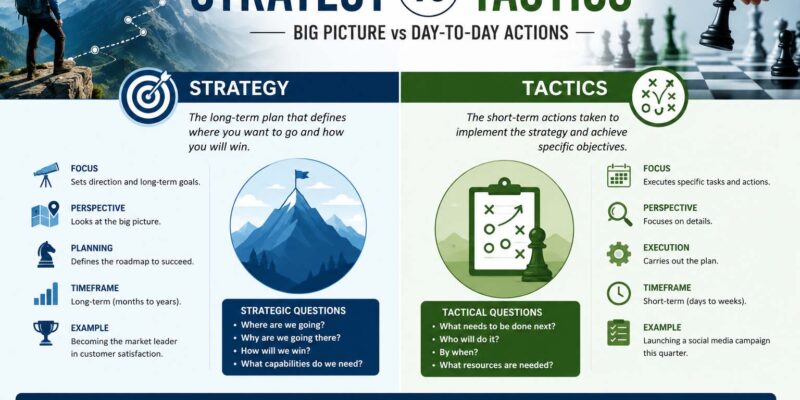
One of the most common questions in business, entrepreneurship, and marketing is understanding strategy vs tactics.
Successful companies use both strategy and tactics to achieve their goals. A strong strategy provides direction, while effective tactics help execute the plan.
Whether you’re a business owner, manager, marketer, or student, understanding the relationship between strategy and tactics can improve decision-making and long-term results. Businesses often create structured plans, such as a Marketing Strategy Template, to organize objectives, resources, and measurable goals before selecting specific actions.
This guide explains the key differences, provides real-world examples, and shows how businesses can use both effectively.
What Is a Strategy?
A strategy is a long-term plan designed to achieve a specific objective.
It answers questions such as:
- Where are we going?
- What is our goal?
- Why are we pursuing this objective?
- How will we position ourselves?
Strategy focuses on the bigger picture rather than individual actions.
Example
A company may create a strategy to become the leading online retailer in its industry within five years.
This goal defines the overall direction of the business.
What Are Tactics?
Tactics are the specific actions used to implement a strategy.
They answer questions such as:
- What actions will we take today?
- Which tools will we use?
- How will we execute the plan?
Tactics are usually short-term and highly focused.
Example
If the strategy is to become the leading online retailer, tactics may include:
- Running social media campaigns
- Publishing blog content
- Offering discounts
- Improving website SEO
These activities support the larger strategic goal.
Strategy vs Tactics: Quick Comparison
| Strategy | Tactics |
|---|---|
| Long-term focus | Short-term focus |
| Defines direction | Executes direction |
| Goal-oriented | Action-oriented |
| Broad scope | Specific activities |
| Changes less often | Adjusted frequently |
| Answers “Why?” | Answers “How?” |
Understanding this distinction helps organizations avoid confusion.
Why Strategy and Tactics Matter
Businesses need both components to succeed.
Without Strategy
A company may perform many activities without a clear purpose.
Without Tactics
A strategy remains only an idea without practical implementation.
Success occurs when strategy and tactics work together.
Tactics vs Strategy: Real-World Example
Understanding tactics vs strategy becomes easier through examples.
Business Goal
Increase annual revenue by 25%.
Strategy
Expand digital market presence and attract new customers.
Tactics
- Launch SEO campaigns
- Create social media advertisements
- Improve email marketing
- Publish educational content
- Optimize conversion rates
The strategy provides direction while tactics drive execution.
Strategy vs Tactics Examples
Many people search for strategy vs tactics examples because practical scenarios make the concepts easier to understand.
Example 1: Fitness Business
Strategy
Become the top local fitness center within three years.
Tactics
- Offer referral programs
- Run local advertising
- Create social media content
- Host community events
Example 2: Software Company
Strategy
Expand into international markets.
Tactics
- Translate website content
- Launch country-specific campaigns
- Hire local support teams
- Partner with regional distributors
Example 3: E-commerce Store
Strategy
Improve customer retention.
Tactics
- Loyalty rewards
- Email promotions
- Personalized recommendations
- Customer satisfaction surveys
Each tactical action supports the strategic objective. Companies focused on retention may also develop a Customer Engagement Strategy to create stronger relationships and improve long-term customer loyalty.
Marketing Strategy vs Tactics
One of the most common business discussions involves marketing strategy vs tactics.
Marketing Strategy
A marketing strategy focuses on:
- Target audience
- Brand positioning
- Core messaging
- Long-term marketing goals
Marketing Tactics
Marketing tactics include:
- Facebook ads
- Blog articles
- Email campaigns
- SEO optimization
- Influencer partnerships
The strategy identifies who you want to reach and why.
The tactics determine how you reach them.
Marketing Strategy vs. Tactics in Action
Let’s examine a practical scenario.
Company Goal
Increase online sales by 40%.
Marketing Strategy
Position the brand as the most trusted solution in its niche.
Marketing Tactics
- Publish expert content
- Improve customer reviews
- Run retargeting ads
- Optimize product pages
- Create educational videos
The strategy remains relatively stable.
The tactics may change based on performance data.
How to Develop an Effective Business Strategy
Step 1: Define Your Goal
Clearly identify the outcome you want to achieve.
Examples:
- Revenue growth
- Market expansion
- Customer acquisition
- Brand awareness
Step 2: Analyze the Market
Understand:
- Competitors
- Industry trends
- Customer needs
- Opportunities
Market research improves strategic decision-making.
Step 3: Identify Competitive Advantages
Determine what makes your business unique.
Examples include:
- Better service
- Lower costs
- Superior quality
- Stronger brand recognition
Step 4: Create Long-Term Objectives
Develop measurable targets that support your vision.
How to Choose Effective Tactics
Once a strategy is established, tactics should align with it.
Ask:
- Does this action support the goal?
- Is it measurable?
- Can it be executed efficiently?
Avoid tactics that generate activity without contributing to strategic objectives.
Common Mistakes Businesses Make
Many organizations struggle because they confuse tactics with strategy.
Mistake 1: Focusing Only on Tactics
Businesses that focus only on tactics often lack clear direction, leading to inconsistent results and wasted resources.
Mistake 2: Creating Strategy Without Execution
Even the best strategy fails without action.
Mistake 3: Constantly Changing Direction
Frequent strategic shifts create confusion.
Mistake 4: Ignoring Performance Data
Successful businesses regularly evaluate tactical performance.
Business Strategy Section: Aligning Teams for Success
Strong businesses ensure every department understands the overall strategy.
Leadership
Sets strategic direction.
Marketing
Executes promotional tactics.
Sales
Converts leads into customers.
Operations
Supports business delivery.
Alignment improves efficiency and results.
Benefits of Understanding Strategy vs Tactics
Organizations that understand the difference often experience:
- Better decision-making
- Stronger goal alignment
- Improved resource allocation
- Higher productivity
- Sustainable growth
These benefits contribute to long-term success.
FAQ
What is the difference between strategy and tactics?
Strategy is the long-term plan, while tactics are the specific actions used to achieve that plan.
Why is strategy important?
Strategy provides direction and helps businesses focus on long-term goals.
Why are tactics important?
Tactics turn strategy into action and help achieve measurable results.
What comes first: strategy or tactics?
Strategy should come first because tactics must support a clear objective.
Can tactics change while strategy stays the same?
Yes. Businesses often adjust tactics based on performance and market conditions.
What is marketing strategy vs tactics?
Marketing strategy defines the overall marketing approach, while tactics are the individual actions used to execute that approach.
Conclusion
Understanding strategy vs tactics is essential for business success. Strategy provides the roadmap, while tactics help move the organization toward its goals. Neither works effectively without the other.
Whether analyzing tactics vs strategy, learning through strategy vs tactics examples, or exploring marketing strategy vs tactics and marketing strategy vs. tactics, the key lesson remains the same: successful organizations combine clear long-term direction with effective day-to-day execution.
By aligning strategic objectives with practical tactical actions, businesses can improve performance, achieve sustainable growth, and stay competitive in an ever-changing marketplace.