
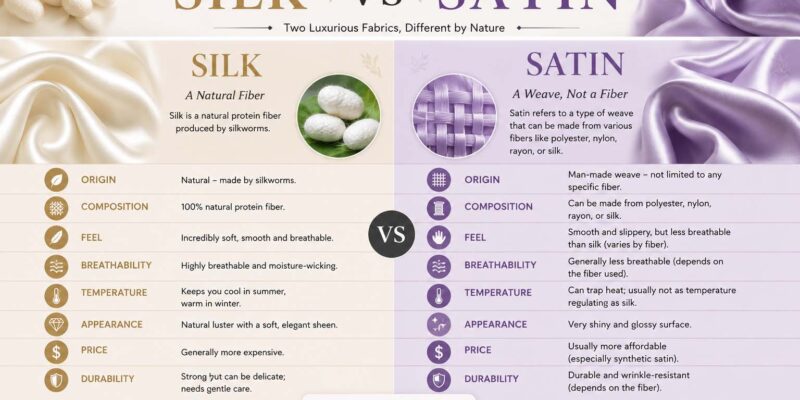
If you’ve ever shopped for bedding, clothing, or luxury accessories, you’ve probably wondered about the difference between silk and satin. The two fabrics often look similar because both have a smooth, glossy finish. However, they are not the same. One is a natural fiber, while the other describes a weaving technique that can be made from several different materials.
Understanding this distinction helps shoppers make better purchasing decisions, while businesses in fashion, home textiles, and retail can recommend products more accurately.
Difference Between Silk and Satin at a Glance
The easiest way to understand the difference between silk and satin is to compare what each term actually means.
| Feature | Silk | Satin |
|---|---|---|
| What it is | Natural fiber | Type of weave |
| Source | Silkworm cocoons | Polyester, nylon, silk, rayon, or blends |
| Feel | Soft and breathable | Smooth and slippery |
| Appearance | Natural sheen | High-gloss finish |
| Durability | Strong but delicate | Depends on the fiber used |
| Price | Usually higher | Available at many price points |
Although silk can be woven using a satin weave, not every satin fabric is made from silk.
What Is Silk?
For thousands of years, it has been valued for its luxurious feel, elegant appearance, and lightweight comfort. The production process requires harvesting silk fibers from cocoons before spinning them into thread and weaving them into fabric.
Because natural silk takes time and specialized craftsmanship to produce, it generally costs more than synthetic alternatives.
Characteristics of Silk
Silk offers several qualities that make it highly desirable.
- Naturally breathable
- Lightweight
- Smooth against the skin
- Excellent temperature regulation
- Elegant natural sheen
- Biodegradable natural fiber
These features make silk a popular choice for premium clothing, scarves, bedding, and luxury home furnishings.
What Is Satin?
Unlike silk, satin is not a fiber.
Instead, satin refers to a weaving technique that creates a smooth surface with very few visible intersections between threads.
Manufacturers can produce satin using several different fibers, including:
- Polyester
- Nylon
- Rayon
- Silk
- Acetate
This flexibility allows satin fabrics to be manufactured at a wide range of prices.
Characteristics of Satin
Depending on the material used, satin commonly offers:
- High shine
- Soft texture
- Drapes beautifully
- Wrinkle resistance in many synthetic versions
- Affordable pricing
- Wide range of colors and finishes
Because most modern satin is made from polyester, it has become widely available for fashion, home décor, and event decoration.
What Is the Difference Between Silk and Satin?
Many shoppers ask, what is the difference between silk and satin when comparing pillowcases, dresses, or formalwear.
The biggest difference is simple.
Silk is the raw material.
Satin is the weaving method.
A satin fabric can be woven from silk, polyester, rayon, or other fibers. Meanwhile, silk can also be woven into fabrics that are not satin.
Understanding this distinction helps consumers compare products based on material rather than appearance alone.
Silk vs. Satin: Which Feels Better?
Comfort depends on personal preference and the product you’re buying.
Silk has a naturally soft texture that many people describe as cool, lightweight, and breathable. It adjusts well to changing temperatures, making it comfortable throughout the year.
Satin feels exceptionally smooth because of its weave. Polyester satin often has a slightly cooler, slicker surface, although it doesn’t breathe as well as natural silk.
If skin comfort is your highest priority, silk often has the advantage. If appearance and affordability matter more, satin can be an excellent alternative.
Durability and Everyday Use
Many buyers assume silk is fragile while satin is always stronger.
In reality, durability depends on the specific material.
Natural silk fibers are surprisingly strong but require gentle care.
Polyester satin is more resistant to wrinkles, stretching, and frequent washing.
High-quality satin made from silk combines many benefits of both materials but typically comes with a premium price.
Choosing Between Silk and Satin for Different Products
The right choice depends on how you plan to use the fabric.
Clothing
Silk is commonly used for:
- Luxury dresses
- Blouses
- Scarves
- Ties
- Premium sleepwear
Satin appears frequently in:
- Evening gowns
- Bridal dresses
- Formal shirts
- Lingerie
- Fashion accessories
Because satin reflects light so well, designers often choose it for garments intended to make a visual statement.
Bedding
Silk bedding is valued for its breathability and smooth feel.
Satin pillowcases have become increasingly popular because they offer a similar appearance at a more affordable price.
For many shoppers, the decision comes down to balancing comfort, maintenance, and budget.
Price Comparison
Cost is one of the biggest differences shoppers notice.
Natural silk generally commands a premium because producing silk fibers is labor-intensive.
Satin pricing varies significantly depending on its material.
| Fabric | Typical Price Range |
| Polyester Satin | Budget-friendly |
| Rayon Satin | Moderate |
| Silk Satin | Premium |
| Pure Silk | Premium to Luxury |
Prices vary by brand, fabric quality, country of origin, retailer, and market conditions.
Buying Tips for Businesses and Retailers
Retailers often receive questions about what’s the difference between silk and satin from customers comparing similar-looking products.
When selling premium accessories, businesses should also educate customers about complementary materials. For example, buyers interested in luxury jewelry may also enjoy learning What Is Gold Used For, especially when selecting accessories that pair well with silk scarves or elegant evening wear.
Rather than focusing only on appearance, explain the material, weave, care requirements, and expected durability. That approach leads to more satisfied customers and fewer product returns.
How to Care for Silk and Satin
Proper care extends the life of both silk and satin, but the cleaning methods are not always the same.
Caring for Silk
Silk is a delicate natural fiber that benefits from gentle handling.
Follow these care tips:
- Hand wash with a mild detergent if the care label allows.
- Use cool or lukewarm water.
- Avoid twisting or wringing the fabric.
- Air dry away from direct sunlight.
- Iron on a low heat setting or use a garment steamer.
Many premium silk garments recommend dry cleaning, so always check the manufacturer’s instructions before washing.
Caring for Satin
The best cleaning method depends on what the satin is made from.
Polyester satin is often machine washable on a gentle cycle, while silk satin usually requires the same careful treatment as pure silk.
To keep satin looking smooth:
- Wash according to the care label.
- Turn garments inside out before washing.
- Avoid high dryer temperatures.
- Store garments on padded hangers when possible.
Advantages and Disadvantages
Both fabrics have strengths and trade-offs. Understanding them helps shoppers choose the right option for their needs.
| Silk | Satin |
|---|---|
| Naturally breathable | Usually more affordable |
| Luxurious texture | High-gloss appearance |
| Excellent temperature regulation | Easy to find in many colors |
| Lightweight and comfortable | Often easier to care for |
| More expensive | Quality varies by material |
| Requires gentle maintenance | Synthetic versions may trap more heat |
Neither fabric is universally better. The right choice depends on how you plan to use it and what features matter most to you.
Common Misconceptions About Silk and Satin
Many shoppers confuse these fabrics because of their similar appearance.
Myth: Satin Is Fake Silk
Not exactly.
Satin is a weaving technique rather than a specific material. While many satin products use polyester, satin can also be woven from genuine silk.
Myth: Silk Always Looks Shinier
Although silk has a beautiful natural sheen, many synthetic satin fabrics produce an even glossier finish because of their weave.
Myth: All Satin Feels the Same
The fiber makes a significant difference.
A polyester satin pillowcase feels different from silk satin, even though both share the same weaving pattern.
Which Fabric Is Better for Different Needs?
Choosing between silk and satin becomes easier when you think about your priorities.
Choose Silk If You Want:
- A natural fiber
- Better breathability
- Premium quality
- Excellent temperature regulation
- Long-term luxury
Choose Satin If You Want:
- A lower purchase price
- Bold shine
- Easy-to-find colors
- Fashion-forward designs
- Lower-maintenance synthetic options
If your budget allows, silk offers an exceptional combination of comfort and elegance. If affordability is your main concern, quality satin provides a similar visual appeal at a lower cost.
Shopping Tips Before You Buy
Whether you’re shopping online or in a store, look beyond the product name.
Ask yourself these questions:
- Is the fabric made from natural silk or synthetic fibers?
- Does the product list the material composition clearly?
- Are the care instructions practical for your lifestyle?
- Does the weave suit the intended use?
- Is the price consistent with the materials used?
Reading the product description carefully can help you avoid surprises after your purchase.
How Fashion Businesses Benefit From Explaining Fabric Differences
Retailers that clearly explain fabric construction often build stronger customer trust.
Instead of labeling every shiny fabric as “silky,” businesses should specify whether a product uses natural silk, polyester satin, or silk satin. Clear descriptions help customers understand exactly what they’re buying and reduce returns caused by unrealistic expectations.
Accessories also influence buying decisions. For example, customers comparing luxury necklaces with elegant evening outfits may also research the difference between 10k and 14k gold before choosing jewelry that complements silk or satin clothing.
Accurate product information improves the shopping experience and helps customers feel more confident about their purchase.
Frequently Asked Questions
What’s the difference between satin and silk?
The main difference is that silk is a natural fiber, while satin is a weaving technique. Satin can be made from silk, polyester, rayon, nylon, or other fibers.
Is silk more expensive than satin?
In most cases, yes. Natural silk requires a labor-intensive production process, while many satin fabrics are made from more affordable synthetic materials.
Which fabric lasts longer?
Both fabrics can last for years when properly cared for. Durability depends on the fiber, fabric quality, and how the item is used and maintained.
Is satin good for bedding?
Yes. Satin pillowcases and sheets are popular because they feel smooth and often cost less than silk alternatives. Many shoppers choose them as a budget-friendly option.
Can satin be made from real silk?
Yes. Silk satin combines natural silk fibers with a satin weave, offering the softness of silk and the glossy appearance associated with satin.
Making the Right Choice
Understanding the difference between silk and satin helps you look beyond marketing terms and focus on what really matters. Silk offers natural luxury, breathability, and timeless appeal, while satin provides a smooth finish and comes in a wide range of materials and price points.
Before making a purchase, compare the fabric composition, weave, care requirements, and intended use rather than judging a product by its shine alone. Whether you’re choosing clothing, bedding, or accessories, knowing what’s the difference between satin and silk allows you to select a product that fits your budget, lifestyle, and expectations with confidence.