
Shopping for gold jewelry can quickly become confusing. You find two rings that look almost identical, yet one is labeled 10K and the other 14K, with noticeably different prices. Naturally, the question becomes: which one offers better value?
The difference between 10K and 14K gold comes down to gold content, durability, appearance, and cost. Neither option is automatically better. The right choice depends on your budget, how often you’ll wear the jewelry, and what qualities matter most to you.
Whether you’re buying an engagement ring, wedding band, necklace, bracelet, or earrings, understanding these differences helps you make a more informed purchase.
What Do 10K and 14K Mean?
The “K” stands for karat, which measures how much pure gold is contained in a piece of jewelry.
Pure gold is classified as 24 karats.
Since pure gold is naturally soft, jewelers mix it with other metals such as silver, copper, nickel, or zinc to improve strength and durability.
Here’s how the two options compare:
| Gold Type | Pure Gold Content | Other Metals |
|---|---|---|
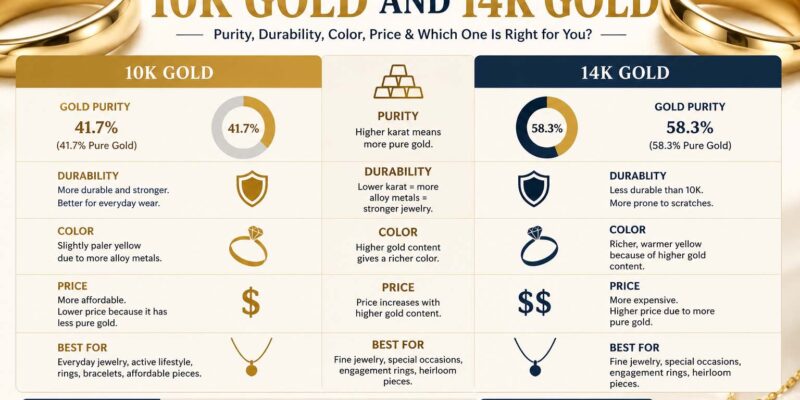
| 10K Gold | 41.7% | 58.3% |
| 14K Gold | 58.3% | 41.7% |
This difference in gold content affects almost every aspect of the jewelry, from its color to its price.
What Is the Difference Between 10K and 14K Gold?
Many shoppers ask, what is the difference between 10K and 14K gold before making a purchase.
The main differences include:
- Gold purity
- Color
- Durability
- Value
- Price
- Long-term appearance
Each factor plays a role depending on how and where the jewelry will be worn.
Gold Purity
The biggest difference is the amount of real gold.
10K Gold
10K gold contains 41.7% pure gold.
The remaining percentage consists of stronger alloy metals that improve durability.
Because of its lower gold content, 10K is generally harder and more resistant to scratches.
14K Gold
14K gold contains 58.3% pure gold.
The higher percentage of gold gives it a richer appearance while still providing enough durability for everyday jewelry.
This balance explains why 14K remains one of the most popular choices for engagement rings and fine jewelry.
For readers interested in how gold is used beyond jewelry, learning What Is Gold Used For also provides helpful insight into the metal’s many industrial, medical, and technological applications.
Color Difference Between 10K and 14K Gold
One of the easiest differences to notice is color.
The color difference between 10K and 14K gold is subtle but noticeable when the two pieces are placed side by side.
10K Gold Appearance
Because it contains less pure gold, 10K often has:
- A lighter yellow tone
- Slightly paler appearance
- Less rich color
14K Gold Appearance
With more pure gold, 14K usually appears:
- Warmer
- Richer
- More vibrant
- Closer to traditional yellow gold
When viewed separately, many people cannot easily distinguish them.
The difference becomes much clearer when both pieces are compared directly.
Durability Comparison
Jewelry worn every day needs to withstand regular use.
Since 10K contains more alloy metals, it tends to be slightly harder than 14K.
This makes it well suited for:
- Daily rings
- Bracelets
- Men’s jewelry
- Active lifestyles
14K gold is still highly durable.
Although it’s slightly softer than 10K, it’s more than strong enough for everyday wear when properly cared for.
Price Differences
Gold content directly affects price.
Because 14K contains more pure gold, it almost always costs more than 10K.
The price difference varies depending on:
- Current gold prices
- Brand
- Jewelry design
- Craftsmanship
- Gemstones
- Retailer
Higher gold content increases material costs, which explains much of the price difference.
Which Offers Better Value?
Value depends on your priorities rather than a single measurement.
Choose 10K Gold If You Want:
- Lower purchase price
- Greater scratch resistance
- Everyday durability
- Practical value
Choose 14K Gold If You Want:
- Richer gold color
- Higher gold purity
- Better resale appeal
- Traditional fine jewelry appearance
Neither choice is wrong.
Instead, each serves a different type of buyer.
Common Jewelry Available in Both Options
Most jewelry retailers offer both 10K and 14K versions of popular designs.
These include:
- Engagement rings
- Wedding bands
- Necklaces
- Bracelets
- Earrings
- Pendants
- Chains
Having multiple purity options allows buyers to balance appearance with budget.
Which Gold Is Better for Everyday Wear?
People who wear jewelry every day often prioritize durability.
For active lifestyles, 10K offers slightly greater resistance to scratches because of its higher alloy content.
However, millions of people wear 14K jewelry daily without problems.
Proper storage and occasional cleaning help both types maintain their appearance over many years.
How Jewelers Price Gold Jewelry
Gold content isn’t the only factor that determines retail pricing.
Professional jewelers also consider:
- Design complexity
- Manufacturing costs
- Brand reputation
- Gemstone quality
- Labor
- Market demand
When comparing similar jewelry from different retailers, understanding What Is MSRP can help explain why suggested retail prices may differ from actual selling prices, especially during promotions or seasonal sales.
Is 14K Always Better Than 10K?
Not necessarily.
Many buyers assume higher purity automatically means better quality.
That’s not always true.
If durability and affordability matter most, 10K can be an excellent choice.
If color and higher gold content are your priorities, 14K may better match your expectations.
The best option depends on how you’ll wear the jewelry rather than simply choosing the higher karat.
White Gold and Rose Gold Options
Both 10K and 14K gold are available in more than the traditional yellow color.
White Gold
White gold is created by mixing gold with white metals such as nickel, palladium, or silver. It is often finished with a rhodium coating to give it a bright, reflective appearance.
- Engagement rings
- Wedding bands
- Earrings
- Tennis bracelets
The visual difference between 10K and 14K white gold is usually much less noticeable than with yellow gold.
Rose Gold
Rose gold gets its warm pink tone from a higher percentage of copper in the alloy.
Both purity levels are available, although 14K rose gold often has a slightly richer appearance because of its higher gold content.
Skin Sensitivity and Allergies
The amount of alloy metals in gold jewelry can affect people with sensitive skin.
Because 10K gold contains a higher percentage of alloy metals, some individuals may be more likely to experience skin irritation if they are sensitive to metals such as nickel.
14K gold contains more pure gold and fewer alloy metals, making it a preferred option for many buyers with mild metal sensitivities.
If you have known allergies, ask the jeweler about the specific alloy used before purchasing.
Maintenance and Care
Both 10K and 14K gold are relatively easy to maintain.
Simple care habits help preserve their appearance.
Cleaning Tips
- Wash occasionally with warm water and mild soap.
- Use a soft brush to remove dirt from detailed settings.
- Dry with a lint-free cloth.
- Avoid harsh household chemicals.
Proper Storage
Store jewelry separately in soft pouches or lined jewelry boxes to reduce scratches caused by contact with other pieces.
Comparison Table
| Feature | 10K Gold | 14K Gold |
|---|---|---|
| Pure Gold Content | 41.7% | 58.3% |
| Color | Lighter yellow | Richer yellow |
| Durability | Higher | Very good |
| Scratch Resistance | Slightly better | Good |
| Price | Lower | Higher |
| Fine Jewelry Appeal | Good | Excellent |
| Everyday Wear | Excellent | Excellent |
This comparison shows that both options perform well for everyday jewelry, with the main differences being appearance, purity, and price.
How to Choose Between 10K and 14K Gold
The right choice depends on your priorities.
Choose 10K gold if you:
- Want to spend less.
- Prefer extra durability.
- Lead an active lifestyle.
- Need practical everyday jewelry.
Choose 14K gold if you:
- Prefer a richer gold color.
- Want higher gold purity.
- Value traditional fine jewelry.
- Don’t mind paying a little more.
Thinking about how often you’ll wear the jewelry is often more helpful than focusing only on the karat number.
Common Buying Mistakes
Many first-time jewelry buyers make similar mistakes.
Assuming Higher Karats Are Always Better
Higher purity doesn’t automatically mean the best choice.
A ring worn every day may benefit from the extra durability of 10K gold.
Ignoring Lifestyle
Someone who works with their hands every day may appreciate the added scratch resistance of 10K gold.
A piece reserved for special occasions may make 14K a better fit.
Comparing Price Alone
A lower price doesn’t necessarily mean lower value.
Consider:
- Craftsmanship
- Design
- Warranty
- Gemstone quality
- Comfort
- Long-term wear
Looking at the complete package leads to a better buying decision.
Forgetting to Verify Hallmarks
Reputable jewelry should include a stamp indicating its purity, such as “10K” or “14K.”
Checking these markings helps confirm what you’re buying.
Is 10K or 14K Better for Engagement Rings?
Both are commonly used.
Many jewelers recommend 14K for engagement rings because it offers an excellent balance between durability and a rich gold appearance.
10K is still a solid option for buyers who prioritize affordability and expect the ring to withstand heavy daily wear.
There is no universal “best” choice—only the one that best matches your preferences and budget.
Frequently Asked Questions
What Is the Difference Between 10K and 14K Gold?
The main difference is gold purity. Ten-karat gold contains 41.7% pure gold, while fourteen-karat gold contains 58.3%. This affects color, durability, and price.
What’s the difference between 10K and 14K gold?
The higher gold content in 14K gives it a warmer color and higher value, while 10K is generally harder and more resistant to scratches.
What’s the color difference between 10K and 14K gold?
Fourteen-karat gold usually has a richer yellow tone, while 10K appears slightly lighter because it contains more alloy metals.
Is 10K gold real gold?
Yes. Any jewelry labeled 10K contains genuine gold and meets legal standards for gold jewelry in many countries.
Is 14K gold worth the extra money?
Many buyers believe so because it offers a higher gold content and a richer appearance. Others prefer 10K because of its durability and lower cost. The better value depends on your personal priorities.
Does 10K or 14K last longer?
Both can last for decades with proper care. Ten-karat gold is generally more resistant to scratches, while fourteen-karat gold offers an excellent balance between durability and appearance.
Making the Right Decision
Understanding the difference between 10K and 14K gold helps you shop with greater confidence instead of relying only on price or appearance.
If durability and affordability are your top priorities, 10K gold is an excellent everyday choice. If you prefer a richer gold color and higher purity while still maintaining good durability, 14K gold is often worth the additional investment.
Before making your purchase, compare the quality of the craftsmanship, verify the gold hallmark, review warranty information, and choose a style that fits both your budget and how you’ll wear it. Taking a few extra minutes to compare these details can help you select jewelry you’ll enjoy for many years.