
Successful marketing campaigns, website projects, advertising efforts, and branding initiatives all start with one important document: the creative brief.
Many businesses struggle with project delays, unclear expectations, and inconsistent results because teams are not aligned from the beginning. A well-written creative brief helps solve these problems by providing a clear roadmap for everyone involved. Businesses often connect creative planning with a broader Marketing Strategy Template to ensure every campaign supports measurable objectives and long-term growth goals.
In this guide, we’ll explore creative brief examples, explain their purpose, review key components, and show how businesses can use them to improve project outcomes.
What Is a Creative Brief?
A creative brief is a document that outlines the goals, audience, messaging, requirements, and expectations of a project.
It serves as a communication tool between:
- Business owners
- Marketing teams
- Designers
- Writers
- Developers
- Agencies
- Stakeholders
The goal is to ensure everyone understands the project before work begins.
Why Creative Briefs Matter
Without a creative brief, teams may have different interpretations of project goals.
A strong brief helps:
- Reduce misunderstandings
- Improve collaboration
- Save time
- Minimize revisions
- Increase project consistency
- Keep campaigns aligned with business objectives
Whether you’re launching a website, creating advertisements, or developing social media content, a creative brief creates clarity.
Key Elements of a Creative Brief
Most successful briefs contain the following sections.
Project Overview
Example:
“Develop a new landing page to increase lead generation for our software product.”
Business Goal
Clearly define the desired outcome.
Examples:
- Increase sales
- Generate leads
- Improve brand awareness
- Boost website traffic
Target Audience
Describe the intended audience.
Include details such as:
- Age group
- Industry
- Interests
- Challenges
- Buying behavior
Understanding customer needs is important when creating campaigns. Many businesses also use a Voice of the Customer Program to collect feedback and understand audience expectations before developing creative strategies.
Key Message
Explain the main message the audience should remember.
Deliverables
List project requirements.
Examples:
- Website pages
- Blog posts
- Banner ads
- Email campaigns
- Videos
Timeline
Include important deadlines and milestones.
Budget
Outline financial limitations and expectations.
Best Creative Brief Examples
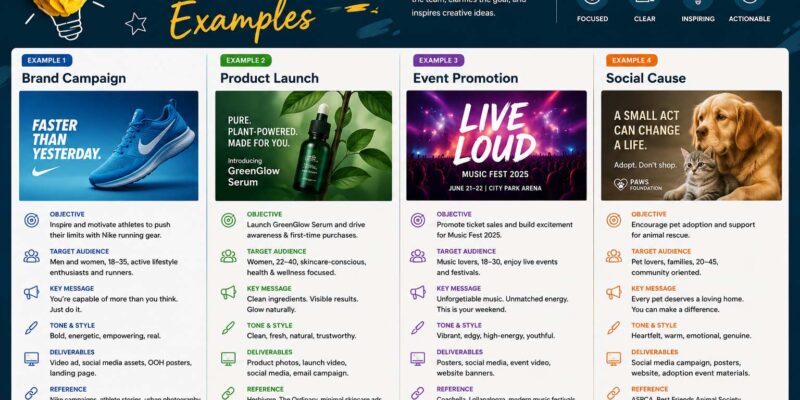
Many marketers search for best creative brief examples to understand how professionals structure projects.
Here is a simple marketing campaign example.
Marketing Campaign Brief Example
Project Name: Summer Product Launch
Objective: Increase online sales by 20%.
Audience: Adults aged 25-45 interested in outdoor activities.
Primary Message: High-quality products designed for adventure.
Deliverables:
- Social media ads
- Landing page
- Email campaign
Deadline: Six weeks
This format provides enough information to guide creative work without overwhelming the team.
Website Creative Brief Examples
One of the most common business uses involves website creative brief examples.
Website Redesign Brief
Project Goal:
Create a modern website experience that improves usability and increases conversions.
Target Audience:
Small business owners seeking marketing services.
Key Requirements:
- Mobile-friendly design
- Faster loading speed
- Clear call-to-action buttons
- Improved service pages
Success Metrics:
- Increased leads
- Lower bounce rate
- Higher conversion rate
Website briefs help designers and developers align technical work with business goals.
Examples of a Creative Brief for Social Media
Businesses frequently use creative briefs for social media campaigns.
Social Media Campaign Example
Objective:
Grow Instagram followers by 15%.
Target Audience:
Young professionals aged 22-35.
Campaign Theme:
Productivity and business growth.
Content Types:
- Reels
- Stories
- Carousel posts
Success Metrics:
- Engagement rate
- Reach
- Follower growth
This approach helps maintain content consistency throughout a campaign.
Examples of a Creative Brief for Branding Projects
Branding projects require strong direction.
Brand Identity Example
Business Challenge:
Outdated brand image.
Goal:
Create a modern, professional visual identity.
Deliverables:
- Logo redesign
- Brand color palette
- Typography guidelines
- Brand style guide
Target Audience:
Technology startups and entrepreneurs.
Branding briefs ensure visual decisions support long-term business strategy.
Creative Brief Examples PDF and Templates
Many professionals search for creative brief examples PDF when looking for ready-to-use templates.
A standard template may include:
Creative Brief Template
- Project Title
- Business Objective
- Target Audience
- Primary Message
- Project Deliverables
- Brand Guidelines
- Timeline
- Budget
- Success Metrics
Businesses can save this structure as a PDF, document, or project management template for future use.
Step-by-Step Guide to Writing a Creative Brief
Creating an effective brief does not have to be complicated.
Step 1: Define the Goal
Identify exactly what success looks like.
Avoid vague objectives.
Step 2: Understand the Audience
Research customer needs, preferences, and pain points.
Step 3: Clarify the Message
Determine the single most important takeaway.
Step 4: List Deliverables
Specify what the team must create.
Step 5: Set Deadlines
Establish realistic timelines.
Step 6: Share with Stakeholders
Ensure everyone reviews and approves the brief before work begins.
A clear approval process helps teams maintain alignment and avoid confusion during execution. This is especially important when creative projects involve multiple departments working toward the same business goals.
Common Creative Brief Mistakes
Even experienced teams make errors.
Too Much Information
Overly detailed briefs can overwhelm creative teams.
Unclear Objectives
Vague goals make success difficult to measure.
Missing Audience Details
Without audience insights, campaigns may miss their target.
No Success Metrics
Teams need measurable outcomes to evaluate performance.
Lack of Stakeholder Alignment
Disagreements later often result from insufficient planning.
Business Strategy Benefits of Creative Briefs
Creative briefs are more than project documents.
They also support broader business strategy.
Improved Efficiency
Teams spend less time seeking clarification.
Better Resource Management
Clear expectations reduce wasted effort.
Stronger Brand Consistency
Messaging remains aligned across channels.
Higher Return on Investment
Well-planned campaigns often generate better results.
For growing businesses, creative briefs can become a valuable operational tool. When combined with clear planning frameworks and effective Strategy vs Tactics decisions, businesses can ensure creative activities support larger organizational objectives.
Who Should Use Creative Briefs?
Creative briefs benefit:
- Entrepreneurs
- Small business owners
- Marketing managers
- Agencies
- Freelancers
- Content creators
- Website developers
- Branding consultants
Any project involving creative work can benefit from a structured brief.
Frequently Asked Questions
What is a creative brief?
A creative brief is a document that outlines project goals, audience, messaging, deliverables, and expectations.
Why are creative briefs important?
They improve communication, reduce confusion, and keep projects aligned with business objectives.
What should be included in a creative brief?
Common sections include project goals, target audience, key messages, deliverables, timeline, budget, and success metrics.
Are creative briefs only for marketing projects?
No. They can be used for websites, branding, advertising, content creation, and many other business initiatives.
Where can I find creative brief examples PDF?
Many businesses create their own templates using standard sections and save them as reusable PDF documents.
How long should a creative brief be?
Most effective creative briefs range from one to three pages, depending on project complexity.
Conclusion
Understanding and using creative brief examples can significantly improve project planning, communication, and execution. Whether you’re creating a marketing campaign, redesigning a website, launching a new brand, or managing social media content, a well-structured creative brief helps keep everyone aligned and focused on the same goals.