
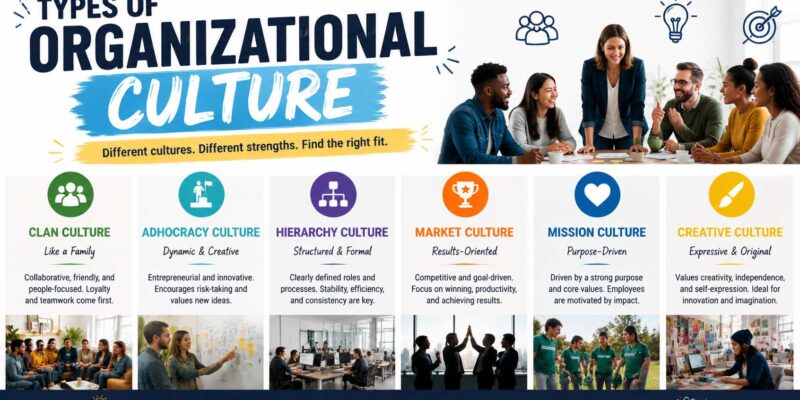
Why do some companies thrive on innovation while others succeed through consistency and clear processes? The answer often lies in their types of organizational culture. Culture shapes how employees communicate, make decisions, solve problems, and work toward company goals.
Every organization develops its own way of doing things, whether intentionally or naturally over time. Understanding the different types of organizational culture helps business owners, managers, and employees build workplaces that encourage productivity, engagement, and long-term growth.
This guide explains the most common culture models, how they affect daily operations, and how to identify the best fit for your organization.
What Are Types of Organizational Culture?
Types of organizational culture describe the shared values, beliefs, behaviors, and expectations that influence how people work within a company.
Culture affects nearly every part of a business, including:
- Leadership style
- Employee communication
- Decision-making
- Customer service
- Team collaboration
- Innovation
- Performance expectations
A healthy culture aligns employees around common goals while helping the business adapt to change.
Why Organizational Culture Matters
Company culture influences more than workplace morale.
A strong culture can help organizations:
- Attract talented employees
- Improve collaboration
- Increase productivity
- Build customer trust
- Support innovation
- Reduce workplace conflict
- Encourage long-term growth
Many organizations also experience the benefits of employee retention when employees feel connected to company values and supported by leadership.
The 4 Types of Organizational Culture
Business experts often refer to the 4 types of organizational culture described in the Competing Values Framework. Each culture emphasizes different priorities and leadership approaches.
| Culture Type | Primary Focus | Leadership Style | Best For |
|---|---|---|---|
| Clan | Collaboration | Coaching and mentoring | Team-oriented organizations |
| Adhocracy | Innovation | Visionary leadership | Fast-changing industries |
| Market | Results | Competitive leadership | Sales-driven businesses |
| Hierarchy | Structure | Process-focused management | Large or regulated organizations |
Although many businesses lean toward one culture, most combine elements of several styles.
Clan Culture
Clan culture emphasizes teamwork, trust, and employee development.
Managers often act as mentors rather than supervisors, encouraging collaboration instead of competition.
Key Characteristics
- Open communication
- Strong teamwork
- Employee involvement
- Shared decision-making
- High engagement
Advantages
- Strong workplace relationships
- High employee satisfaction
- Better collaboration
- Increased loyalty
Challenges
- Slower decision-making
- Difficulty addressing poor performance
- Less emphasis on competition
Many organizations with clan cultures encourage regular feedback sessions, including practices like a Skip Level Meeting, which gives employees opportunities to communicate directly with senior leaders.
Adhocracy Culture
Adhocracy culture values creativity, experimentation, and innovation.
Employees are encouraged to take calculated risks and develop new ideas without excessive bureaucracy.
Key Characteristics
- Flexibility
- Entrepreneurial thinking
- Fast decision-making
- Innovation
- Adaptability
Advantages
- Encourages creativity
- Responds quickly to market changes
- Supports product development
- Attracts innovative talent
Challenges
- Less predictable processes
- Higher risk
- Potential role ambiguity
Technology startups and research companies often thrive with this culture because rapid innovation drives their success.
Market Culture
Market culture focuses on results, competition, and measurable performance.
Organizations prioritize productivity, profitability, and customer success while setting ambitious performance goals.
Key Characteristics
- Goal-oriented leadership
- Performance measurement
- Competitive environment
- Customer focus
- Accountability
Advantages
- Strong business performance
- Clear objectives
- Fast execution
- Revenue growth
Challenges
- Increased workplace pressure
- Risk of employee burnout
- Less collaboration
Sales organizations frequently adopt market culture because performance metrics directly influence business outcomes.
Hierarchy Culture
Hierarchy culture emphasizes stability, consistency, and well-defined processes.
Employees follow established procedures, reporting structures, and operational guidelines.
Key Characteristics
- Formal policies
- Clear responsibilities
- Standardized processes
- Risk management
- Operational efficiency
Advantages
- Reliable performance
- Consistent quality
- Clear expectations
- Easier compliance
Challenges
- Slower innovation
- More bureaucracy
- Reduced flexibility
Government agencies, healthcare organizations, financial institutions, and manufacturing companies often rely on hierarchical structures to maintain consistency.
Different Types of Organizational Culture in Business
Although the four primary models are widely recognized, many companies blend multiple approaches.
For example:
- A technology startup may combine clan and adhocracy cultures.
- A retail chain may balance market culture with hierarchy.
- A consulting firm might encourage innovation while maintaining structured project management.
These blended approaches create types of organizational culture in business that fit specific industries, company sizes, and strategic goals.
How Leadership Shapes Organizational Culture
Leadership influences culture every day through actions, communication, and decision-making.
Leaders reinforce culture by:
- Setting expectations
- Rewarding desired behaviors
- Hiring people who fit company values
- Providing feedback
- Demonstrating company principles
Senior executives, including the Chief Strategy Officer, often help ensure organizational culture supports long-term business objectives and strategic priorities.
Employees pay attention to what leaders consistently do—not just what they say.
How to Identify Your Company’s Culture
Many businesses don’t intentionally create a culture. Instead, it develops naturally over time.
Ask these questions to identify your current culture:
How are decisions made?
- Quickly by individuals?
- Through collaboration?
- Using formal approval processes?
What behaviors receive recognition?
- Innovation
- Teamwork
- Sales performance
- Accuracy
- Efficiency
How do employees communicate?
- Informally
- Through structured meetings
- Across departments
- Primarily through management
The answers often reveal which culture dominates your organization.
Building a Strong Organizational Culture
Creating a healthy workplace culture requires consistent effort.
Step 1: Define Core Values
Choose values that reflect how employees should work together.
Examples include:
- Integrity
- Innovation
- Accountability
- Respect
- Collaboration
- Customer focus
Step 2: Hire for Cultural Fit
Technical skills matter, but hiring people who align with company values improves teamwork and long-term engagement.
Step 3: Communicate Expectations
Leaders should regularly reinforce desired behaviors during meetings, performance reviews, and everyday conversations.
Step 4: Reward Positive Behaviors
Recognize employees who demonstrate company values through awards, promotions, or public appreciation.
Step 5: Review Culture Regularly
Business needs change over time.
Annual employee surveys, feedback sessions, and leadership reviews help ensure culture continues supporting company goals.
Organizational Culture and Business Strategy
Culture and strategy should support each other.
A company focused on rapid innovation needs a different culture than one prioritizing operational consistency.
Understanding Strategy vs Tactics helps leaders recognize that culture supports long-term direction while daily actions turn strategy into measurable results.
When culture conflicts with business goals, execution often becomes much more difficult.
Organizational Culture Across Projects
Large organizations frequently manage multiple departments with different responsibilities.
For example:
- Product development teams may encourage experimentation.
- Finance departments often emphasize accuracy.
- Customer service teams prioritize responsiveness.
- Operations teams rely on standardized processes.
Because of these differences, organizations often adapt their leadership style alongside different types of project management while maintaining consistent company values across the business.
Common Mistakes Businesses Make
Even well-intentioned companies sometimes create cultural challenges.
Avoid these common mistakes:
- Defining values but ignoring them
- Rewarding only short-term results
- Poor communication from leadership
- Hiring without considering cultural fit
- Failing to recognize employee contributions
- Resisting necessary change
- Allowing inconsistent management practices
Culture grows through everyday decisions rather than posters displayed in the office.
Best Practices for a Healthy Workplace Culture
Organizations that build strong cultures often follow these habits:
- Lead by example.
- Encourage honest communication.
- Recognize employee achievements.
- Support professional development.
- Promote collaboration across departments.
- Listen to employee feedback.
- Adapt as the business grows.
Small improvements made consistently often create lasting cultural change.
Frequently Asked Questions
What are the four types of organizational culture?
The four types of organizational culture are Clan, Adhocracy, Market, and Hierarchy. Each emphasizes different leadership styles, priorities, and ways of working.
Can a company have more than one culture?
Yes. Many organizations combine elements of several cultures depending on departments, leadership styles, and business objectives.
Which organizational culture is best?
There isn’t a single best culture. The right choice depends on your industry, business goals, company size, and workforce.
How does organizational culture affect employees?
Culture influences communication, motivation, teamwork, decision-making, job satisfaction, and overall workplace experience.
Can organizational culture change?
Yes. Leadership, hiring practices, employee feedback, and business strategy can gradually reshape company culture over time.
Turn Culture Into a Competitive Advantage
A strong organizational culture doesn’t happen by accident. It grows through consistent leadership, clear values, and everyday actions that reinforce the behaviors your business wants to encourage. Whether your company values collaboration, innovation, performance, or structure, aligning culture with business goals helps employees perform at their best.
Start by evaluating your current workplace, identifying the strengths and gaps in your culture, and making small improvements that support your long-term vision. Over time, those changes can create a more engaged workforce, stronger business performance, and a workplace where people genuinely want to succeed together.