
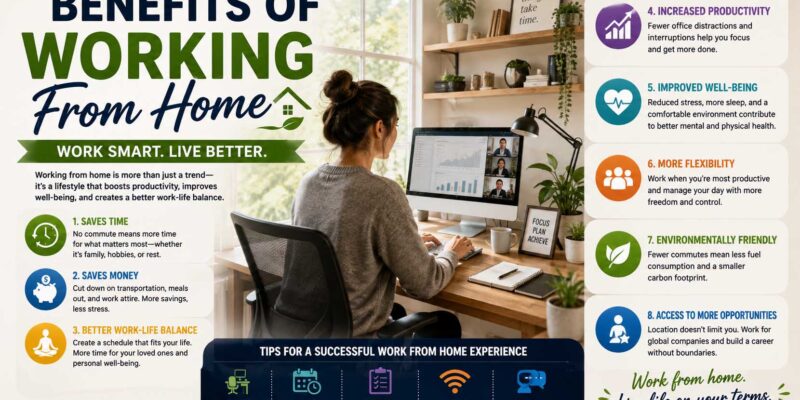
The benefits of working from home have become a major topic for businesses and professionals alike. Remote work has evolved from a temporary solution into a long-term workplace strategy for many organizations. While it isn’t the perfect fit for every job, millions of employees and employers have discovered advantages that extend beyond simply skipping the daily commute.
Whether you’re considering a remote role, managing a distributed team, or deciding on your company’s workplace policy, understanding both the opportunities and the challenges can help you make informed decisions.
What Does Working From Home Mean?
Working from home, often called remote work or telecommuting, allows employees to perform their job duties outside a traditional office. Most remote workers rely on internet access, collaboration software, and digital communication tools to stay connected with coworkers and clients.
Depending on the company, employees may work:
- Fully remote
- Hybrid (part office, part home)
- Occasionally from home
- From different locations while traveling
Each arrangement offers different levels of flexibility.
Benefits of Working From Home for Employees
The most noticeable benefits of working from home for employees involve flexibility and greater control over the workday.
Some common advantages include:
- Less commuting
- More flexible schedules
- Lower transportation costs
- Better work-life balance
- Fewer workplace distractions for some roles
- Greater independence
For many employees, even saving an hour each day on commuting creates more time for exercise, family, hobbies, or rest.
Benefits of Working From Home for Employers
Remote work also offers several benefits of working from home for employers.
Businesses may experience:
- Reduced office expenses
- Access to wider talent pools
- Lower turnover
- Improved employee satisfaction
- Greater business continuity during disruptions
- Increased scheduling flexibility
Companies that hire remotely are no longer limited to candidates living near their headquarters, making recruitment much more competitive.
Quick Comparison: Office vs. Remote Work
| Area | Office Work | Working From Home |
|---|---|---|
| Commute | Daily travel | No commute |
| Workspace | Company office | Home office |
| Flexibility | Usually fixed | Often greater flexibility |
| Costs | Higher commuting expenses | Lower travel costs |
| Collaboration | Face-to-face | Digital communication |
| Hiring | Local candidates | Broader talent pool |
The best choice depends on job responsibilities, company culture, and personal preferences.
Better Work-Life Balance
One of the biggest reasons people seek remote jobs is improved work-life balance.
Working from home may provide more opportunities to:
- Prepare healthy meals
- Exercise during breaks
- Spend time with family
- Handle personal appointments
- Reduce commuting stress
That doesn’t mean work automatically becomes easier. Setting healthy boundaries remains essential to prevent work from extending into personal time.
Financial Savings
Remote work often reduces everyday expenses.
Potential savings include:
- Fuel
- Public transportation
- Parking
- Work clothing
- Eating lunch out
- Childcare in some situations
Although home utility bills may increase slightly, many employees still report lower overall work-related expenses.
Increased Productivity
Contrary to early concerns, many organizations have found that remote employees maintain or even improve productivity.
Reasons may include:
- Fewer interruptions
- Personalized workspaces
- Flexible schedules
- Better focus during independent tasks
Of course, productivity depends on the nature of the work, home environment, and individual work habits.
Benefits of Working From Home for Moms
The benefits of working from home for moms often include greater scheduling flexibility.
Depending on the role, remote work may make it easier to:
- Coordinate school schedules
- Attend appointments
- Reduce commuting time
- Balance family responsibilities
Working from home is not the same as full-time childcare, however. Many parents still rely on childcare during working hours to stay productive.
Benefits of Working From Home With Pets
For animal lovers, the benefits of working from home with pets can improve the overall workday.
Many remote workers appreciate being able to:
- Spend more time with pets
- Take walking breaks
- Reduce separation anxiety for some animals
- Enjoy companionship throughout the day
Short breaks with pets may also encourage movement and help reduce prolonged sitting.
Better Employee Retention
Flexible arrangements can increase job satisfaction, which supports long-term benefits of employee retention such as reduced hiring costs and improved team stability.
Employees who feel trusted and supported are often more likely to remain with their employer.
Expanding the Talent Pool
Remote hiring removes many geographic limitations.
Businesses can recruit professionals from:
- Different cities
- Rural communities
- Other states or regions
- International markets where appropriate
This broader access allows companies to find specialized skills that may not exist locally.
Communication Still Matters
Successful remote work depends on clear communication.
Teams often rely on:
- Video meetings
- Instant messaging
- Project management software
- Shared documents
Many organizations also create detailed documentation through What Is SOP practices so employees can complete tasks consistently regardless of location.
Time Management Becomes More Important
Without office routines, managing time becomes a personal responsibility.
Helpful habits include:
- Setting regular work hours
- Taking scheduled breaks
- Prioritizing daily tasks
- Reducing distractions
- Planning tomorrow’s work before finishing today
Some employees also use digital tracking systems similar to What Is a Timesheet processes to monitor project hours and improve productivity.
Challenges of Remote Work
Working from home offers many benefits, but it’s not without challenges.
Common difficulties include:
- Isolation
- Household distractions
- Blurred work-life boundaries
- Communication delays
- Limited face-to-face collaboration
Recognizing these challenges early helps individuals develop practical solutions.
Best Practices for Remote Employees
If you’re new to remote work, these strategies can help.
Create a Dedicated Workspace
A consistent workspace signals the beginning and end of the workday.
Stick to a Routine
Starting work at the same time each day creates healthy habits.
Communicate Regularly
Frequent updates keep projects moving and reduce misunderstandings.
Take Movement Breaks
Short walks or stretching sessions help reduce fatigue.
Protect Personal Time
Log off at the end of your workday whenever possible.
How Company Culture Changes
Remote work doesn’t eliminate workplace culture.
Instead, companies intentionally build relationships through communication, recognition, collaboration, and shared values.
Organizations often rethink their types of organizational culture to ensure remote and in-office employees receive equal opportunities to participate and grow.
Technology Makes Remote Work Possible
Modern remote work depends on digital tools.
Employees regularly use:
- Video conferencing
- Cloud storage
- Collaboration platforms
- Project management software
- Document editors
Strong digital literacy has become an important workplace skill.
Everyday productivity also depends on efficient document creation, making skills covered in What Is Word Processing increasingly valuable across many remote positions.
Common Mistakes to Avoid
Many remote workers make similar mistakes when starting out.
Avoid these habits:
- Working without a schedule
- Skipping breaks
- Ignoring ergonomic setup
- Responding to every message immediately
- Mixing work and personal spaces too often
Healthy routines improve both productivity and wellbeing.
Is Working From Home Right for Every Business?
Not always.
Remote work works particularly well for:
- Software development
- Marketing
- Customer support
- Accounting
- Graphic design
- Writing
- Consulting
Jobs requiring physical equipment, in-person customer service, manufacturing, or healthcare often require employees to be on site.
Many businesses now combine office and remote work through hybrid arrangements.
Frequently Asked Questions
Does working from home increase productivity?
Many employees report improved productivity, although results depend on the job, work environment, and individual habits.
What equipment do remote workers need?
Most professionals need a reliable computer, internet connection, webcam, headset, and an ergonomic workspace.
Is remote work suitable for every employee?
Not necessarily. Some people prefer office environments for collaboration and structure, while others thrive with greater independence.
Can businesses save money with remote work?
Many companies reduce expenses related to office space, utilities, and facilities, although technology investments may increase.
Does remote work improve employee satisfaction?
Flexible work arrangements often contribute to higher job satisfaction, particularly when employees have clear expectations and strong communication with managers.
Building a Successful Remote Work Routine
Working from home offers opportunities for employees and employers alike, from improved flexibility and lower costs to broader hiring options and increased job satisfaction. Still, success depends on thoughtful planning, clear communication, and healthy daily habits.
Whether you’re managing a remote team or starting your first home-based role, focus on creating routines, maintaining strong collaboration, and protecting work-life balance. With the right approach, the benefits of working from home can support both professional performance and long-term wellbeing.