
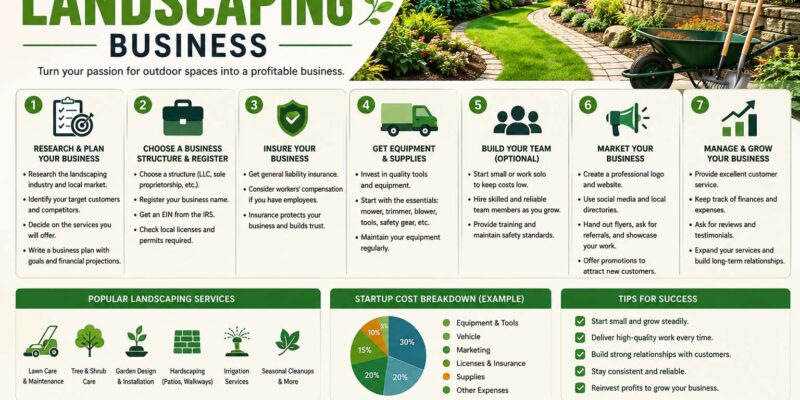
Starting a landscaping business can be a great way to turn outdoor skills into a profitable company. Homeowners, property managers, and businesses all need reliable landscaping services throughout the year, creating opportunities for entrepreneurs who enjoy working outside.
The best part is that you don’t need a huge investment to get started. Many successful landscaping companies begin with basic equipment, a pickup truck, and a handful of local customers.
This guide explains how to start a landscaping business, what equipment you’ll need, estimated startup costs, pricing strategies, and practical tips for attracting your first clients.
Why Start a Landscaping Business?
Landscaping is more than mowing lawns. Many businesses offer services such as:
- Lawn mowing
- Garden maintenance
- Tree and shrub trimming
- Mulching
- Weed control
- Seasonal cleanups
- Planting flowers
- Landscape design
- Irrigation maintenance
- Snow removal in colder regions
Offering multiple services helps generate income throughout the year instead of relying on one type of job.
Step 1: Decide Which Services You’ll Offer
One of the first decisions is choosing your specialty.
Some businesses focus only on lawn maintenance, while others provide complete landscape installations.
Common service options include:
Lawn Care
Perfect for beginners.
Services include:
- Grass cutting
- Edging
- Blowing leaves
- Fertilizing
- Weed removal
These jobs often lead to recurring weekly or biweekly customers.
Landscape Installation
This involves larger projects like:
- Planting trees
- Installing flower beds
- Building garden borders
- Adding mulch
- Decorative rock installation
These jobs usually bring higher profits but require more experience.
Seasonal Services
Many landscaping companies increase revenue by offering:
- Spring cleanup
- Fall leaf removal
- Snow removal
- Holiday lighting
- Gutter cleaning
Seasonal work helps keep income flowing throughout the year.
Step 2: Create a Simple Business Plan
A business plan doesn’t have to be complicated.
Include basic information like:
- Services offered
- Target customers
- Local competitors
- Startup budget
- Marketing Strategy Template
- Pricing strategy
- Income goals
This roadmap helps you stay focused as your business grows.
Step 3: Register Your Business
Before serving customers, make sure your business is legally set up.
Depending on your location, this may include different rules, permits, or requirements that vary by city or region. In many areas, you may need to register your business, obtain a basic operating license, and follow local tax regulations. Learning What Is a Business License can help you understand one of the common requirements before getting started.
- Choosing a business name
- Registering your company
- Applying for local licenses
- Obtaining tax identification numbers
- Opening a business bank account
Check your local regulations since requirements vary by city, state, and country.
Step 4: Purchase Essential Equipment
You don’t need every tool immediately.
Start with the basics.
A beginner setup often includes:
- Lawn mower
- String trimmer
- Leaf blower
- Rake
- Shovel
- Wheelbarrow
- Hedge trimmer
- Safety glasses
- Gloves
- Ear protection
As your customer base grows, you can invest in commercial-grade equipment.
How Much Does It Cost to Start a Landscaping Business?
Many new business owners ask, how much does it cost to start a landscaping business?
The answer depends on whether you’re starting part-time or launching a full-service company.
Estimated Startup Costs
| Expense | Estimated Cost |
|---|---|
| Lawn mower | $300–$2,000 |
| String trimmer | $100–$400 |
| Leaf blower | $100–$500 |
| Hand tools | $150–$600 |
| Safety equipment | $100–$300 |
| Trailer (optional) | $1,000–$4,000 |
| Marketing | $200–$1,000 |
| Insurance | Varies by location |
A basic business can often begin for $1,000 to $5,000 if you already own a vehicle and some equipment.
Larger commercial operations may require significantly more.
How Much to Start a Landscaping Business If You’re on a Budget
If you’re wondering how much to start a landscaping business with limited funds, start small.
Ways to reduce expenses include:
- Buy quality used equipment.
- Rent specialized tools.
- Focus on mowing and cleanup services first.
- Work from home instead of renting office space.
- Upgrade equipment as profits increase.
Many successful landscaping businesses grow this way, similar to How to Start a Cleaning Business by expanding services gradually.
Step 5: Buy Business Insurance
Insurance protects both you and your customers.
Common policies include:
- General liability insurance
- Commercial vehicle insurance
- Equipment coverage
- Workers’ compensation (if hiring employees)
Insurance may also improve customer confidence when bidding on larger jobs.
Step 6: Set Competitive Prices
Pricing should cover:
- Labor
- Equipment maintenance
- Fuel
- Insurance
- Taxes
- Travel time
- Profit
Research competitors in your area before setting your rates.
Some businesses charge:
- Hourly
- Per visit
- Weekly maintenance contracts
- Monthly service plans
Recurring maintenance agreements often create more stable income than one-time jobs.
How to Start a Landscaping Business With No Experience
Many people ask how to start a landscaping business with no experience.
The good news is that experience can be built over time.
Here’s a smart approach:
Learn Basic Lawn Care
Study topics like:
- Grass types
- Fertilizing
- Weed control
- Plant care
- Safe equipment operation
Free online resources and local gardening workshops can help.
Practice Before Charging Customers
Work on:
- Your own yard
- Friends’ properties
- Family members’ lawns
This builds confidence while creating before-and-after photos for marketing.
Start With Simple Services
Begin with jobs like:
- Lawn mowing
- Leaf cleanup
- Mulching
- Hedge trimming
You can expand into landscape design later.
How to Start a Small Landscaping Business from the Ground Up
Starting a small landscaping business is a practical way to build a service-based income with relatively low startup costs.
Small operations have several advantages:
- Lower startup costs
- Easier scheduling
- Less financial risk
- More personal customer relationships
Many successful landscaping companies begin with one owner and one truck before expanding.
Finding Your First Customers
Marketing doesn’t have to be expensive.
Some effective methods include:
Google Business Profile
Create a business profile so nearby customers can find you online.
Encourage satisfied customers to leave reviews.
Social Media
Share:
- Before-and-after photos
- Lawn care tips
- Seasonal projects
- Customer testimonials
Visual content works especially well for landscaping businesses.
Yard Signs
Place signs (with permission) after completing jobs.
Neighbors often notice quality work.
Flyers
Distribute flyers in neighborhoods where your target customers live.
Focus on areas with many homeowners.
Word of Mouth
Happy customers become your best salespeople.
Offer excellent service and ask for referrals.
Equipment Maintenance Matters
Reliable equipment keeps your schedule running smoothly.
Regular maintenance includes:
- Sharpen mower blades
- Change engine oil
- Clean air filters
- Replace worn trimmer line
- Check tire pressure
- Store tools properly
Preventive maintenance reduces costly repairs.
Growing Beyond One Person
Once demand increases, consider hiring help.
Look for employees who are:
- Dependable
- Friendly
- Physically fit
- Detail-oriented
- Comfortable working outdoors
Create simple training procedures to maintain consistent service quality.
Common Mistakes New Landscaping Businesses Make
Avoid these beginner errors.
Buying Too Much Equipment
Don’t purchase expensive machines before you have enough work.
Grow your equipment as your customer list grows.
Underpricing Jobs
Charging too little may attract customers, but it often leads to low profits.
Know your costs before creating estimates.
Ignoring Customer Communication
Always:
- Return calls promptly.
- Arrive on time.
- Explain delays.
- Confirm appointments.
Professional communication builds trust.
Skipping Contracts
Even simple maintenance agreements help prevent misunderstandings.
Include:
- Services provided
- Frequency
- Payment terms
- Cancellation policy
Ways to Increase Revenue
Once your business is established, offer additional services.
Examples include:
- Fertilization
- Landscape lighting
- Tree planting
- Irrigation installation
- Pressure washing
- Fence installation
- Patio maintenance
- Garden design
Selling multiple services increases the value of each customer.
Seasonal Business Tips
Demand changes throughout the year.
Spring
- Lawn cleanup
- Mulching
- Planting flowers
Summer
- Weekly mowing
- Irrigation maintenance
- Weed control
Fall
- Leaf removal
- Tree trimming
- Winter preparation
Winter
- Snow removal
- Equipment maintenance
- Marketing for spring
Planning ahead helps maintain steady cash flow.
Quick Startup Checklist
Before accepting your first customer, make sure you’ve completed these steps:
| Task | Complete |
|---|---|
| Choose business name | ✓ |
| Register the business | ✓ |
| Purchase equipment | ✓ |
| Buy insurance | ✓ |
| Create pricing | ✓ |
| Build a website or profile | ✓ |
| Print business cards | ✓ |
| Take before-and-after photos | ✓ |
| Ask for first reviews | ✓ |
Frequently Asked Questions
Is a landscaping business profitable?
It can be. Profitability depends on pricing, operating costs, customer retention, and efficient scheduling.
Do I need experience before starting?
No. Many owners begin with basic lawn care services and gain experience while growing their business.
How many customers do I need?
That depends on your pricing and expenses. A smaller number of recurring maintenance clients can provide steady income because they offer consistent, repeat business instead of one-time jobs.
Should I buy new or used equipment?
Quality used equipment is often a smart choice when starting on a budget, provided it’s well maintained.
Can I run a landscaping business alone?
Yes. Many businesses start with a single owner before expanding with additional employees and equipment.
Your Next Steps
Learning how to start a landscaping business doesn’t require years of experience or a large investment. By focusing on reliable service, quality work, and smart financial decisions, you can build a business that grows steadily over time.
If you’re researching how much does it cost to start a landscaping business, remember that many successful companies begin with basic tools and a small budget. Those wondering how much to start a landscaping business can often get started for a few thousand dollars—or even less if they already own some equipment. If you’re exploring how to start a landscaping business with no experience, begin with simple services, practice your skills, and learn as you go. And if your goal is , starting lean can reduce risk while giving you the flexibility to expand at your own pace.
Focus on delivering dependable service, keeping customers happy, and reinvesting profits into better equipment. With consistency and strong word-of-mouth recommendations, your landscaping business can grow from a small local operation into a trusted company serving your community for years to come.