
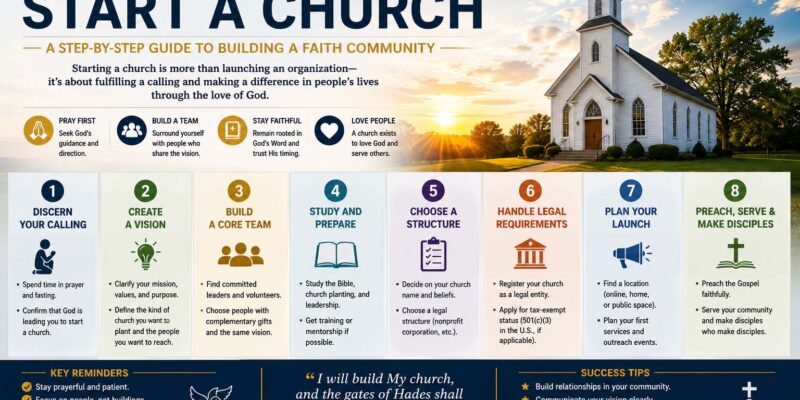
Starting a church is about much more than finding a building and holding a Sunday service. It takes thoughtful planning, committed leadership, legal preparation, and a clear vision for serving a community.
If you’re researching how to start a church, you’re probably asking practical questions. Where do you begin? Do you need legal registration? How do you find members? What does it cost? How do you organize leadership?
This guide walks through the process step by step. While laws vary by country and state, these principles provide a solid foundation for planning and launching a new church.
What Does It Mean to Start a Church?
A church is more than a place where people gather for worship.It is an organized community built around shared beliefs, teaching, fellowship, service, and spiritual growth, where members come together to support one another and practice their faith.
Launching a church often involves both spiritual and organizational responsibilities, including:
- Creating a clear mission
- Building a leadership team
- Organizing worship services
- Managing finances responsibly
- Meeting legal requirements
- Serving the local community
Treating these responsibilities with care helps create a healthy foundation for long-term growth.
A Simple Roadmap
| Stage | Main Goal |
|---|---|
| Vision | Define the church’s purpose |
| Leadership | Build a trusted leadership team |
| Legal Setup | Complete required registrations |
| Planning | Create budgets and ministry plans |
| Launch | Begin regular worship services |
| Growth | Expand outreach and community programs |
Define Your Mission and Vision
Every successful church begins with a clear purpose.
Ask questions like:
- Who are we trying to serve?
- What needs exist in our community?
- What values guide our ministry?
- What makes our church unique?
Write a simple mission statement that explains why the church exists.
A clear vision helps every future decision stay focused.
Build a Leadership Team
Starting alone can be overwhelming.
Many churches begin with a small group of committed leaders who share responsibilities.
Your team may include:
- Senior pastor
- Worship leader
- Children’s ministry leader
- Treasurer
- Administrative volunteer
- Hospitality coordinator
Choose people known for integrity, reliability, and a willingness to serve.
How to Start a Church Legally
Many people search for how to start a church legally because legal requirements vary by location.
Common steps may include:
- Choosing a legal name
- Forming a nonprofit organization if applicable
- Creating governing documents
- Applying for tax-related registrations when available
- Opening a church bank account
- Following local zoning and occupancy rules
- Obtaining any required permits or insurance
Depending on your location, you may also need to understand What Is a Business License before completing registration requirements.
The exact process depends on your country, state, or local jurisdiction.
Before launching, consult a qualified attorney or nonprofit professional who understands local laws. In some cases, learning What Is a Disregarded Entity can also help you understand how different legal structures are treated.
Choose the Right Meeting Location
A church doesn’t need a large building on day one.
Many successful churches begin in:
- Community centers
- Schools
- Hotel conference rooms
- Office spaces
- Homes
- Shared worship facilities
As attendance grows, you can evaluate whether purchasing or leasing a permanent location makes sense.
Choose a space that is:
- Safe
- Accessible
- Comfortable
- Large enough for expected attendance
- Easy for visitors to find
Create a Budget
Even small churches have expenses.
Your budget may include:
- Facility rental
- Insurance
- Audio equipment
- Musical instruments
- Children’s ministry supplies
- Website hosting
- Printed materials
- Community outreach
- Utilities
- Administrative costs
A written budget encourages responsible financial stewardship and helps avoid unexpected shortfalls, similar to the planning required in How to Start a Cleaning Business.
Plan Your Worship Services
Consistency helps people know what to expect.
Think about:
- Service length
- Music style
- Teaching format
- Prayer time
- Children’s programs
- Fellowship opportunities
Many churches begin with one weekly service before expanding their schedule.
Develop Core Ministries
Not every ministry needs to launch immediately.
Start with a few essential areas.
Examples include:
- Sunday worship
- Children’s ministry
- Small groups
- Community service
- Prayer gatherings
- Youth ministry
Expanding gradually often leads to stronger long-term results than trying to do everything at once.
How to Start a Church From Scratch
If you’re wondering how to start a church from scratch, focus on building people before buildings.
Many thriving churches began with:
- A handful of families
- Bible study groups
- Home gatherings
- Community outreach events
- Volunteer service projects
Strong relationships usually create healthier growth than large marketing campaigns alone.
A website helps visitors learn about your church before attending.
Include pages such as:
- About Us
- Mission
- Leadership
- Service Times
- Contact Information
- Directions
- Frequently Asked Questions
Adding online sermons, event calendars, and volunteer information can also improve communication.
Reach Your Community
Growing a church often starts with serving others.
Ideas include:
- Food drives
- School supply donations
- Family events
- Free parenting workshops
- Community clean-up projects
- Holiday outreach
- Youth activities
When people see genuine care for the community, they are more likely to learn about your church.
Use Social Media Wisely
Social media can support community engagement.
Share:
- Upcoming events
- Sermon highlights
- Volunteer opportunities
- Community stories
- Encouraging messages
Keep your communication welcoming, consistent, and authentic.
How to Start a Ministry Without a Church: A Practical Guide to Getting Started
Some people feel called to serve but are not ready to launch a full congregation.
Starting a ministry without a church building is possible by focusing on purpose, community outreach, and consistent service. Many ministries begin informally through online platforms, small group gatherings, volunteer work, or community support efforts before ever having a physical location.
- Prison outreach
- Food assistance
- Campus ministry
- Online Bible studies
- Marriage support
- Youth mentoring
- Mission work
- Hospital visitation
Many ministries operate independently while partnering with existing churches and community organizations.
How to Start a Church in Texas
People often ask about how to start a church in Texas because state requirements can differ from other locations. In general, starting a church involves defining your mission, organizing leadership, complying with state nonprofit guidelines, and meeting any local registration or tax exemption requirements that apply to religious organizations.
The overall process is similar to starting a church elsewhere:
- Establish a leadership team.
- Choose a church name.
- Prepare governing documents.
- Review nonprofit and tax requirements.
- Follow local zoning and occupancy regulations.
- Obtain insurance where appropriate.
Because legal and tax rules can change, check with Texas state agencies and qualified legal or accounting professionals before completing registrations.
Leadership Best Practices
Healthy churches usually have leaders who prioritize accountability and service.
Good leadership habits include:
- Regular meetings
- Financial transparency
- Volunteer training
- Clear communication
- Conflict resolution
- Long-term planning
Strong leadership builds trust within the congregation.
Common Challenges
New churches often face similar obstacles.
These may include:
Limited Budget
Start with essential expenses only.
Avoid unnecessary purchases during the early months.
Volunteer Burnout
Encourage rest and shared responsibilities.
Avoid expecting a small group of people to handle every task.
Slow Growth
Healthy churches often grow gradually.
Focus on meaningful relationships rather than attendance numbers alone.
Communication Problems
Keep members informed through:
- Email newsletters
- Social media
- Church website
- Weekly announcements
Clear communication reduces confusion.
Mistakes to Avoid
Many first-time church leaders make avoidable mistakes.
Watch for these:
- Launching without a clear mission
- Ignoring legal requirements
- Failing to create a budget
- Trying to grow too quickly
- Neglecting volunteer development
- Poor financial recordkeeping
- Lack of leadership accountability
Learning from these mistakes can save time and resources.
Frequently Asked Questions
How much money does it take to start a church?
Startup costs vary widely depending on facility size, equipment, staffing, and location. Some churches begin with modest budgets by meeting in homes or rented community spaces.
Can you start a church in your home?
In many places, yes, though local zoning rules, occupancy limits, and other regulations may apply. Check your local requirements before hosting regular gatherings.
Do churches need nonprofit status?
Requirements vary by country and jurisdiction. Many churches choose nonprofit structures because they can provide legal and tax-related benefits, but professional guidance is recommended.
How long does it take to start a church?
The planning process may take several months or longer, depending on leadership preparation, legal requirements, finances, and community readiness.
Should you buy a building immediately?
Not necessarily. Many successful churches begin in rented or shared spaces before moving into permanent facilities.
Building a Strong Foundation for the Future
Learning how to start a church is about balancing vision with practical planning. A healthy church grows through clear leadership, responsible management, genuine community service, and consistent care for the people it serves.
Whether you’re exploring how to start a church from scratch, researching how to start a church legally, considering How to Start a Church in Texas or Launch a Ministry Without a Church Building begin with a clear mission and take one step at a time. Focus on serving your community well, build trustworthy leadership, stay organized, and seek qualified legal and financial advice when needed. A thoughtful foundation today can support meaningful ministry for many years to come.