
Starting a business can be exciting, but choosing the right business structure is one of the first major decisions an entrepreneur must make. Among all business types, the sole proprietorship is often the simplest and most common.
Understanding sole proprietorship examples can help aspiring entrepreneurs determine whether this structure fits their goals. Many freelancers, local service providers, consultants, and small business owners operate as sole proprietors because of the simplicity and flexibility involved. Creating a Marketing Strategy Template early in the business journey can also help new entrepreneurs organize their goals, target customers, and promotional activities.
What Is a Sole Proprietorship?
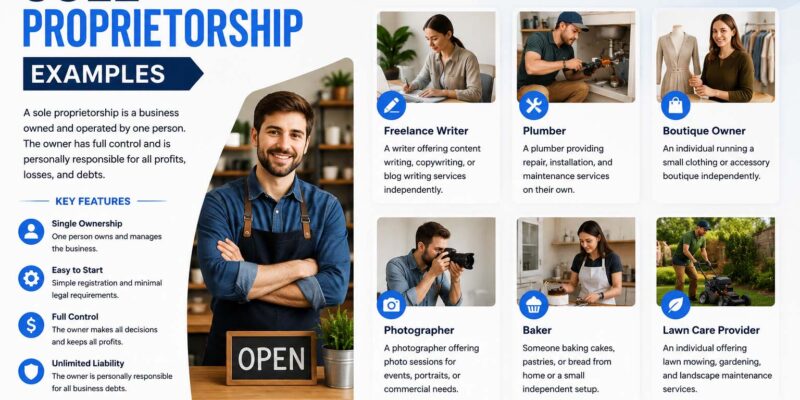
A sole proprietorship is a business owned and operated by one individual.
The owner and the business are legally considered the same entity in many jurisdictions.
This means:
- One owner controls operations
- The owner receives profits
- The owner is responsible for debts and obligations
Because of its simplicity, the sole proprietorship is often the first business structure chosen by entrepreneurs.
Why Sole Proprietorships Are Popular
Many new business owners start as sole proprietors because they are relatively easy to establish.
Benefits often include:
- Simple setup process
- Lower startup costs
- Full decision-making authority
- Direct access to profits
- Flexible operations
These advantages make sole proprietorships attractive for small businesses and independent professionals.
Common Sole Proprietorship Examples
There are countless sole proprietorship examples across different industries.
Some common examples include:
Freelance Writers
Many writers operate independently and provide content services directly to clients.
Graphic Designers
Independent designers often manage their own projects and customer relationships.
Tutors
Private tutors commonly operate as sole proprietors.
Photographers
Freelance photographers frequently run small businesses independently.
Personal Trainers
Fitness professionals often build client-based businesses as sole proprietors.
These businesses typically have one owner who manages operations and income. As these businesses grow, understanding What Is a Lead becomes important for attracting and converting potential customers into paying clients.
Examples of Sole Proprietorship in Everyday Business
Many people interact with examples of sole proprietorship regularly without realizing it.
Examples include:
Local Lawn Care Services
A homeowner hires an individual to mow lawns and maintain landscaping.
Independent Consultants
Professionals offer expertise to businesses without forming larger organizations.
Home-Based Businesses
Many entrepreneurs successfully operate online or home-based businesses with minimal startup costs.
Independent Repair Services
Technicians providing appliance or electronics repair often operate independently.
These businesses demonstrate the flexibility of the sole proprietorship model.
Sole Proprietorship Business Examples by Industry
Different industries offer numerous opportunities for sole proprietors.
Service Businesses
Examples include:
- Cleaning services
- Pet care
- Event planning
- Home maintenance
Creative Businesses
Examples include:
- Photography
- Graphic design
- Content creation
- Illustration
Professional Services
Examples include:
- Consulting
- Coaching
- Accounting
- Tutoring
Online Businesses
Examples include:
- Blogging
- Affiliate marketing
- E-commerce stores
- Digital products
These sole proprietorship business examples show how versatile this structure can be. Business owners who sell premium consulting, coaching, or specialized services may eventually expand into High Ticket Sales as their expertise and reputation grow.
Famous Sole Proprietorship Examples
Many people search for famous sole proprietorship examples to understand how successful businesses start.
While many large companies eventually become corporations or limited liability companies, some began as sole proprietorships.
Examples include:
Independent Authors
Many successful authors initially operate as sole proprietors.
Freelance Creators
Content creators often start independently before building larger teams.
Local Business Owners
Many well-known community businesses begin with a single entrepreneur.
Consultants and Coaches
Numerous industry experts launch solo practices before expanding.
These examples highlight how a small operation can grow into something much larger over time. Building a strong Customer Engagement Strategy can help these businesses retain clients and encourage repeat business as they expand.
Examples of Sole Proprietorship Company Names
Entrepreneurs frequently look for examples of sole proprietorship company names when brainstorming business ideas.
Examples might include:
- Smith Landscaping Services
- Johnson Photography
- Elite Fitness Coaching
- Bright Path Tutoring
- Creative Design Studio
Many sole proprietors choose names that:
- Reflect their services
- Include their personal name
- Support branding efforts
- Appeal to target customers
A strong business name can contribute to professional credibility.
Advantages of Sole Proprietorships
Understanding the benefits helps explain why this structure remains popular.
Easy to Start
In many locations, setup requirements are minimal.
Complete Control
Owners make all business decisions independently.
Direct Access to Profits
Income flows directly to the owner.
Operational Flexibility
Changes can often be implemented quickly.
Lower Administrative Requirements
Compared with larger business structures, compliance obligations are often simpler.
These benefits appeal particularly to first-time entrepreneurs.
Challenges of Sole Proprietorships
Despite their advantages, sole proprietorships also present risks.
Unlimited Personal Liability
Owners may be personally responsible for business debts.
Limited Access to Capital
Securing investment can sometimes be more difficult.
Workload Concentration
The owner often handles multiple responsibilities.
Growth Limitations
Expanding operations may eventually require a different structure. As businesses grow, some owners also choose to hire experienced executives, such as a Fractional COO, to improve operations while maintaining flexibility.
How to Start a Sole Proprietorship
For many entrepreneurs, the process is relatively straightforward.
Step 1: Choose a Business Idea
Identify a product or service that solves a problem.
Step 2: Select a Business Name
Choose a name that aligns with your brand.
Step 3: Verify Legal Requirements
Research local licensing and registration rules.
Step 4: Open Business Accounts
Separate personal and business finances when possible.
Step 5: Market Your Services
Use digital and traditional marketing methods to attract customers.
These steps provide a strong foundation for launching a business.
Business Strategy Tips for Sole Proprietors
A successful sole proprietorship requires more than simply offering a service.
Build a Professional Brand
Develop a consistent brand identity that helps customers recognize and trust your business.
Focus on Customer Relationships
Satisfied customers often generate referrals.
Manage Finances Carefully
Track income and expenses consistently.
Invest in Skills
Continuous learning supports long-term growth.
Diversify Revenue Sources
Offering multiple services may improve stability.
Strong business practices help sole proprietors remain competitive.
When Should a Sole Proprietorship Become an LLC?
As businesses grow, owners often consider changing structures.
Common reasons include:
- Increased revenue
- Greater liability concerns
- Hiring employees
- Seeking investors
Many entrepreneurs begin as sole proprietors and later transition to an LLC or corporation.
The right timing depends on business goals and circumstances.
Frequently Asked Questions
What is a sole proprietorship?
A sole proprietorship is a business owned and operated by one individual.
What are some sole proprietorship examples?
Examples include freelancers, photographers, tutors, consultants, and lawn care providers.
What are examples of sole proprietorship company names?
Examples include service-based names such as Johnson Photography or Elite Fitness Coaching.
What are the benefits of a sole proprietorship?
Benefits include simplicity, full control, and direct access to profits.
What are the disadvantages of a sole proprietorship?
The main disadvantages include unlimited personal liability, limited access to capital, and greater responsibility for managing all aspects of the business.
Can a sole proprietorship grow into a larger company?
Yes. Many successful businesses begin as sole proprietorships before expanding into LLCs or corporations.
Conclusion
Understanding sole proprietorship examples helps aspiring entrepreneurs see how this simple business structure operates in the real world. From practical examples of sole proprietorship and diverse sole proprietorship business examples to inspiring famous sole proprietorship examples and creative examples of sole proprietorship company names, this model remains one of the most accessible ways to start a business. While it offers simplicity, flexibility, and control, entrepreneurs should also understand the responsibilities involved. With the right planning, marketing strategy, and commitment, a sole proprietorship can become the foundation for long-term business success.