
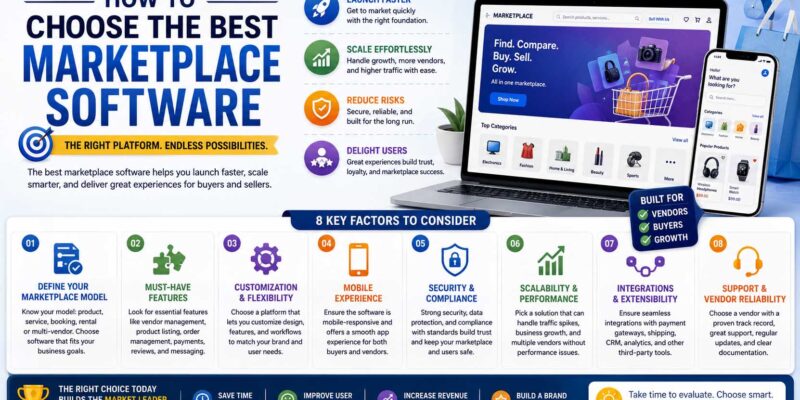
Launching an online marketplace can be an exciting business opportunity, but your success depends heavily on choosing the right technology. If you’re wondering how to choose the best marketplace software, you’re not alone. With dozens of platforms promising powerful features, finding one that fits your business goals can feel overwhelming.
The best marketplace software should support your current needs while giving you room to grow. Whether you’re building a B2B marketplace, a multi-vendor eCommerce platform, or a niche industry marketplace, making the right choice early can save time, money, and future headaches.
This guide explains the most important factors to consider before investing in marketplace software and helps you make a confident decision.
Why Choosing the Right Marketplace Software Matters
Marketplace software is the foundation of your business. It manages vendors, customers, products, payments, orders, and reporting from one central platform.
A poor software choice can lead to:
- Slow website performance
- Limited customization
- Difficult vendor management
- Security concerns
- Expensive migrations later
On the other hand, the right solution helps your marketplace scale smoothly while delivering a better experience for buyers and sellers.
How to Choose the Best Marketplace Software Based on Your Business Model
Not every marketplace operates the same way.
Before comparing software vendors, define your marketplace type.
B2C Marketplaces
Businesses sell products directly to consumers.
Examples include:
- Fashion marketplaces
- Electronics marketplaces
- Handmade goods
- Beauty products
These platforms usually require strong search functionality, promotions, and customer reviews.
B2B Marketplaces
Companies sell products or services to other businesses.
Typical requirements include:
- Bulk ordering
- Custom pricing
- Purchase approvals
- Business accounts
- Invoice payments
Service Marketplaces
These platforms connect customers with service providers.
Examples include:
- Freelancers
- Tutors
- Consultants
- Home repair professionals
Scheduling tools, messaging, and booking systems become much more valuable here.
Core Features Every Marketplace Platform Should Include
When comparing software options, focus on practical functionality instead of long feature lists.
Look for these essentials:
Vendor Management
Your software should allow vendors to:
- Create profiles
- Manage products
- Track orders
- View earnings
- Update inventory
Easy vendor onboarding helps your marketplace grow faster.
Product Management
Flexible catalog management allows sellers to organize products efficiently.
Useful features include:
- Categories
- Product variants
- Bulk imports
- Inventory tracking
- Image management
Secure Payment Processing
Reliable payment support is essential.
Look for:
- Multiple payment gateways
- Automatic commission calculations
- Tax management
- Refund handling
- Split payments
The easier transactions become, the more confidence buyers and sellers will have.
Mobile-Friendly Design
Many customers shop on smartphones.
Choose software that offers:
- Responsive design
- Fast page loading
- Mobile checkout
- Simple navigation
A mobile-friendly marketplace often sees higher conversion rates.
Compare Scalability Before Making a Decision
Your marketplace may start small, but growth changes everything.
Ask questions like:
- Can the platform support thousands of vendors?
- Will product limits become a problem?
- Can performance remain fast during busy seasons?
- Does the software support international expansion?
Planning for growth now prevents costly platform changes later.
Consider Integration Options
Modern businesses rarely rely on one application.
Marketplace software should integrate with tools such as:
- Payment providers
- Shipping services
- Email marketing
- Accounting software
- Customer support platforms
- Analytics solutions
If you’re also evaluating sales tools, understanding how to choose a crm system can help you create a connected technology stack that supports both customer acquisition and long-term relationships.
Evaluate the Customer Experience
Customers expect fast, simple shopping experiences.
Pay attention to features such as:
- Powerful search
- Smart filters
- Wish lists
- Ratings and reviews
- Fast checkout
- Order tracking
A positive buying experience encourages repeat purchases.
Vendor Experience Is Just as Important
Marketplace owners sometimes focus only on buyers.
However, vendors are equally valuable.
A strong vendor dashboard should include:
- Sales reports
- Product management
- Inventory controls
- Order notifications
- Earnings summaries
When vendors enjoy using your platform, they’re more likely to stay active and recommend it to others.
Analytics and Reporting
Business decisions should rely on data rather than guesswork.
Useful reporting features include:
| Report | Why It Matters |
|---|---|
| Sales performance | Measures revenue trends |
| Vendor performance | Identifies top sellers |
| Customer activity | Understands buying behavior |
| Inventory reports | Prevents stock issues |
| Commission reports | Tracks marketplace earnings |
Good analytics help marketplace owners identify growth opportunities quickly.
Security Should Never Be an Afterthought
Online marketplaces handle sensitive customer information and financial transactions.
Choose software that supports:
- SSL encryption
- Multi-factor authentication
- Role-based permissions
- Regular security updates
- Secure payment processing
- Backup and recovery options
Strong security protects both your reputation and your users.
Customization and Branding
Every marketplace has unique goals.
Look for software that allows you to customize:
- Branding
- Colors
- Layouts
- Product categories
- Checkout process
- Vendor pages
A unique appearance helps your business stand out from competitors.
Understand Your Long-Term Marketing Needs
Marketplace growth depends on more than technology.
Your platform should support marketing through:
- SEO-friendly URLs
- Email campaigns
- Discount codes
- Referral programs
- Social sharing
- Content marketing
As your business expands, having a documented Marketing Strategy Template can help align promotional efforts with your marketplace’s growth objectives.
Don’t Ignore Customer Feedback
Real user feedback often reveals strengths and weaknesses that product demos don’t show.
Before purchasing software:
- Read customer reviews.
- Watch product demonstrations.
- Request a trial account.
- Ask existing users about support quality.
- Compare independent review sites.
Many successful marketplace owners also build a voice of the customer program to collect ongoing feedback after launch, helping them improve both the platform and the buying experience over time.
Customer Retention Features Matter
Winning a customer once is only the beginning.
Your marketplace software should support long-term engagement through features like:
- Loyalty programs
- Personalized recommendations
- Saved payment methods
- Purchase history
- Targeted promotions
These capabilities strengthen your overall Customer Engagement Strategy and encourage repeat purchases, which are often more profitable than constantly acquiring new customers.
Common Mistakes When Choosing Marketplace Software
Many businesses rush into purchasing software without proper planning.
Avoid these mistakes:
Choosing Based Only on Price
The cheapest solution may lack critical features or become expensive through paid add-ons.
Instead, compare total ownership costs.
Ignoring Future Growth
Your software should support your business for years, not just launch day.
Think ahead before committing.
Overlooking Support Quality
Even excellent software occasionally needs troubleshooting.
Check whether the provider offers:
- Live chat
- Email support
- Phone support
- Knowledge base
- Community forums
Responsive support can save valuable time when issues arise.
Buying Too Many Features
Some platforms include hundreds of tools that smaller businesses never use.
Focus on features that directly support your marketplace goals.
Create Standard Operating Procedures Early
Technology alone doesn’t guarantee consistency.
As your marketplace grows, documenting workflows with a clear What Is SOP framework helps employees and vendors follow repeatable processes for onboarding, customer service, and order management.
Well-defined procedures reduce confusion and improve operational efficiency.
A Simple Marketplace Software Evaluation Checklist
Before making your final decision, review these questions:
- Does it support your marketplace model?
- Is it easy for vendors to use?
- Can customers complete purchases quickly?
- Does it integrate with your existing systems?
- Is pricing transparent?
- Does it scale with your business?
- Are security features up to date?
- Is customer support reliable?
- Can you customize branding?
- Does the provider have a good reputation?
If most answers are “yes,” you’re likely evaluating a strong platform.
Frequently Asked Questions
What is marketplace software?
Marketplace software is a platform that allows multiple vendors to sell products or services through a single website or application managed by a marketplace owner.
Should I choose cloud-based marketplace software?
For most businesses, yes. Cloud-based platforms reduce infrastructure management, receive regular updates, and are easier to scale as your marketplace grows.
How much does marketplace software cost?
Pricing varies widely. Entry-level solutions may start at a few hundred dollars per month, while enterprise platforms can cost several thousand dollars monthly, depending on features, transaction volume, and customization.
Can marketplace software support international selling?
Many modern platforms support multiple currencies, languages, tax rules, and shipping providers, making international expansion much easier.
How long does implementation usually take?
Simple cloud-based solutions can be launched within a few weeks, while highly customized enterprise marketplaces may take several months to deploy.
Making Your Final Decision
Learning how to choose the best marketplace software comes down to matching technology with your business goals. Instead of chasing the longest feature list, focus on usability, scalability, security, integrations, and the experience your platform creates for both buyers and sellers.
Take time to compare vendors, test demo environments, how to choose the best marketplace software and think beyond your initial launch. A marketplace that performs well today should also support your growth tomorrow.