
A talented employee hands in their resignation, and suddenly a business faces much more than an empty desk. Managers have to recruit, interview, train a replacement, and give the new hire time to reach full productivity. The process takes time, costs money, and often affects the morale of the remaining team.
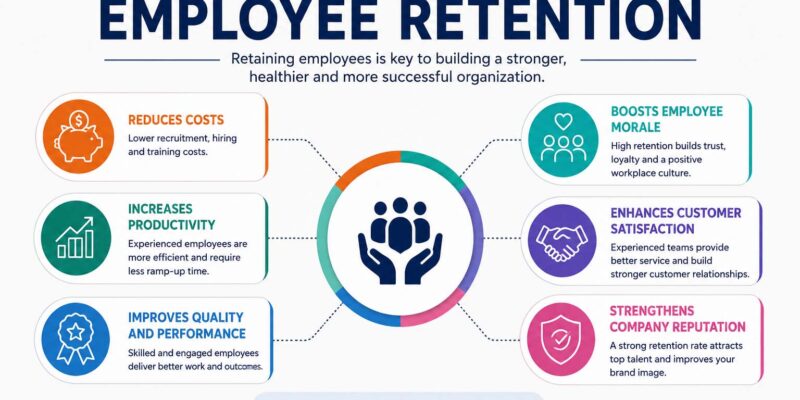
That’s why understanding the benefits of employee retention is essential for businesses of every size. Retaining skilled employees doesn’t simply reduce hiring costs—it strengthens company culture, improves customer relationships, boosts productivity, and creates long-term stability.
Whether you’re a small business owner, an HR professional, or a business leader looking to build a stronger workforce, this guide explains why employee retention matters and how your organization can improve it through practical, proven strategies.
What Is Employee Retention?
Employee retention refers to a company’s ability to keep employees working for the organization over an extended period rather than losing them to resignations, retirements, or competitors.
A high retention rate usually indicates that employees are satisfied with their work environment, compensation, career opportunities, and leadership. On the other hand, frequent turnover often signals deeper issues that deserve attention.
Retention isn’t about preventing employees from ever leaving. Instead, it’s about creating a workplace where talented people choose to stay because they see opportunities for growth, feel appreciated, and enjoy their work.
Why Employee Retention Has Become a Business Priority
Today’s workforce has more career options than ever before. Remote work, flexible schedules, and competitive job markets mean employees can explore new opportunities without relocating.
As a result, organizations that focus only on recruitment often overlook a more cost-effective strategy—keeping the talented people they already have.
Many executive leaders, including a Chief Strategy Officer, recognize employee retention as a long-term competitive advantage because experienced employees contribute directly to business growth, innovation, and customer satisfaction.
Businesses that prioritize retention often enjoy greater operational consistency while avoiding the repeated disruption caused by constant hiring.
Benefits of Employee Retention for Long-Term Business Success
The benefits of employee retention extend far beyond reducing recruitment expenses. They influence nearly every part of an organization.
Lower Hiring and Training Costs
Recruiting new employees involves advertising positions, screening applicants, conducting interviews, onboarding, and training.
These expenses add up quickly.
When businesses retain experienced employees, they avoid repeating this process unnecessarily. Instead of replacing workers, they can invest those resources into employee development, technology, or business expansion.
Higher Productivity
Experienced employees understand company systems, customer expectations, and internal workflows.
Because they spend less time learning the basics, they complete tasks more efficiently and make fewer mistakes.
Teams with stable membership also collaborate better because employees already understand one another’s strengths and communication styles.
Stronger Company Culture
A positive workplace culture develops over time.
When employees stay with an organization, they reinforce company values, mentor new hires, and help maintain consistent standards.
Frequent turnover makes it difficult to build trust across departments because relationships are constantly restarting.
Organizations that clearly document processes through resources like What Is SOP often find it easier to maintain consistency while supporting employee success.
Better Customer Relationships
Customers appreciate familiar faces.
Whether employees work in retail, healthcare, finance, or business services, long-term relationships help build trust and confidence.
Employees who understand customer preferences often provide faster, more personalized service.
Satisfied employees frequently create satisfied customers.
Increased Knowledge Retention
Employees gain valuable knowledge through years of experience.
They understand company history, internal systems, client expectations, and practical problem-solving techniques that aren’t always documented.
When experienced employees leave, much of that knowledge leaves with them.
Retaining skilled staff helps preserve this expertise for future generations of employees.
Improved Employee Engagement
People tend to become more engaged when they believe their employer values their contributions.
Recognition, meaningful work, career development, and supportive leadership all encourage employees to invest more energy into their roles.
Engaged employees often contribute new ideas, collaborate more effectively, and demonstrate stronger commitment during challenging periods.
What Is the Importance of Benefits on Employee Retention?
Many employers consider the importance of benefits for employee retention when reviewing compensation packages.
Employee benefits have become one of the biggest factors influencing job satisfaction.
While salary remains important, today’s workforce also evaluates health insurance, retirement plans, paid leave, flexible work options, professional development, and wellness programs before deciding whether to remain with an employer.
A competitive benefits package shows employees that the organization values both their professional contributions and personal well-being.
Businesses that regularly review their benefits often experience stronger retention than companies relying on salary increases alone.
The Importance of Employee Benefits for Retention
The importance of employee benefits for retention extends beyond attracting job applicants.
Benefits help employees feel financially secure and supported during different stages of life.
For example, comprehensive healthcare reduces personal financial stress, while retirement plans encourage employees to build long-term careers within the company.
Flexible scheduling has also become a major retention factor, especially for working parents and employees balancing professional and personal responsibilities.
When businesses combine competitive pay with meaningful benefits, employees are more likely to stay engaged and committed.
Key Factors That Influence Employee Retention
Retention doesn’t depend on a single policy.
Instead, several workplace factors work together to shape employee satisfaction.
Supportive Leadership
Employees often leave managers rather than companies.
Leaders who communicate openly, provide constructive feedback, and recognize achievements create healthier work environments.
Regular conversations also help identify concerns before employees begin searching for new opportunities.
Many organizations use a Skip Level Meeting to give employees an opportunity to share feedback directly with senior leaders, creating additional communication channels that strengthen trust.
Career Development Opportunities
People want to grow professionally.
Employees who see clear career paths are less likely to leave for advancement elsewhere.
Organizations can support development through:
- Internal promotions
- Leadership training
- Professional certifications
- Skill-building workshops
- Mentorship programs
Learning opportunities show employees that the business is invested in their future.
Competitive Compensation
While compensation isn’t the only reason employees stay, it remains a significant factor.
Regular salary reviews help businesses remain competitive in changing labor markets.
Performance bonuses, profit sharing, and recognition programs also encourage long-term commitment.
Still, compensation works best alongside strong leadership, meaningful work, and positive workplace culture rather than replacing them.
Healthy Work-Life Balance
Employees perform better when they have time to recharge.
Flexible schedules, remote work options, reasonable workloads, and generous vacation policies all contribute to healthier work environments.
Businesses that support work-life balance often experience lower burnout and higher employee satisfaction.
How Wellness Programs Improve Retention
The impact of wellness benefits on employee retention has become increasingly clear across many industries.
Wellness initiatives may include:
- Mental health support
- Employee assistance programs
- Fitness memberships
- Stress management resources
- Financial wellness education
- Health screenings
These programs demonstrate that employers care about employees beyond workplace performance.
As a result, employees often feel more connected to the organization and more motivated to remain part of the team.
Wellness programs also contribute to lower absenteeism and improved workplace morale, creating benefits for both employees and employers.
Benefits of PEOs for Employee Retention
Many growing businesses explore the benefits of PEOs for employee retention as they look for ways to improve the employee experience without building a large HR department.
A Professional Employer Organization (PEO) partners with businesses to handle HR functions such as payroll, benefits administration, compliance, and employee support.
This arrangement allows smaller companies to offer benefits that may otherwise only be available at larger organizations.
Some advantages include:
- Access to competitive health insurance plans
- Better retirement benefit options
- Streamlined HR processes
- Improved compliance with employment laws
- More time for business owners to focus on leadership
When employees receive professional HR support and attractive benefits, they often feel more confident about building a long-term career with the company.
Practical Strategies to Improve Employee Retention
Retaining employees doesn’t happen by accident. It requires consistent effort and a workplace where people feel respected, supported, and motivated.
Hire the Right People
Retention starts before an employee’s first day.
Clear job descriptions, realistic expectations, and thorough interviews help ensure candidates understand the role and company culture.
Hiring people whose values align with the organization reduces the likelihood of early turnover.
Build a Strong Onboarding Process
New employees form lasting impressions during their first few weeks.
An effective onboarding program should introduce company goals, team members, expectations, and available resources.
Employees who feel welcomed are more likely to become engaged quickly.
Recognize Good Work Regularly
Recognition doesn’t always require financial rewards.
Simple actions such as thanking employees publicly, celebrating milestones, or acknowledging achievements during team meetings help people feel appreciated.
Consistent recognition encourages employees to continue performing at a high level.
Encourage Open Communication
Employees should feel comfortable sharing concerns, ideas, and suggestions.
Regular one-on-one meetings, anonymous surveys, and team discussions help managers identify issues before they become reasons to resign.
Invest in Learning and Development
Professional growth keeps employees motivated.
Businesses can support development through:
- Online training
- Industry certifications
- Leadership coaching
- Cross-functional projects
- Conference attendance
When employees continue learning, they often become more confident and productive while seeing a future within the organization.
Common Reasons Employees Leave
Understanding why employees resign helps businesses address problems before they grow.
Some of the most common reasons include:
- Limited career advancement
- Poor management
- Lack of recognition
- Burnout
- Uncompetitive compensation
- Weak communication
- Poor work-life balance
- Toxic workplace culture
Most resignations result from several issues combined rather than a single event.
Regular employee feedback helps leaders spot patterns early.
Common Mistakes That Hurt Employee Retention
Even organizations with good intentions sometimes make decisions that increase turnover.
Avoid these common mistakes:
Waiting Until Employees Want to Leave
Many companies only discuss career goals after an employee submits a resignation.
Career development should be an ongoing conversation rather than a last-minute negotiation.
Promoting Without Leadership Training
Strong technical skills don’t automatically create effective managers.
New supervisors benefit from leadership training that covers communication, coaching, conflict resolution, and performance management.
Better managers often lead to better retention.
Ignoring Employee Feedback
Collecting feedback has little value if employees never see improvements.
Whether feedback comes through surveys or conversations, businesses should explain how they’re responding to employee concerns.
Transparency builds trust.
Focusing Only on Salary
Competitive pay matters, but employees also value flexibility, career growth, recognition, supportive leadership, and meaningful work.
Organizations that address only compensation may still struggle with turnover.
Employee Retention Best Practices
The most successful companies treat retention as an ongoing business strategy rather than a one-time HR initiative.
A practical approach includes:
| Best Practice | Business Benefit |
|---|---|
| Offer competitive benefits | Improves job satisfaction |
| Provide regular feedback | Strengthens communication |
| Create career paths | Encourages long-term commitment |
| Recognize achievements | Increases engagement |
| Support work-life balance | Reduces burnout |
| Train managers | Builds stronger teams |
| Review compensation regularly | Maintains market competitiveness |
Small improvements across several areas often produce better results than one major change.
Measuring Employee Retention Success
Businesses should monitor retention using measurable data instead of relying on assumptions.
Useful metrics include:
- Annual employee turnover rate
- Employee retention rate
- Average employee tenure
- Internal promotion rate
- Employee engagement survey results
- Exit interview feedback
- Absenteeism trends
Reviewing these indicators helps leaders identify what’s working and where improvements are needed.
Real-World Example
Imagine two companies with similar salaries and products.
Company A invests in leadership training, employee recognition, flexible work options, and professional development.
Company B focuses mainly on filling vacancies after employees leave.
After three years, Company A has lower recruitment costs, stronger customer relationships, and more experienced teams. Company B continues spending significant resources on hiring and onboarding while struggling to maintain consistent performance.
This example shows that retention creates long-term business value rather than simply reducing turnover.
Technology Can Support Employee Retention
Modern HR software makes it easier to improve employee satisfaction and engagement.
Businesses commonly use digital tools to:
- Track performance goals
- Schedule feedback sessions
- Manage employee benefits
- Deliver online training
- Measure engagement
- Conduct anonymous surveys
Some organizations also improve the employee experience by simplifying administrative tasks through the benefits of outsourcing payroll, allowing HR teams to spend more time on people-focused initiatives instead of routine paperwork.
Listening to Employees Creates Better Retention
Employee retention improves when organizations actively seek feedback instead of making assumptions.
Regular surveys, interviews, and discussion sessions help leaders understand what employees value most.
Many businesses apply principles similar to a voice of the customer program, except they focus internally by gathering employee insights and using that information to improve workplace policies, communication, and culture.
Employees who feel heard are more likely to stay committed to the organization.
Frequently Asked Questions
Why is employee retention important?
Employee retention reduces recruitment costs, preserves organizational knowledge, improves productivity, strengthens company culture, and builds better customer relationships.
What are the biggest benefits of employee retention?
Some of the biggest benefits include lower hiring costs, improved employee engagement, greater operational stability, stronger teamwork, and higher customer satisfaction.
Can employee benefits improve retention?
Yes. Competitive benefits such as healthcare, retirement plans, paid leave, flexible work arrangements, and wellness programs often increase job satisfaction and encourage employees to remain with an employer.
How can small businesses improve employee retention?
Small businesses can improve retention by offering career development opportunities, recognizing employee achievements, maintaining open communication, providing flexible work options where possible, and creating a positive workplace culture.
How long does it take to improve retention?
Retention improvements usually happen gradually. Businesses that consistently invest in leadership, communication, employee development, and workplace culture often see measurable results over several months and continue benefiting over the long term.
Turning Retention Into a Long-Term Business Advantage
The benefits of employee retention reach every part of an organization. Companies that keep experienced employees spend less on recruitment, maintain stronger customer relationships, preserve valuable knowledge, and build teams that work together more effectively.
Retention isn’t driven by salary alone. Employees are more likely to stay when they feel respected, have opportunities to grow, receive meaningful benefits, and trust their leaders. By reviewing workplace practices regularly and acting on employee feedback, businesses can create an environment where talented people choose to build lasting careers.
Treat employee retention as an ongoing investment rather than a short-term HR goal, and the rewards can support sustainable business growth for years to come.