
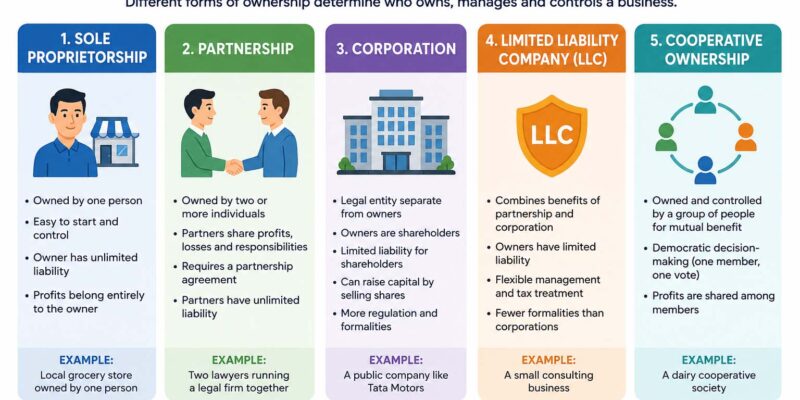
Starting a business often begins with one big decision: choosing the right types of ownership. Your ownership structure affects everything from taxes and legal liability to decision-making and future growth. Whether you’re launching a small local business or planning to build a large company, selecting the right ownership model lays the foundation for long-term success.
While many entrepreneurs focus on products, marketing, or funding first, the ownership structure deserves just as much attention. A well-chosen structure can simplify operations, reduce risk, and make it easier to attract investors or partners as your business grows.
What Are Types of Ownership?
The term types of ownership refers to the legal structure that determines who owns a business, how profits are shared, who makes decisions, and who is responsible for debts or legal obligations.
Different ownership structures are designed for different business goals. Some are ideal for solo entrepreneurs, while others support multiple owners or large organizations with shareholders.
Although the exact legal requirements vary by country, the most common types of business ownership remain similar around the world.
Why Choosing the Right Ownership Structure Matters
Your ownership model influences nearly every part of your business.
It can affect:
- Personal liability
- Tax obligations
- Startup costs
- Decision-making authority
- Funding opportunities
- Business continuity
- Regulatory requirements
For example, before opening a company, many entrepreneurs need to understand What Is a Business License because licensing requirements often depend on the business activity and local regulations.
Choosing the wrong structure doesn’t necessarily mean failure, but changing ownership later can involve legal paperwork, tax consequences, and additional costs.
The 4 Types of Business Ownership
When people refer to the 4 types of business ownership, they usually mean these widely recognized structures:
| Ownership Type | Number of Owners | Personal Liability | Tax Treatment | Best For |
|---|---|---|---|---|
| Sole Proprietorship | One | Unlimited | Personal income tax | Freelancers and small businesses |
| Partnership | Two or more | Usually shared | Pass-through taxation | Professional firms and family businesses |
| Limited Liability Company (LLC) | One or more | Limited | Flexible | Small and growing businesses |
| Corporation | Shareholders | Limited | Corporate taxation | Larger companies and investors |
Each option offers unique advantages depending on your goals.
Sole Proprietorship
A sole proprietorship is the simplest ownership structure.
One person owns the business and controls every decision.
The owner also receives all profits but assumes full responsibility for debts and legal obligations.
Advantages
- Easy to start
- Low setup costs
- Complete control
- Simple tax reporting
Disadvantages
- Unlimited personal liability
- Harder to raise investment
- Business depends heavily on one owner
A freelance graphic designer or neighborhood bakery often starts as a sole proprietorship before expanding.
Partnership
A partnership is formed when two or more individuals own and operate a business together.
Partners typically contribute money, skills, or resources while sharing profits and responsibilities according to a partnership agreement.
Although partnerships are relatively easy to establish, clear communication and written agreements help prevent future disagreements.
Advantages
- Shared financial investment
- Combined expertise
- Easier workload distribution
- Flexible management
Disadvantages
- Shared responsibility for decisions
- Potential conflicts between partners
- Personal liability in many partnership structures
Professional services such as accounting firms, law offices, and consulting businesses frequently operate as partnerships.
Limited Liability Company (LLC)
The Limited Liability Company, commonly known as an LLC, combines features of corporations and sole proprietorships.
Owners, known as members, generally receive liability protection while enjoying flexible tax treatment.
Because of this balance, LLCs have become one of the most popular different types of business ownership for small and medium-sized businesses.
Benefits of an LLC
- Limited personal liability
- Flexible ownership options
- Pass-through taxation in many jurisdictions
- Less administrative complexity than corporations
While legal rules vary, many entrepreneurs choose an LLC because it offers protection without requiring the formal structure of a corporation.
Corporation
A corporation is a separate legal entity owned by shareholders.
Unlike other ownership structures, the corporation itself owns assets, enters contracts, and assumes legal responsibility for its operations.
Shareholders generally aren’t personally responsible for business debts beyond their investment.
Corporations are often preferred by businesses planning to raise capital through investors or public stock offerings.
Advantages
- Strong liability protection
- Easier access to investment
- Long-term business continuity
- Transferable ownership through shares
Disadvantages
- More regulations
- Greater administrative requirements
- Higher setup and compliance costs
Many multinational companies and publicly traded organizations use the corporate structure because it supports large-scale growth.
Types of Property Ownership vs Business Ownership
People sometimes confuse types of property ownership with business ownership.
Property ownership refers to who legally owns physical assets such as land, buildings, or homes.
Business ownership defines who owns the company itself, controls its operations, receives profits, and accepts legal responsibilities.
For example, a corporation may own office buildings, equipment, and vehicles while shareholders own the corporation rather than those individual assets.
Understanding this distinction helps entrepreneurs make better legal and financial decisions when purchasing property for business use.
Factors to Consider Before Choosing an Ownership Structure
There isn’t one ownership model that works for every business.
Instead, evaluate several factors before making a decision.
Liability Protection
Ask yourself how much personal financial risk you’re willing to accept.
Businesses operating in higher-risk industries often choose structures that separate personal assets from business liabilities.
Taxes
Different ownership structures have different tax rules.
Before selecting one, consider speaking with an accountant or tax advisor who understands your local regulations.
You’ll also benefit from understanding What Is a Ledger, since accurate financial records are essential regardless of which ownership structure you choose.
Business Goals
Think about where you want your business to be in five or ten years.
If rapid expansion or outside investment is part of your plan, a corporation may provide more flexibility.
If you value simplicity and complete control, a sole proprietorship or LLC may be a better fit.
Number of Owners
Some ownership structures are built for a single owner, while others allow multiple people to share ownership, responsibilities, and profits.
Choosing a structure that fits your current team—and allows room for future growth—can save time and legal costs later.
How to Choose the Right Ownership Structure
Once you understand the available ownership models, the next step is matching one to your business goals. The best choice depends on more than taxes or startup costs. It should also support how you plan to operate, grow, and manage your company over time.
A simple decision-making process can help:
- Define your business goals.
- Decide whether you’ll have one owner or multiple owners.
- Consider your tolerance for personal liability.
- Estimate your funding needs.
- Review the tax implications.
- Consult a legal or financial professional before registering the business.
Although many businesses start with a simple structure, it’s common to change ownership as the company grows. Planning ahead can make that transition much smoother.
Real-World Examples of Ownership Structures
Looking at practical examples makes the differences easier to understand.
Local Coffee Shop
A neighborhood coffee shop owned and managed by one person may operate as a sole proprietorship or an LLC. The owner has full control over daily operations and business decisions.
Marketing Agency
Two experienced marketers who start a business together might choose a partnership or an LLC. Both owners contribute skills, share profits, and divide responsibilities based on an agreement.
Manufacturing Company
A company producing industrial equipment often requires significant investment, multiple shareholders, and long-term expansion plans. Many businesses in this category adopt a corporate structure. If you’re curious about industries that manufacture machinery and equipment, the article what companies are in the capital goods field provides helpful background.
Technology Startup
A software startup expecting outside investors may begin as an LLC before converting to a corporation to make raising investment capital easier.
Common Mistakes When Choosing a Business Ownership Type
Selecting an ownership structure without careful planning can create unnecessary challenges later.
Here are some common mistakes to avoid:
- Choosing the simplest option without considering future growth.
- Ignoring personal liability risks.
- Failing to create written agreements between co-owners.
- Overlooking tax obligations.
- Mixing personal and business finances.
- Registering the wrong legal structure for the company’s long-term goals.
Many of these issues can be prevented with professional advice before the business officially launches.
Financial Records Matter Regardless of Ownership
No matter which ownership structure you choose, organized financial management is essential.
For example, every growing business purchases supplies, inventory, or services. Learning What Is a Purchase Order can help you understand how companies document purchasing transactions and maintain accurate records.
As your business expands, you’ll also need reliable accounting practices that support budgeting, forecasting, and financial reporting.
Understanding Long-Term Assets
Businesses often invest in equipment, vehicles, computers, or machinery that provide value for several years.
Understanding What Is a Depreciation Schedule helps business owners see how long-term assets affect financial statements and tax reporting.
This becomes especially valuable as a company grows and invests in larger equipment or facilities.
Best Practices for Business Owners
Regardless of your ownership structure, following a few best practices can strengthen your business from the beginning.
- Create a written business plan.
- Keep business and personal finances separate.
- Maintain accurate financial records.
- Review legal and tax requirements regularly.
- Update ownership agreements when circumstances change.
- Purchase appropriate insurance coverage.
- Reassess your ownership structure as the business evolves.
These habits improve decision-making and make it easier to respond to new opportunities.
Frequently Asked Questions
What are the main types of ownership?
The four most common ownership structures are sole proprietorship, partnership, limited liability company (LLC), and corporation. Each offers different levels of liability protection, taxation, and management flexibility.
Which ownership type is best for a small business?
There isn’t a single best option. Many small businesses choose an LLC because it offers liability protection with relatively simple administration. Others prefer a sole proprietorship when they want an inexpensive way to get started.
Can I change my ownership structure later?
Yes. Many businesses change their legal structure as they grow. The exact process depends on local laws and may involve legal, tax, and administrative requirements.
Does ownership affect taxes?
Yes. Different ownership structures are taxed differently. Tax rules vary by country, so it’s wise to seek advice from a qualified accountant or tax professional before making a final decision.
Is business ownership the same as property ownership?
No. Business ownership determines who owns and manages a company, while property ownership relates to assets such as land, buildings, or other real estate.
Key Takeaways
Choosing the right types of ownership is one of the first and most influential decisions you’ll make as a business owner. The structure you select affects liability, taxation, management, funding opportunities, and future growth.
Rather than choosing the simplest option by default, think about where you want your business to be in the coming years. A structure that fits your current needs while allowing room to expand can save time, reduce costs, and support long-term success. If you’re unsure which option is right for your situation, discussing your plans with a legal or financial professional is often the best next step before registering your business.