
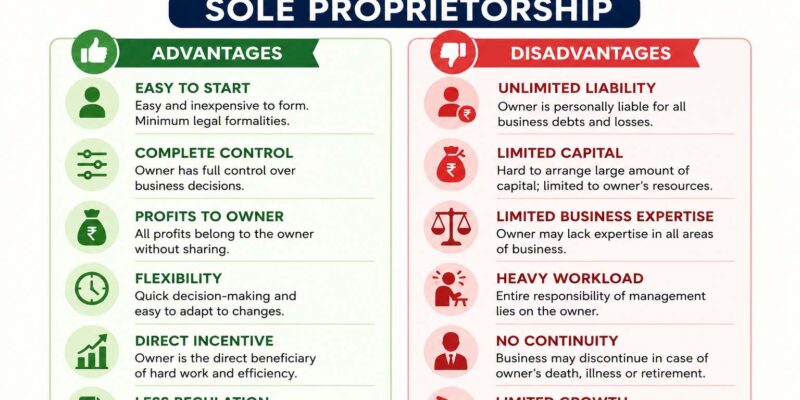
Starting a business often begins with choosing the right legal structure. For many entrepreneurs, understanding the advantages and disadvantages of sole proprietorship is one of the first steps toward making an informed decision. A sole proprietorship is simple to start, inexpensive to manage, and gives the owner complete control. At the same time, it also comes with financial and legal risks that every business owner should understand before getting started.
Whether you’re planning a side business or launching your first company, knowing how this business structure works will help you decide if it fits your goals.
What Is a Sole Proprietorship?
One individual owns and operates the business, and there is no legal separation between the owner and the company.
The owner is responsible for:
- Daily operations
- Business decisions
- Income and expenses
- Taxes
- Business debts
Because of its simplicity, many freelancers, consultants, local service providers, and small retailers begin as sole proprietors.
If you’d like to see real-world businesses that use this structure, exploring Sole Proprietorship Examples can provide helpful inspiration before starting your own venture.
Key Features of a Sole Proprietorship
Before weighing the pros and cons, it’s helpful to understand the characteristics that define this business structure.
Common features include:
- One owner
- Simple registration process
- Complete management control
- Personal responsibility for debts
Compared with other types of ownership, a sole proprietorship involves fewer legal requirements and less paperwork, making it attractive to first-time entrepreneurs.
Advantages and Disadvantages of Sole Proprietorship at a Glance
| Advantages | Disadvantages |
|---|---|
| Easy to start | Unlimited personal liability |
| Low startup costs | Harder to raise capital |
| Full control over decisions | Business ends if owner leaves |
| Simple tax filing | Limited growth potential |
| Keeps all profits | Greater financial risk |
Every entrepreneur values these factors differently, so the best choice depends on business goals, industry, and risk tolerance.
Main Advantages of Sole Proprietorship
The biggest reason many entrepreneurs choose this structure is its simplicity.
Let’s look at the major benefits.
Easy and Affordable to Start
One of the strongest advantages is the low cost of launching the business.
In many locations, you can begin operating after completing only a few registration steps and obtaining any required permits or licenses.
Unlike corporations, sole proprietorships usually don’t require extensive legal documents or ongoing compliance requirements.
This allows entrepreneurs to focus their time and money on growing the business rather than handling administrative tasks.
Complete Control Over Business Decisions
As the only owner, you make every important decision.
You decide:
- Products or services
- Pricing
- Marketing strategies
- Business hours
- Hiring decisions
- Future expansion
Since there are no partners or shareholders, decisions can be made quickly without lengthy approval processes.
This flexibility is especially valuable for businesses operating in fast-changing markets.
Keep All Business Profits
Another major advantage is that the owner receives all profits after expenses and taxes.
Instead of dividing earnings among multiple owners, the business income belongs entirely to you.
While you’re also responsible for losses, many entrepreneurs appreciate having full financial control over their business.
Simple Tax Reporting
Taxes are often easier for sole proprietors than for larger business entities.
Business income generally “passes through” to the owner’s personal tax return, reducing some of the complexity associated with corporate taxation.
Even so, maintaining accurate financial records remains essential throughout the year.
Greater Flexibility
Business owners can quickly adapt to changing customer needs.
For example, a freelance designer may introduce new services, adjust pricing, or expand into different markets without waiting for approval from business partners.
This flexibility often helps small businesses respond to opportunities faster than larger organizations.
When a Sole Proprietorship Works Best
Although every business is different, this structure often works well for:
- Freelancers
- Consultants
- Online sellers
- Tutors
- Local service providers
- Independent contractors
- Small home-based businesses
Businesses with relatively low startup costs and manageable financial risks often benefit most from this model.
Understanding the Risks Behind the Benefits
While the advantages are appealing, every entrepreneur should also understand the trade-offs before choosing this structure.
Many people ask, what are the advantages and disadvantages of a sole proprietorship before registering their business because the decision affects taxes, legal liability, financing, and future growth.
Evaluating both sides early helps prevent costly changes later.
How Sole Proprietorship Compares With Other Business Structures
A sole proprietorship isn’t the only option available.
Entrepreneurs may also consider:
- Partnerships
- Limited liability companies (LLCs)
- Corporations
Each structure offers different levels of legal protection, taxation, management flexibility, and administrative requirements.
For example, entrepreneurs comparing multiple ownership models often review Partnership Business Examples to understand how shared ownership differs from operating a business alone.
Likewise, reading about partnership advantages and disadvantages can help clarify whether working with business partners better matches your long-term plans.
Questions to Ask Before Choosing This Structure
Before registering your business, ask yourself:
- How much financial risk will my business have?
- Will I need outside investors?
- Do I plan to hire employees?
- Could my business expand quickly?
- Am I comfortable being personally responsible for business obligations?
Your answers will help determine whether a sole proprietorship supports your long-term business strategy.
Main Disadvantages of Sole Proprietorship
While many entrepreneurs appreciate the simplicity of this business structure, it’s equally important to understand the challenges before making a decision. The advantages and disadvantages of a sole proprietorship should always be evaluated together.
Unlimited Personal Liability
The biggest drawback is unlimited personal liability.
Since the business and the owner are legally the same, the owner is personally responsible for business debts and legal claims. If the business cannot pay what it owes, personal assets such as savings, vehicles, or even a home may be at risk, depending on local laws.
For businesses with significant financial risk, this is often the deciding factor when choosing another legal structure.
Limited Access to Funding
Growing a business usually requires capital.
Sole proprietors may find it more difficult to secure large loans or attract investors because there are no shares to sell and the business depends on one owner.
Many lenders also consider the owner’s personal credit history when reviewing loan applications.
Heavy Workload
Running a sole proprietorship means wearing many hats.
The owner often handles:
- Sales
- Customer service
- Marketing
- Accounting
- Operations
- Purchasing
- Business planning
While this provides complete control, it can also lead to long working hours and burnout if responsibilities are not managed carefully.
Business Continuity Challenges
A sole proprietorship is closely tied to its owner.
If the owner retires, becomes seriously ill, or decides to stop operating, the business may be difficult to continue without transferring ownership or creating a new legal entity.
Businesses that expect long-term growth often plan ahead for succession.
Advantages and Disadvantages of LLC vs Sole Proprietorship
Many new business owners compare these two structures before registering their company.
| Feature | Sole Proprietorship | LLC |
|---|---|---|
| Startup cost | Usually lower | Often higher |
| Setup process | Simple | More paperwork |
| Personal liability | Unlimited | Limited in many cases |
| Tax flexibility | Simple pass-through taxation | Multiple tax options depending on eligibility |
| Business credibility | Good for many small businesses | Often viewed as more formal |
| Ongoing compliance | Minimal | Usually greater reporting requirements |
When considering the advantages and disadvantages of LLC vs sole proprietorship, the right choice depends on your goals, industry, expected revenue, and tolerance for risk.
A sole proprietorship may work well for low-risk businesses, while an LLC may provide greater legal protection for businesses with higher financial exposure.
Common Mistakes New Sole Proprietors Make
Choosing the right business structure is only the beginning.
Avoid these common mistakes to improve your chances of long-term success.
Mixing Personal and Business Finances
Even though a sole proprietorship isn’t legally separate from its owner, keeping separate bank accounts and financial records makes bookkeeping much easier.
Clear records also help during tax season and when applying for financing.
Ignoring Legal Requirements
Many entrepreneurs assume they can begin operating immediately.
- Business licenses
- Local permits
- Sales tax registration
- Professional certifications
Research local regulations before serving customers.
Not Planning for Growth
A sole proprietorship may be ideal today but less suitable in the future.
If your business begins hiring employees, expanding into multiple locations, or taking on significant financial obligations, you may eventually benefit from changing to another business structure.
Is a Sole Proprietorship Right for Your Business?
Many first-time entrepreneurs ask, what are the advantages and disadvantages of sole proprietorship before launching their business.
- Want a simple startup process
- Have limited startup capital
- Prefer making decisions independently
- Operate a low-risk business
- Want minimal administrative requirements
On the other hand, another structure may be a better option if you expect rapid growth, need investors, or want stronger personal liability protection.
Understanding concepts such as What Is a Disregarded Entity can also help you compare how different business structures are treated for tax purposes as your business grows.
Best Practices for Sole Proprietors
Following a few practical habits can help your business stay organized and profitable.
Keep Accurate Financial Records
Track income and expenses consistently.
Using accounting software or working with a qualified accountant can reduce errors and make tax filing much easier.
Build an Emergency Fund
Business income can fluctuate throughout the year.
Setting aside savings helps cover unexpected expenses and provides greater financial stability during slower periods.
Review Insurance Needs
Business insurance cannot eliminate every risk, but it can help reduce financial losses caused by accidents, lawsuits, or property damage.
The type of coverage you need depends on your industry and business activities.
Reassess Your Business Structure Regularly
As your company grows, your original structure may no longer be the best fit.
Review your business goals every year to determine whether your current setup still supports your long-term plans.
Frequently Asked Questions
What are the advantages and disadvantages of a sole proprietorship?
The main advantages include low startup costs, complete control, simple taxes, and easy setup. The main disadvantages include unlimited personal liability, limited access to funding, and greater responsibility for managing every aspect of the business.
Can a sole proprietorship hire employees?
Yes.
A sole proprietor can hire employees, although doing so increases management responsibilities and may require payroll registration, insurance, and compliance with employment laws.
Is a sole proprietorship good for small businesses?
Yes.
Many freelancers, consultants, local service providers, and home-based businesses successfully operate as sole proprietorships, especially during the early stages.
Can You Convert a Sole Proprietorship to an LLC?
Yes.
Many entrepreneurs begin as sole proprietors and later form an LLC as their business expands or their legal and financial needs change.
Is a sole proprietorship the cheapest business structure?
In many cases, yes.
It usually has the lowest startup costs and the fewest ongoing administrative requirements, making it attractive to first-time business owners.
Key Takeaways Before You Start
The advantages and disadvantages of sole proprietorship should always be considered alongside your business goals, financial situation, and growth plans. This structure offers flexibility, low startup costs, and complete control, making it an excellent choice for many small businesses and independent professionals.
At the same time, personal liability and limited financing options can become significant challenges as a business grows. Before choosing a business structure, evaluate both your current needs and your long-term vision. A thoughtful decision today can save time, money, and unnecessary complications as your business moves forward.