
Great customer service can turn a first-time buyer into a loyal customer. On the other hand, a poor experience can quickly send someone to a competitor. That’s why understanding the types of customer service is one of the smartest investments any business can make. Whether you run a small startup, an online store, or a large company, offering the right support at the right time helps build trust, improve customer satisfaction, and strengthen your brand.
Customer expectations continue to evolve. People now expect fast responses, multiple communication channels, and personalized support. By learning the different customer service models, businesses can create better experiences while improving operational efficiency.
What Are Types of Customer Service?
Customer service refers to the assistance a business provides before, during, and after a customer makes a purchase. It includes answering questions, solving problems, handling complaints, processing returns, and helping customers get the most value from a product or service.
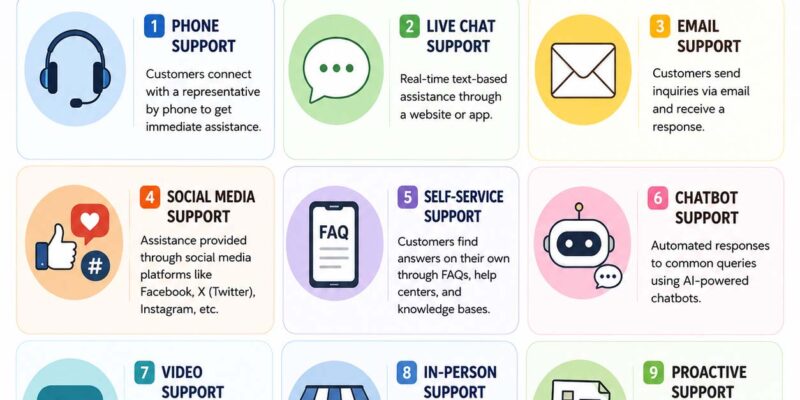
The different types of customer service vary based on how businesses interact with customers. Some companies rely on face-to-face conversations, while others focus on email, live chat, social media, or AI-powered support.
The best approach often combines several service channels to meet customer preferences.
Why Customer Service Matters
Excellent customer service goes beyond solving problems. It creates positive experiences that encourage repeat purchases and word-of-mouth recommendations.
Businesses with strong customer service often experience:
- Higher customer satisfaction
- Increased customer loyalty
- Better online reviews
- More referrals
- Higher customer lifetime value
- Stronger brand reputation
A customer-focused culture also supports long-term growth because satisfied customers are more likely to return and recommend the business to others.
Understanding the Main Types of Customer Service
Every business serves customers differently. The right customer service strategy depends on the products, audience, budget, and communication preferences.
Below are some of the most common service models used by businesses today.
1. In-Person Customer Service
Traditional face-to-face support remains one of the most effective ways to build relationships.
Retail stores, banks, hotels, hospitals, and restaurants rely heavily on in-person interactions because employees can respond immediately while observing customer reactions.
Advantages
- Personal interaction
- Faster issue resolution
- Better communication through body language
- Stronger customer relationships
Challenges
- Higher staffing costs
- Limited business hours
- Location-dependent
Businesses that operate physical locations often include customer service planning alongside a Marketing Strategy Template to ensure the customer experience matches their brand promise across every touchpoint.
2. Phone Customer Service
Phone support continues to be one of the fastest ways to resolve complex issues.
Customers often prefer speaking directly with an agent when dealing with billing questions, technical problems, or urgent requests.
Phone service works especially well for:
- Financial services
- Healthcare providers
- Internet providers
- Insurance companies
- Travel agencies
Well-trained representatives can explain complicated situations more effectively than written messages.
3. Email Customer Service
Email remains one of the most reliable support channels for businesses that don’t require immediate responses.
Customers appreciate email because it creates a written record of conversations and allows them to explain issues in detail.
Email support is ideal for:
- Product inquiries
- Warranty claims
- Refund requests
- Technical documentation
- Business-to-business communication
Clear response guidelines are easier to maintain when organizations develop a detailed What Is SOP document for customer service teams, ensuring consistent communication across every interaction.
4. Live Chat Support
Live chat has become one of the fastest-growing customer service channels.
Visitors can ask questions while browsing a website without making a phone call or waiting for an email reply.
Benefits include:
- Faster response times
- Increased sales conversions
- Lower support costs
- Improved customer satisfaction
- Ability to handle multiple conversations simultaneously
Many businesses combine live chat with chatbots, allowing routine questions to be answered instantly before transferring complex issues to human agents.
5. Social Media Customer Service
Customers increasingly expect businesses to respond through platforms like Facebook, Instagram, LinkedIn, and X.
Public responses also demonstrate transparency because other customers can see how issues are handled.
Social media support commonly addresses:
- Shipping updates
- Product questions
- Service complaints
- Brand feedback
- Community engagement
Quick responses on social platforms often improve public perception while preventing small complaints from becoming larger reputation issues.
Types of Customer Service Online
As digital business continues to grow, types of customer service online have become essential for companies of every size.
Online customer service usually includes:
- Live chat
- Email support
- Social media messaging
- AI chatbots
- Self-service knowledge bases
- Customer portals
- Video support
Rather than replacing human representatives, these digital tools help businesses respond faster while allowing support agents to focus on more complex customer needs.
Choosing the Right Service Mix
Few businesses rely on just one customer service channel.
When selecting service channels, consider:
- Customer demographics
- Product complexity
- Budget
- Team size
- Expected response times
- Business hours
For example, an e-commerce business may prioritize live chat and email, while a local service company may receive most customer requests through phone calls.
Two Core Categories Every Business Should Understand
Although many service channels exist, businesses can group them into 2 types of customer service based on who provides the assistance.
Human Customer Service
Human representatives remain the best option for handling emotional conversations, complicated problems, negotiations, and personalized recommendations.
Customers often value empathy, active listening, and professional judgment that only experienced support staff can provide.
Automated Customer Service
Automation helps businesses answer common questions quickly through chatbots, interactive voice response (IVR) systems, FAQs, and self-service portals.
Automation works best for repetitive tasks such as:
- Password resets
- Order tracking
- Appointment scheduling
- Basic account information
- Frequently asked questions
A balanced combination of automation and human support typically delivers the best customer experience while keeping operating costs under control.
Customer Service and Sales Often Work Together
Customer service doesn’t end after a purchase. It also supports future sales opportunities by building trust and encouraging repeat business.
For example, support representatives frequently identify buying opportunities when customers ask about upgrades or complementary products. In many organizations, this information is passed to the sales team after qualifying What Is a Lead, helping both departments work toward shared business goals.
More Types of Customer Service Every Business Should Know
The first five service models cover many customer interactions, but businesses often combine several additional approaches to create a complete support strategy. These methods help companies serve customers more efficiently while improving satisfaction.
6. Self-Service Customer Support
Many customers prefer solving simple problems on their own instead of contacting a support representative.
A self-service system may include:
- Frequently asked questions (FAQs)
- Knowledge bases
- Video tutorials
- User guides
- Community forums
This approach reduces support costs while giving customers instant access to information at any time of day.
To keep self-service resources accurate, businesses should regularly review and update documentation. Teams often document these updates using How to Write Meeting Minutes so everyone understands which articles, policies, or guides need revisions.
7. AI-Powered Customer Service
Artificial intelligence has become a valuable tool for handling routine customer requests.
AI-powered assistants can:
- Answer common questions
- Recommend products
- Route conversations to the right department
- Track orders
- Schedule appointments
While AI improves response times, human agents remain essential for complex situations that require empathy or detailed problem-solving.
8. Video Customer Service
Some issues are easier to explain through video than text or phone calls.
Businesses offering technical products, software, or professional services increasingly use video meetings to:
- Demonstrate products
- Troubleshoot equipment
- Provide onboarding sessions
- Deliver personalized consultations
Video support creates a more personal experience without requiring customers to visit a physical location.
9. Proactive Customer Service
Instead of waiting for customers to report problems, proactive support identifies potential issues before they become complaints.
Examples include:
- Shipping delay notifications
- Product maintenance reminders
- Service renewal alerts
- Software update announcements
- Follow-up emails after purchases
Customers often appreciate businesses that communicate early because it reduces uncertainty and builds confidence.
10. Omnichannel Customer Service
Many organizations now combine every communication channel into one connected experience.
With omnichannel customer service, customers can begin a conversation through live chat, continue by email, and finish over the phone without repeating the same information.
This seamless experience improves convenience and helps support teams respond more efficiently.
Comparison of the 10 Types of Customer Service
| Customer Service Type | Best For | Response Speed | Human Interaction |
|---|---|---|---|
| In-person | Retail and local businesses | Immediate | High |
| Phone | Complex issues | Fast | High |
| Detailed requests | Medium | High | |
| Live chat | Website visitors | Fast | Medium to High |
| Social media | Public engagement | Fast | Medium |
| Self-service | Common questions | Immediate | Low |
| AI-powered | Routine inquiries | Immediate | Low |
| Video support | Technical assistance | Medium | High |
| Proactive service | Customer retention | Varies | Medium |
| Omnichannel | Consistent customer experience | Fast | High |
How to Choose the Right Customer Service Model
Not every business needs every service channel. Instead, choose the combination that best matches your customers and available resources.
Ask yourself these questions:
- Where do customers usually contact your business?
- How quickly do they expect a response?
- Which questions are repeated most often?
- Can automation handle simple requests?
- Which channels produce the highest customer satisfaction?
Small businesses often begin with email and phone support before adding live chat or AI tools as customer demand grows.
Common Mistakes to Avoid
Even businesses with experienced support teams can make avoidable mistakes.
Some of the most common include:
Ignoring Customer Feedback
Customer complaints often highlight opportunities for improvement. Treat feedback as valuable information instead of criticism.
Offering Inconsistent Responses
Different employees should provide the same answer to similar questions whenever possible. Standard procedures and regular training help maintain consistency.
Making Customers Wait Too Long
Long response times are one of the biggest causes of customer dissatisfaction.
Businesses should establish realistic response goals for each communication channel and monitor performance regularly.
Overusing Automation
Automation improves efficiency, but relying on it for every interaction can frustrate customers.
Give customers an easy way to reach a human representative when automated systems cannot resolve the issue.
Best Practices for Excellent Customer Service
Strong customer service depends on people, processes, and continuous improvement.
Follow these best practices:
- Listen carefully before responding.
- Personalize conversations whenever possible.
- Resolve issues during the first interaction when practical.
- Keep customers informed throughout the process.
- Train employees regularly.
- Measure customer satisfaction using surveys and performance metrics.
- Review recurring complaints to identify long-term improvements.
Happy employees also contribute to better customer experiences. Investing in training, recognition, and workplace culture often supports the benefits of employee retention, leading to more experienced teams and stronger customer relationships.
Frequently Asked Questions
What are the different types of customer service?
The most common options include in-person support, phone service, email, live chat, social media, self-service, AI-powered assistance, video support, proactive customer service, and omnichannel support.
What are the 10 types of customer service?
The 10 types of customer service covered in this guide are:
- In-person customer service
- Phone customer service
- Email customer service
- Live chat support
- Social media customer service
- Self-service support
- AI-powered customer service
- Video customer service
- Proactive customer service
- Omnichannel customer service
Many successful businesses combine several of these approaches instead of relying on just one.
Which customer service type is best?
There isn’t a single best option. The right choice depends on your customers, products, budget, and business goals. Most organizations achieve the best results by combining multiple service channels.
Is online customer service replacing traditional support?
No. Digital channels continue to grow, but phone and face-to-face support remain valuable for situations that require detailed explanations or personal interaction.
Why is omnichannel customer service becoming more popular?
Customers often switch between devices and communication channels. Omnichannel support creates a consistent experience by keeping conversations connected across every platform.
Building a Customer Service Strategy That Lasts
Understanding the types of customer service helps businesses create experiences that encourage trust, loyalty, and repeat purchases.
As your business grows, adding new service options can help you meet changing expectations without sacrificing the personal support customers value most.